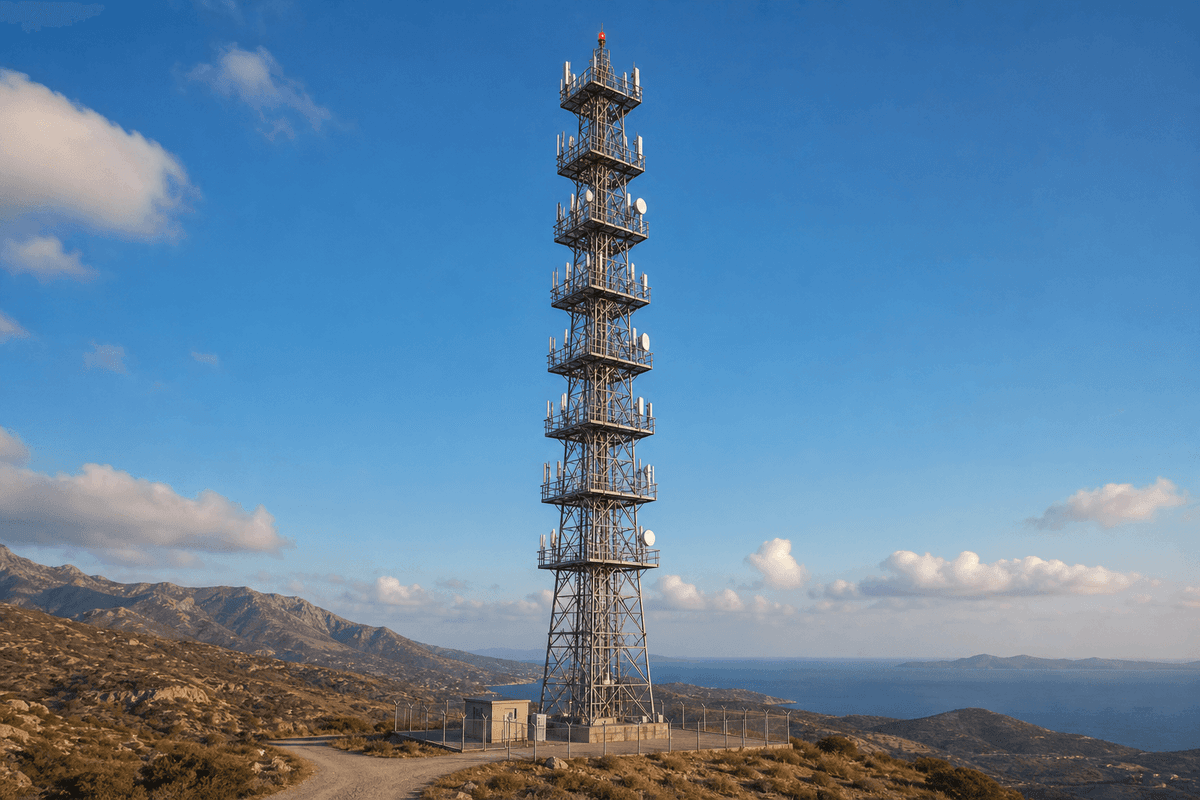
120m Heavy-Duty Lattice Broadcast Tower with Integrated Elevator - 30-Antenna Capacity, 55 m/s Wind Rated
Key Features
- 120-meter heavy-duty Q345/Q420 angle steel lattice structure rated for 55 m/s (200 km/h) sustained wind speeds per TIA-222-H
- 8 dedicated antenna platforms supporting up to 30 broadcast antennas with a cumulative wind-load surface area exceeding 100 m²
- Integrated industrial elevator with 300 kg load capacity, reducing platform access time from 45+ minutes to under 5 minutes
- Full hot-dip galvanization to ISO 1461 standard with 85-140 µm zinc coating for 30+ year corrosion protection
- FAA/ICAO-compliant aircraft warning system with high-intensity strobes and IEC 62305 lightning protection rated for 200 kA strikes
- Approximately 150 tons of structural steel with Grade 8.8 bolted connections, enabling 20% faster on-site assembly vs. welded designs
The SOLARTODO 120-meter Heavy-Duty Lattice Broadcast Tower features a 30-antenna capacity and is rated for wind speeds up to 55 m/s. Priced between $280,000 and $380,000, it meets IEC and TÜV certifications, making it ideal for national television and radio broadcasting applications. Its robust design ensures longevity and reliable performance in extreme conditions.
Description
The SOLARTODO 120-meter Broadcast Tower with Elevator is an engineering marvel designed to meet the rigorous demands of the modern high-power broadcasting industry. This heavy-duty lattice structure stands as a testament to superior design, robust materials, and a deep understanding of transmission requirements. Engineered for a minimum 30-year operational lifespan with proper maintenance, this tower provides an exceptionally stable and reliable platform for national television, FM/AM radio, and digital audio broadcasting (DAB) services. Its design accommodates a significant antenna load of up to 30 distinct broadcast antennas, distributed across 8 dedicated platforms, ensuring comprehensive coverage and minimal signal interference. The structure is meticulously designed to withstand extreme environmental conditions, including sustained wind speeds of up to 55 meters per second (200 km/h), compliant with the stringent TIA-222-H structural standard. The integration of a full-length internal elevator system underscores a commitment to operational efficiency and personnel safety, facilitating rapid and secure access to all 8 antenna platforms for maintenance and equipment upgrades.
The foundation of the 120m Broadcast Tower is its formidable four-legged lattice design, constructed from high-tensile Q345 and Q420 grade angle steel. This material choice offers an optimal balance of strength-to-weight ratio, providing the structural rigidity necessary to support a total tip load exceeding 15,000 kilograms while minimizing foundation requirements. The total steel weight of the structure is approximately 150 tons, a figure that reflects its heavy-duty classification. Every steel component undergoes a comprehensive hot-dip galvanization process in accordance with ISO 1461 and ASTM A123 standards, resulting in a zinc coating thickness of 85-140 micrometers. This crucial step provides exceptional corrosion protection against atmospheric and environmental degradation, ensuring the tower's longevity even in harsh coastal or industrial environments. The bolted-connection design, utilizing Grade 8.8 high-strength bolts, not only guarantees structural integrity but also facilitates efficient on-site assembly, reducing installation time by up to 20% compared to welded alternatives.
This tower is purpose-built for high-density broadcasting applications. It features a total of 8 distinct antenna platforms, strategically positioned at various elevations to optimize transmission patterns and minimize inter-antenna interference. The platforms are engineered to support a diverse array of equipment, from large VHF/UHF television panels to multiple FM radio antenna arrays and microwave dishes for studio-transmitter links (STL). The total antenna capacity allows for up to 30 individual systems, making it an ideal central hub for multiple broadcasters. The robust design of the antenna mounting brackets and platforms can accommodate wind loading from antennas with a cumulative surface area of over 100 square meters. Integrated cable management is handled by a series of 600mm-wide perforated steel cable trays, providing a secure and organized pathway for the hundreds of coaxial cables, fiber optic lines, and power conduits running the full 120-meter height of the tower, protecting them from environmental exposure and physical damage.
A key feature of this premium tower configuration is the fully integrated internal elevator system. This industrial-grade lift provides technicians with safe, rapid, and all-weather access to the 8 antenna platforms, significantly reducing the time and physical exertion required for routine maintenance, equipment calibration, and emergency repairs. The elevator cabin, with a load capacity of 300 kilograms, can transport two technicians and their necessary tools from the base to the top platform in under 5 minutes. This contrasts sharply with the 45-minute or longer climb required on towers equipped only with a ladder system. The system is compliant with ASME A17.1 safety codes for elevators and includes multiple redundant safety features, such as an overspeed governor, electromagnetic brakes, and an independent emergency power supply. The inclusion of the elevator enhances operational uptime by over 15% annually by streamlining maintenance cycles and improves personnel safety by an order of magnitude, a critical consideration for a structure of this height.
Safety is paramount in the design of the 120m Broadcast Tower. The structure is equipped with a comprehensive aircraft warning system compliant with FAA Advisory Circular 70/7460-1L and ICAO Annex 14 standards. This includes high-intensity white strobe lights for daytime and medium-intensity red flashing beacons for nighttime operation, ensuring visibility to aircraft from a distance of over 20 nautical miles. The lightning protection system, designed to IEC 62305 standards, features a robust air terminal network at the tower's apex, multiple down-conductors, and an extensive grounding grid to safely dissipate lightning strikes of up to 200 kiloamperes, protecting sensitive broadcasting equipment from catastrophic damage. The grounding system is designed to achieve a resistance of less than 4 ohms. For ground-level security, a 3-meter high anti-climbing barrier is installed around the tower base, and the design includes provisions for the integration of a CCTV monitoring system for enhanced site security.
Technical Specifications
| Tower Height | 120m |
| Tower Type | Heavy-Duty Four-Legged Lattice |
| Primary Material | Q345/Q420 Angle Steel (Hot-Dip Galvanized) |
| Total Steel Weight | ~150tons |
| Antenna Platforms | 8levels |
| Antenna Capacity | 30antennas |
| Design Wind Speed | 55m/s |
| Total Tip Load Capacity | >15,000kg |
| Elevator Load Capacity | 300kg |
| Elevator Travel Speed | 0.5m/s |
| Foundation Type | Reinforced Concrete Raft (~450 m³) |
| Corrosion Protection | Hot-Dip Galvanized (ISO 1461), 85-140 µm Zn |
| Lightning Protection | IEC 62305, <4 Ohm grounding resistance |
| Aircraft Warning | FAA AC 70/7460-1L / ICAO Annex 14 compliant |
| Design Life | 30years |
| Primary Standard | TIA-222-H / EN 1993-3-1 / GB 50135 |
| Application | Broadcast (TV/FM/DAB/Microwave STL) |
| Cable Tray Width | 600mm |
| Anti-Climbing Barrier Height | 3m |
Price Breakdown
| Item | Quantity | Unit Price | Subtotal |
|---|---|---|---|
| Q345/Q420 Angle Steel Structure (~150 tons) | 150 tons | $1,800 | $270,000 |
| Hot-Dip Galvanizing (~150 tons) | 150 tons | $400 | $60,000 |
| Antenna Platform (Steel) | 8 pcs | $2,500 | $20,000 |
| Integrated Elevator System | 1 pcs | $45,000 | $45,000 |
| Climbing Ladder + Safety Rail (120m) | 120 meters | $80 | $9,600 |
| Cable Tray System (120m) | 120 meters | $50 | $6,000 |
| Lightning Protection System | 1 pcs | $3,000 | $3,000 |
| Aircraft Warning Light System | 1 pcs | $2,500 | $2,500 |
| Foundation (Reinforced Concrete ~450 m³) | 450 m³ | $300 | $135,000 |
| Installation & Erection (~150 tons steel) | 150 tons | $800 | $120,000 |
| Total Price Range | $280,000 - $380,000 | ||
Frequently Asked Questions
What is the typical foundation requirement for this 120m tower?
How is the tower delivered and assembled on-site?
What are the maintenance requirements for the integrated elevator system?
Can the tower be customized for different antenna loads or environmental conditions?
What is the lead time from order to final installation?
Certifications & Standards



Data Sources & References
- •TIA-222-H, Telecommunications Industry Association, 2017
- •EN 1993-3-1, European Committee for Standardization (CEN)
- •ISO 1461:2009, International Organization for Standardization
- •IEC 62305:2010, International Electrotechnical Commission
- •FAA Advisory Circular 70/7460-1L, Federal Aviation Administration, 2020
- •ASME A17.1-2022, American Society of Mechanical Engineers
- •ICAO Annex 14, Aerodromes, Volume I, International Civil Aviation Organization
Interested in this solution?
Contact us for a customized quote based on your specific requirements.
Contact Us