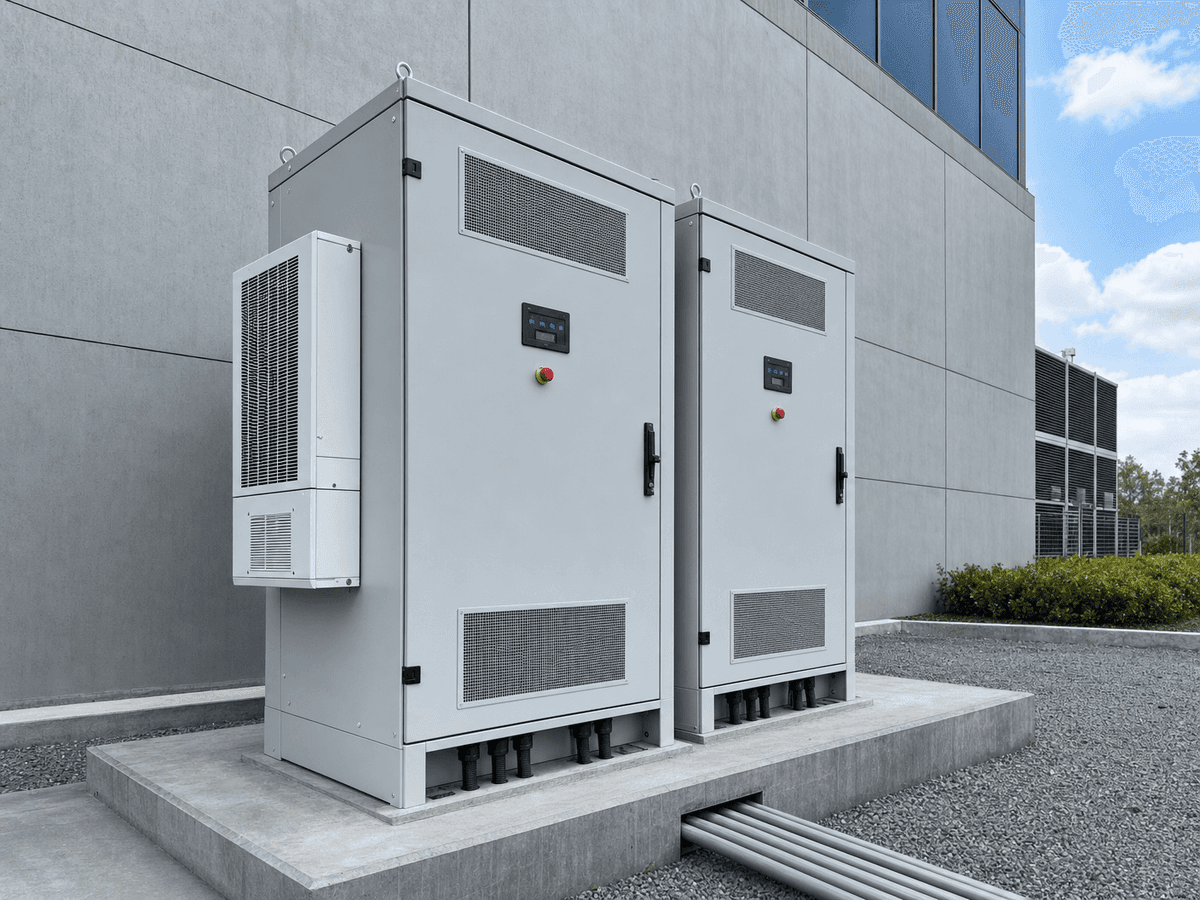
500kWh Data Center UPS LFP - 500kW 1-Hour BESS
Key Features
- 500kW / 500kWh LFP BESS with 1-hour autonomy for critical data center loads
- Under 10ms transfer response with >96% PCS efficiency for UPS-grade continuity
- 6000+ cycle life, 90% depth of discharge, and 10-year / 70% capacity warranty
- Liquid-cooled architecture optimized for systems above 100kWh and 15-year design life
- EPC turnkey pricing from $68,900 to $83,100, equal to about $138-$166 per kWh installed
The SOLARTODO 500kWh Data Center UPS LFP is a 500kW/500kWh lithium iron phosphate battery energy storage system engineered for 1-hour autonomy, under 10ms transfer, and data center-grade backup continuity. It combines liquid-cooled LFP batteries, bidirectional PCS, advanced BMS, and cloud monitoring in a standards-aligned UPS replacement platform for mission-critical loads.
Description
The 500kWh Data Center UPS LFP from SOLARTODO is a 500kW / 500kWh battery energy storage system designed for 1-hour autonomy in mission-critical facilities that require <10ms response time and stable power quality during grid disturbances. Built on LFP (lithium iron phosphate) chemistry with 6000+ cycles, this system is engineered as a modern UPS replacement or hybrid UPS layer for data centers, telecom hubs, edge computing sites, and digital infrastructure campuses where uptime targets often exceed 99.982% to 99.995%. For buyers evaluating alternatives, View all Battery Energy Storage System (BESS) products to compare capacities from 200kWh to multi-MWh configurations.
Unlike conventional VRLA UPS banks that typically require battery replacement every 3 to 5 years, operate with lower usable depth of discharge, and add significant HVAC load, this 500kWh LFP BESS supports 90% depth of discharge, a 10-year / 70% capacity warranty, and liquid-cooled thermal management optimized for systems above 100kWh. According to NREL and IEA analyses on stationary storage economics, LFP-based systems have become increasingly favorable for commercial backup applications between 2025 and 2026, especially where operators need both resilience and participation in demand management programs. In practical terms, a 500kW data hall load can be sustained for approximately 1 hour, or a 250kW critical load can be extended to nearly 2 hours, depending on site operating strategy and reserve settings.
Product Overview
This configuration is intended for data center operators that want to consolidate backup power functions into a battery platform with fast transfer, digital controls, and lower lifecycle maintenance than legacy UPS battery rooms. The standard architecture combines 500kWh of LFP battery capacity, a 500kW bidirectional power conversion system, integrated BMS, EMS communications, liquid cooling, and three-tier fire protection. The system supports both grid-tied and islanded modes, enabling continuity during utility faults and controlled restart sequences during black-start scenarios. Industry references including IEC 62619, UL 9540, UL 9540A, NFPA 855, and UN38.3 guide safety, transport, and stationary deployment requirements for installations in commercial and industrial environments.
For procurement teams, the value proposition is measurable in numbers rather than marketing language. Installed market pricing for stationary storage in 2025 is commonly reported in the range of roughly $125 to $180 per kWh depending on enclosure type, PCS topology, cooling, and project scope, while this model is offered with EPC turnkey pricing from $68,900 to $83,100, equivalent to approximately $138 to $166 per kWh installed. That range is aligned with current commercial benchmarks cited by IRENA, BloombergNEF, and Wood Mackenzie for integrated LFP systems in the sub-1MWh class, especially where redundant controls and site commissioning are included.
System Architecture
The system architecture follows a layered electrical and control design suitable for Tier-class digital infrastructure. At the battery layer, prismatic LFP cells in aluminum housings are arranged into rack-level modules with continuous voltage, current, and temperature sensing. At the conversion layer, a 500kW bidirectional PCS provides AC/DC conversion with >96% conversion efficiency and supports seamless transitions between utility-connected and island operation. At the supervisory layer, the BMS and EMS monitor SOC, SOH, thermal status, alarms, and event logs, while external interfaces can connect to SCADA, BMS, DCIM, and facility power management systems over industrial protocols.
The enclosure and auxiliaries are sized for high-availability operation. For a 500kWh system, liquid cooling is preferred because it improves temperature uniformity across racks, reduces thermal gradients, and helps preserve long-term cycle life over 10 years of operation. Fire safety uses a three-tier approach: early gas detection, automatic suppression, and system shutdown logic. This aligns with best practice recommendations found in UL 9540A fire propagation testing methodologies and NFPA 855 installation guidance for energy storage systems used in occupied or high-value facilities.

Technical Specifications
The nominal energy capacity is 500kWh, and the nominal power rating is 500kW, resulting in a 1C configuration suitable for UPS-style discharge profiles. Standard battery chemistry is LFP, with expected cycle life of 6000+ cycles at controlled operating conditions and a design calendar life of approximately 15 years depending on ambient temperature, charge window, and annual throughput. The standard depth of discharge is 90%, and the target round-trip efficiency is 96% at the system level under typical operating conditions. Operating temperature is generally designed around -20°C to 50°C, with active thermal control maintaining optimal internal battery temperatures in a narrower band during operation.
From an electrical integration perspective, the PCS supports bidirectional operation for charging and discharging, utility-interactive controls, and fast transfer logic for critical loads. Response time is specified at <10ms, which is within the switching window typically required to support sensitive IT equipment when coordinated with static transfer infrastructure or hybrid UPS topologies. Depending on site design, the system can be deployed behind a traditional UPS, as a battery-backed microgrid node, or as a replacement for large lead-acid strings in modernized facilities. Buyers can Configure your system online to define voltage class, communication protocol, and enclosure preferences.
Performance and Efficiency
For data center economics, efficiency and usable capacity matter more than nameplate numbers alone. A conventional double-conversion UPS with lead-acid batteries can impose higher energy losses, more frequent maintenance intervals, and shorter replacement cycles. By contrast, this 500kWh LFP BESS supports 90% usable capacity, >96% PCS efficiency, and lower maintenance frequency, which can reduce total backup energy cost over a 10-year period. Compared with conventional VRLA battery banks, LFP systems often reduce replacement events by 50% to 67% over a decade because the chemistry can remain in service for 6000+ cycles rather than the lower practical cycle counts associated with lead-acid technologies.
The operational benefit is not limited to emergency backup. In facilities with time-of-use tariffs or demand charges, the same 500kW power block can support peak shaving, load smoothing, and generator optimization. If a site offsets even 150kW of monthly peak demand for 4 hours on selected days, annual utility savings can reach approximately $18,000 to $32,000 depending on local tariff structures. In regions with high standby generator testing costs, additional savings can arise from reduced diesel runtime, lower fuel logistics, and lower emissions exposure. IEA and IRENA both note that behind-the-meter battery systems increasingly derive value from stacked use cases rather than single-function backup alone.
Safety and Compliance
Safety engineering is central in any data center UPS application because the protected loads can exceed $1 million in rack value per room and downtime can cost $5,000 to $9,000 per minute in some enterprise environments, according to widely referenced Uptime and industry continuity studies. The 500kWh Data Center UPS LFP is designed around UL 9540 system-level requirements, IEC 62619 battery safety criteria, UN38.3 transport compliance, and installation concepts aligned with NFPA 855. Where project jurisdiction requires, site-specific fire separation distances, ventilation calculations, and AHJ review can be incorporated during engineering.
LFP chemistry is selected because it offers strong thermal stability relative to higher-energy chemistries used in some mobility applications. While no electrochemical system is risk-free, LFP materially reduces the probability of severe thermal events when paired with proper BMS supervision, liquid cooling, current interruption devices, and tested enclosure design. The three-tier fire protection package typically includes gas detection, aerosol or clean-agent suppression, and automatic isolation logic. This architecture is consistent with current market practice for stationary storage systems over 100kWh in commercial and industrial sites.
Cloud Monitoring and Controls
Cloud-enabled monitoring allows operators to manage battery assets across 1 site or 100+ sites with a unified dashboard for alarms, trend graphs, event history, and KPI reporting. Standard monitoring points include pack voltage, rack temperature, PCS status, charge/discharge power, SOC, SOH, and communication health. For data center operators already using DCIM or BMS platforms, protocol mapping can be provided to support integration into existing operational workflows. Remote diagnostics can reduce mean time to identify faults by 20% to 40% when compared with manual inspection-only maintenance models.
A typical cloud stack also supports firmware management, threshold customization, and service ticket workflows. This is useful for operators running distributed edge data centers in 5, 20, or 200 locations, where centralized oversight is necessary to maintain SLA compliance. To understand broader ESS controls and operating principles, buyers can Learn about topic and review integration guidance for grid-interactive storage, battery safety, and lifecycle planning.

Application Scenario
A regional colocation operator in the MENA market deployed a 500kW / 500kWh LFP battery system to support 2 data halls with a combined critical IT load of approximately 340kW and a target backup window of 60 minutes before generator synchronization. Prior to the upgrade, the site used aging VRLA strings that required replacement every 4 years and occupied roughly 30% more battery room footprint for the same usable energy. After commissioning the LFP system with liquid cooling and cloud monitoring, the operator reduced battery maintenance visits from 12 per year to 4 per year, improved usable backup capacity by approximately 25%, and lowered generator test runtime by nearly 18% through battery-assisted transfer and load support.
This scenario illustrates where LFP BESS outperforms conventional alternatives. Compared with diesel-generator-only ride-through strategies, battery-backed transfer can reduce transient exposure and improve power quality during startup windows measured in seconds to minutes. Compared with lead-acid UPS battery rooms, LFP can reduce lifecycle replacement frequency and improve energy density. For project developers evaluating data center resilience strategies, Request a custom quotation to model autonomy, redundancy, and site-specific electrical integration.
EPC Investment Analysis and Pricing Structure
For B2B buyers, EPC scope should be evaluated line by line. In this offering, EPC turnkey includes engineering review, single-line confirmation, procurement of the battery system and auxiliaries, logistics coordination, on-site installation, electrical interconnection, testing, commissioning, operator training, and 1-year warranty support. Depending on project jurisdiction, EPC can also include civil interfaces, cable routing, grounding verification, and communications integration. This matters because a price difference of $10,000 to $14,000 can often be explained by whether installation labor, commissioning, and quality documentation are included.
| Pricing Tier | Scope | Price Range (USD) |
|---|---|---|
| FOB Supply | Equipment only, ex-works China | $42,718 - $56,508 |
| CIF Delivered | Equipment + ocean freight + insurance | $51,415 - $68,013 |
| EPC Turnkey | Installed + commissioned + 1-year warranty | $68,900 - $83,100 |
For fleet procurement, SOLARTODO applies the following volume discount guidance on equipment value where project conditions are standardized. These discounts are typically assessed for framework orders rather than one-off custom-engineered sites.
| Order Volume | Discount |
|---|---|
| 50+ systems | 5% |
| 100+ systems | 10% |
| 250+ systems | 15% |
A practical ROI model can be built from resilience value plus operational savings. Assuming annual utility and generator optimization savings of $22,000, plus avoided lead-acid replacement reserve of roughly $8,000 to $12,000 per year on an equivalent legacy UPS asset base, the blended annual economic benefit can reach $30,000 to $34,000. Against an EPC cost of approximately $75,000, indicative simple payback can fall in the range of 2.2 to 2.8 years, excluding the avoided cost of downtime events, which can be materially larger than energy savings. Compared with a conventional lead-acid UPS replacement strategy, lifecycle cost can be reduced by 20% to 35% over 10 years, depending on replacement intervals, HVAC burden, and maintenance contracts.
Standard payment terms are 30% T/T + 70% against B/L, or 100% L/C at sight for qualified transactions. Financing support may be available for projects above $5,000K, subject to jurisdiction, credit review, and project structure. For pricing validation, BOQ review, or EPC scope clarification, contact [email protected].
Price Breakdown
The EPC pricing below represents a realistic turnkey structure without inflating core component prices. Battery cell value is aligned with the provided $55/kWh reference, while installation, engineering, and warranty are listed as separate line items. This approach gives procurement managers a transparent basis for comparing BOM cost against delivered project value.
Why LFP for Data Center UPS
For backup durations between 1 and 8 hours, LFP has become the preferred chemistry in many commercial stationary systems because it balances safety, cycle life, and cost. In 2025, cell pricing around $40 to $55 per kWh and installed system pricing approaching $80 to $180 per kWh have made LFP increasingly competitive for both UPS modernization and behind-the-meter resilience. Compared with NCM, LFP generally offers lower energy density but stronger thermal stability and lower material cost, which is often the better tradeoff for fixed installations where enclosure volume is less constrained.
A 500kWh LFP system is especially well suited to data centers because the load profile is predictable, the value of uptime is high, and maintenance windows are limited. Engineers can also configure reserve SOC bands to ensure backup readiness while still using a portion of capacity for peak shaving or generator optimization. For broader technical context on storage chemistry, standards, and system design, buyers can Learn about topic before finalizing project specifications.
Integration, Delivery, and Procurement Notes
Typical manufacturing and FAT lead time for a 500kWh integrated system is approximately 4 to 8 weeks, depending on order volume, communication customization, and enclosure finish. Ocean transit under CIF terms may add 3 to 6 weeks depending on destination port, while site installation and commissioning usually require 5 to 10 days once foundations, cabling, and protection interfaces are ready. For mission-critical projects, factory acceptance testing, witness testing, and spare parts packages can be added to reduce commissioning risk and improve first-year service readiness.
For consultants and EPC firms, documentation can include GA drawings, single-line diagrams, communication maps, alarm lists, and O&M manuals. This helps accelerate submittals for AHJ review and owner approval. If your project needs N+1 topology assessment, parallel operation, or custom autonomy beyond 1 hour, SOLARTODO can adapt the design around larger battery blocks or modular expansion paths while maintaining the same operational principles.
In summary, the SOLARTODO 500kWh Data Center UPS LFP provides 500kW of fast-response backup power, 1 hour of nominal autonomy, 6000+ cycles, >96% PCS efficiency, liquid cooling, and standards-aligned safety architecture for modern digital infrastructure. It is a technically sound choice for operators seeking lower lifecycle cost, reduced maintenance, and improved resilience compared with conventional lead-acid UPS systems. For next steps, compare models in the BESS catalog, configure a site-specific solution online, or request a formal commercial offer with BOQ and delivery schedule.
Technical Specifications
| Energy Capacity | 500kWh |
| Power Rating | 500kW |
| Battery Chemistry | LFP |
| Application | Data Center UPS |
| Autonomy | 1hour |
| Response Time | <10ms |
| Round-trip Efficiency | 96% |
| Depth of Discharge | 90% |
| Cycle Life | 6000+cycles |
| Calendar Life | 15years |
| Operating Temperature | -20 to 50°C |
| Cooling Method | Liquid Cooling |
| Warranty | 10 years / 70% capacity |
| Annual Savings | 30000USD |
| Payback Period | 2.5years |
Price Breakdown
| Item | Quantity | Unit Price | Subtotal |
|---|---|---|---|
| LFP Battery Cells | 500 pcs | $55 | $27,500 |
| Battery Management System (BMS) | 500 pcs | $15 | $7,500 |
| Bidirectional PCS | 500 pcs | $80 | $40,000 |
| Liquid Thermal Management | 500 pcs | $25 | $12,500 |
| Container/Enclosure | 1 pcs | $8,000 | $8,000 |
| Fire Suppression System | 1 pcs | $5,000 | $5,000 |
| EMS Software | 1 pcs | $3,000 | $3,000 |
| Installation & Commissioning | 1 pcs | $9,000 | $9,000 |
| Engineering & QC | 1 pcs | $6,500 | $6,500 |
| 1-Year Warranty & Support | 1 pcs | $4,200 | $4,200 |
| Total Price Range | $68,900 - $83,100 | ||
Frequently Asked Questions
Is a 500kWh LFP BESS suitable as a full replacement for a conventional data center UPS?
What standards and certifications are relevant for this 500kWh data center UPS battery system?
How does LFP compare with lead-acid UPS batteries for a 10-year project horizon?
What is included in the EPC turnkey price, and what warranty is provided?
What are the standard payment terms and financing options for larger projects?
Certifications & Standards

Data Sources & References
- •NREL stationary battery storage cost and performance references 2025
- •IEA energy storage and electricity security outlook 2025
- •IRENA battery storage cost trends 2025
- •BloombergNEF battery price survey 2025
- •Wood Mackenzie global energy storage outlook 2025
- •IEC 62619 secondary lithium battery safety standard
- •UL 9540 and UL 9540A energy storage safety framework
Interested in this solution?
Contact us for a customized quote based on your specific requirements.
Contact Us