UHV Transmission Cost Analysis 2026 MEA

SOLAR TODO
Solar Energy & Infrastructure Expert Team
Watch the video
TL;DR
In 2026, Middle East and Africa cross-border transmission projects are most attractive when they move 1,000-3,000 MW over long distances using HVDC or UHV architecture. Typical costs are $1.2-3.5 million/km for HVDC lines plus $180-450 million per converter station, and well-utilized projects can achieve payback in about 8-15 years.
MEA UHV and HVDC interconnectors in 2026 typically cost $1.2-3.5 million/km, with converter stations at $180-450 million each. Bankable 1,000-3,000 MW projects usually target 8-15 year payback when utilization exceeds 55% and tariff spreads reach $15-40/MWh.
Summary
UHV cross-border transmission in the Middle East and Africa is moving from concept to bankable infrastructure, with HVDC costs typically ranging from $1.2-3.5 million/km, converter stations at $180-450 million each, and project payback often landing in 8-15 years for 1,000-3,000 MW corridors.
Key Takeaways
- Prioritize HVDC for cross-border corridors above 600-800 km, where losses can stay near 2.5-3.5% per 1,000 km and right-of-way needs are typically 20-35% lower than comparable HVAC routes.
- Budget converter stations early, because two terminals can add $360-900 million to a 500kV-800kV interconnection and often represent 25-40% of total CAPEX.
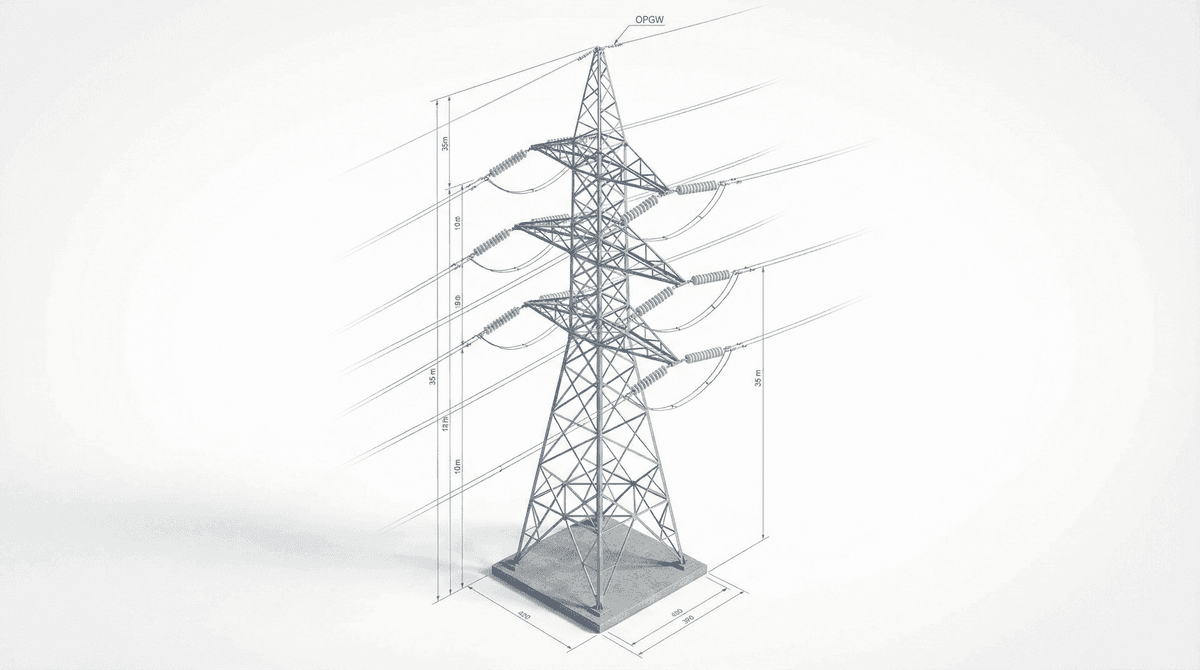
- Compare steel support options carefully, as monopole and tubular power_tower designs can reduce footprint by 40-75% versus lattice structures in urban approaches and constrained border crossings.
- Model tariff spreads before procurement, since cross-border arbitrage of $15-40/MWh can compress payback to 8-12 years on 1,000-2,000 MW links with capacity factors above 55%.
- Use phased EPC packaging, because splitting line works, substations, and converter stations can reduce procurement risk by 5-10% and shorten schedule exposure by 6-12 months.
- Specify 50-year design life steel structures with IEC 60826 and ASCE 10-15 load methodology, especially for desert wind, corrosion, and 45-55°C ambient conditions common in MEA corridors.
- Validate regional demand growth, as Africa’s electricity demand is projected to grow strongly through 2030 while Gulf interconnection and green hydrogen export zones increase the value of 220kV, 400kV, and UHV backbones.
- Negotiate volume pricing for transmission structures, where 50+ units can target 5% discounts, 100+ units 10%, and 250+ units 15% under framework supply agreements.
Market Outlook for UHV Cross-Border Grids in Middle East and Africa
Cross-border UHV and high-capacity HVDC corridors in the Middle East and Africa are becoming economically viable in 2026 because 1,000-3,000 MW transfer blocks can offset generation curtailment, reduce reserve margins by 5-15%, and spread power across 800-3,000 km trading zones.
The core investment logic is no longer only reliability; it is market integration. According to IEA (2024), electricity demand growth in emerging and developing economies remains the main driver of network expansion, while grids are increasingly the bottleneck for renewable deployment. According to IRENA (2024), Africa added renewable capacity but still faces major transmission deficits that limit dispatch efficiency and cross-border trade.
For procurement managers, the cost question is straightforward: can a long-distance corridor move lower-cost solar, hydro, and wind power across borders more cheaply than building redundant local thermal generation? In many MEA cases, the answer is yes when interconnector utilization exceeds 45-55% and when avoided fuel costs remain above $50-80/MWh for displaced oil or gas generation.
The International Energy Agency states, "Grids are the backbone of electricity systems," and that transmission investment must accelerate to support security and clean energy transitions. That statement is particularly relevant in MEA, where solar resource quality often exceeds 2,000 kWh/m2/year in major desert zones while demand centers are separated by hundreds or thousands of kilometers.
Regional demand and investment signals
According to BloombergNEF (2024), global energy transition investment exceeded $1.7 trillion in 2023, with grids and storage becoming a larger share of capital allocation. According to the World Bank (2024), power pools in Africa still trade only a fraction of technically feasible electricity volumes, leaving substantial room for new interconnection assets.
| Region | 2025-2026 Grid Need Signal | Typical Cross-Border Driver | Indicative Voltage Focus |
|---|---|---|---|
| Middle East | High | Solar balancing, desalination load, industrial clusters | 400kV, 500kV HVDC, emerging UHV |
| North Africa | High | Export corridors, hydro-solar balancing, inter-state trade | 220kV, 400kV, ±500kV HVDC |
| Sub-Saharan Africa | Very High | Hydro evacuation, mining loads, power pool trade | 220kV, 330kV, 400kV, HVDC |
| Europe interface | Medium-High | Import/export balancing, resilience, green power exchange | HVDC subsea/overland |
| Latin America benchmark | Medium | Hydro-wind balancing, long-distance bulk transfer | 500kV HVAC, HVDC |
Cost Structure and 2026 CAPEX Benchmarks
UHV and long-distance transmission project CAPEX in MEA typically falls into four blocks: line works at 35-55%, converter or substation packages at 25-40%, civil and land at 10-20%, and owner’s costs plus contingency at 8-15%.
For cross-border projects, buyers should separate line cost from terminal cost. A 400kV HVAC overhead line may range around $0.6-1.5 million/km depending on terrain, while a high-capacity HVDC overhead line may range around $1.2-3.5 million/km in 2026 procurement conditions. Converter stations for ±500kV to ±800kV links can add $180-450 million per terminal, depending on rating, harmonic filtering, redundancy, and grid code requirements.
According to NREL (2024), transmission economics depend strongly on utilization and congestion relief, not simply on line length. According to IEA (2023), network costs are rising globally due to permitting, materials, and transformer bottlenecks. For MEA buyers, steel, conductor aluminum, transformer lead times, and insulation supply remain the main price drivers in 2026.
| Cost Element | HVAC 400kV Benchmark | HVDC/UHV Benchmark | Share of Total CAPEX |
|---|---|---|---|
| Overhead line per km | $0.6-1.5M/km | $1.2-3.5M/km | 35-55% |
| Terminal substation / converter | $80-220M | $180-450M | 25-40% |
| Foundations and civil works | $0.08-0.25M/km | $0.12-0.35M/km | 8-15% |
| Protection, SCADA, telecom | 2-5% | 3-6% | 2-6% |
| Owner’s cost and contingency | 8-12% | 10-15% | 8-15% |
Steel structure cost implications for power_tower procurement
Transmission structures matter more than many financial models assume, because support steel affects transport, erection speed, right-of-way geometry, and visual permitting. In urban approaches, border substations, and industrial corridors, monopole power_tower solutions can reduce occupied footprint by roughly 40-75% versus conventional lattice alternatives, depending on voltage class and conductor configuration.
From the SOLAR TODO product range, buyers evaluating compact transmission routes can benchmark several relevant options. The 35m 110kV Octagonal Transmission Pole Flanged is designed for a 250m span and can reduce occupied ground area by approximately 60-75% compared with conventional lattice structures. The 40m 220kV Dodecagonal Transmission Pole supports double-circuit duty, ACSR-400 class conductors, a 300m design span, and a 50-year design life. For dense distribution interfaces, the 18m 10kV Tapered Monopole Urban Aesthetic Slip-Joint provides a compact footprint and standardized erection methodology.
| Structure Type | Typical Use Case | Footprint Reduction vs Lattice | Design Life | Relevant SOLAR TODO Option |
|---|---|---|---|---|
| Tubular monopole | Urban approach, constrained ROW | 50-70% | 50 years | 18m 10kV Tapered Monopole |
| Octagonal transmission pole | 110kV city-entry corridor | 60-75% | 50 years | 35m 110kV Octagonal Pole |
| Dodecagonal transmission pole | 220kV double-circuit corridor | 40-60% | 50 years | 40m 220kV Dodecagonal Pole |
| Lattice tower | Open rural bulk line | Baseline | 40-50 years | Project-specific |
Year-over-Year Trend Analysis: 2021-2040
Transmission economics in MEA are shifting from isolated national planning to regional corridor economics, with 2021-2025 defined by feasibility work, 2026-2030 by execution, and 2030-2040 by UHV-scale renewable trade integration.
Between 2021 and 2023, many projects were delayed by commodity inflation, higher interest rates, and transformer bottlenecks. Steel and electrical equipment pricing rose materially during this period, pushing EPC contingencies upward by roughly 3-8 percentage points in many utility tenders. By 2024-2025, procurement conditions improved, but long-lead items such as large transformers, reactors, and HVDC valves still required 12-24 months in many cases.
According to IRENA (2024), renewable capacity additions continue to rise globally, increasing pressure on transmission infrastructure. According to Wood Mackenzie (2024), grid investment must accelerate sharply to avoid renewable curtailment and connection queues. In MEA, this translates into stronger business cases for interconnectors linking solar-rich deserts, hydro basins, mining zones, and coastal load centers.
Historical to near-term outlook
| Period | Market Condition | Cost Trend | Project Implication |
|---|---|---|---|
| 2021-2022 | Commodity shock, logistics disruption | CAPEX up 10-25% | Higher contingencies, delayed awards |
| 2023-2024 | Stabilization with equipment bottlenecks | Mixed | More selective tendering |
| 2025-2026 | Renewed interconnector momentum | Moderate inflation | More bankable cross-border projects |
| 2027-2030 | Renewable integration scale-up | Better standardization | Larger 1,000-3,000 MW corridors |
| 2030-2040 | UHV and hybrid AC/DC expansion | Lower unit cost through scale | Regional power market deepening |
Long-term technology evolution scenarios
By 2030, more MEA projects are likely to adopt hybrid architectures: 220kV or 400kV HVAC collection backbones feeding ±500kV or higher HVDC export trunks. By 2040, UHV corridors may be justified where transfer blocks exceed 3,000 MW, curtailment costs are high, and cross-border market rules allow firm wheeling revenue. In those cases, line losses, converter availability, and dispatch value will matter more than simple CAPEX per kilometer.
Fraunhofer ISE states, "The expansion of grids is a prerequisite for the transformation of the energy system." For MEA decision-makers, that means transmission should be evaluated as a market-enabling asset, not only as network overhead.
Regional Breakdown: Middle East, Africa, Europe Interface, and Global Benchmarks
MEA cross-border transmission costs vary by 25-60% between corridors because desert terrain, security requirements, border procedures, and load density affect line routing, foundation design, and utilization rates.
The Middle East generally offers stronger offtaker credit and faster execution on utility-scale projects, but extreme heat and saline or sandy conditions can raise insulation, coating, and maintenance requirements. North Africa benefits from large renewable resource zones and proximity to Europe, but export-oriented projects face complex permitting and interconnection standards. Sub-Saharan Africa often has the strongest long-run need for interconnectors, especially for hydro evacuation and power pool trading, yet financing structures may require multilaterals, sovereign guarantees, or blended finance.
According to the African Development Bank (2024), regional power integration remains one of the most cost-effective ways to reduce average electricity costs and improve reliability. According to IEA (2024), grids in emerging economies need significantly higher annual investment to meet demand growth and renewable integration targets.
| Region | Indicative Corridor Length | Typical Project Size | Payback Range | Key Risk Factor |
|---|---|---|---|---|
| Gulf / Middle East | 300-1,200 km | 1,000-3,000 MW | 8-12 years | Heat, harmonization, marine crossings |
| North Africa | 500-2,000 km | 800-3,000 MW | 9-14 years | Export standards, permitting |
| Sub-Saharan Africa | 200-1,500 km | 300-2,000 MW | 10-15 years | Credit risk, utilization ramp |
| Europe interface | 200-1,000 km | 700-2,000 MW | 8-13 years | Regulatory alignment |
| North America benchmark | 500-2,500 km | 1,000-4,000 MW | 10-16 years | Siting and permitting |
EPC Investment Analysis and Pricing Structure
For 1,000-3,000 MW cross-border links, EPC turnkey delivery usually bundles engineering, procurement, civil works, line erection, substation or converter integration, testing, and commissioning into a single risk-managed package with clearer schedule accountability.
A practical procurement framework for MEA buyers uses three pricing layers. FOB Supply covers towers, conductors, insulators, hardware, and major electrical equipment at port of loading. CIF Delivered adds ocean freight, insurance, and destination logistics. EPC Turnkey includes detailed design, foundations, erection, testing, energization, and interface management across utilities, border agencies, and grid operators.
For power_tower packages, SOLAR TODO can support B2B project inquiries, technical alignment, and offline quotation for transmission and distribution structure supply. This is not an online marketplace; commercial terms are finalized through inquiry, engineering review, and quotation. For large projects, financing support may be available, especially where total package value exceeds $1,000K. Contact: cinn@solartodo.com or +6585559114.
Pricing guidance and commercial terms
- FOB Supply: best for utilities or EPCs with local erection teams and established freight channels.
- CIF Delivered: best for buyers seeking landed cost certainty on imported steel structures and accessories.
- EPC Turnkey: best for cross-border or schedule-critical projects where interface risk can add 5-12% hidden cost.
Volume pricing guidance for structure packages:
- 50+ units: target 5% discount
- 100+ units: target 10% discount
- 250+ units: target 15% discount
Typical payment terms:
- 30% T/T deposit + 70% against B/L
- 100% L/C at sight
ROI and payback logic
Cross-border transmission ROI depends on four variables: utilization, tariff spread, avoided generation CAPEX, and reliability value. If a 1,500 MW link operates at 60% utilization, annual transferred energy reaches about 7.9 TWh. At a net value spread of $20/MWh, gross annual value is about $158 million. At $35/MWh, it rises to about $276 million.
| Scenario | Capacity | Utilization | Net Value Spread | Annual Gross Value | Indicative Payback |
|---|---|---|---|---|---|
| Conservative | 1,000 MW | 45% | $15/MWh | $59M | 13-15 years |
| Base case | 1,500 MW | 60% | $20/MWh | $158M | 10-12 years |
| Strong trading case | 2,000 MW | 65% | $30/MWh | $342M | 8-10 years |
| Premium export case | 3,000 MW | 70% | $40/MWh | $736M | 6-9 years |
For many buyers, the hidden return is avoided thermal backup. Replacing oil-fired or diesel peaking generation at $120-250/MWh with imported hydro or solar-backed supply can materially improve economics even when wheeling charges are high.
Technical Selection Guide for Cross-Border Transmission Structures and Systems
The best 2026 cross-border design usually pairs HVAC for regional collection and substations with HVDC for long-distance transfer, while structure selection should match span, corridor width, visual constraints, and 50-year lifecycle cost.
For line structures, buyers should distinguish between open rural corridors and constrained approaches. Lattice towers still offer cost advantages in open terrain, but monopole and polygonal steel poles can be superior near substations, road crossings, industrial parks, and municipal interfaces. Designs should be checked against IEC 60826, ASCE 10-15, local wind maps, corrosion category, and conductor loading cases including broken-wire events.
SOLAR TODO’s transmission structure portfolio is relevant where compact steel solutions are required. The 35m 110kV Octagonal Transmission Pole Flanged supports single-circuit city transmission with a 250m design span. The 40m 220kV Dodecagonal Transmission Pole supports double-circuit duty and improved torsional performance for higher-load applications. These options are especially useful where right-of-way, aesthetics, and erection speed influence total project cost.
Selection checklist
- Choose HVAC when corridor length is shorter and grid nodes are dense.
- Choose HVDC when distance exceeds roughly 600-800 km or when asynchronous grids must be linked.
- Specify galvanized high-strength steel with 70-100 micrometer coating where desert or coastal corrosion risk is elevated.
- Require telecom and SCADA integration early, because protection and dispatch delays can postpone energization by 3-6 months.
- Review foundation resistance targets, often below 10 ohms for major transmission assets, based on owner specification.
FAQ
Q: What makes UHV or HVDC cross-border transmission economical in MEA in 2026? A: UHV or HVDC becomes economical when projects move 1,000-3,000 MW across long distances, usually above 600-800 km, and displace generation costing $50-80/MWh or more. The strongest cases combine high utilization above 55%, renewable curtailment reduction, and cross-border tariff spreads of $15-40/MWh.
Q: How much does a cross-border transmission project typically cost per kilometer? A: In 2026, 400kV HVAC overhead lines often range from $0.6-1.5 million/km, while high-capacity HVDC overhead lines commonly range from $1.2-3.5 million/km. Terrain, security, foundation conditions, and conductor size can shift those numbers significantly, especially in desert or remote border corridors.
Q: Why do converter stations have such a large impact on project CAPEX? A: Converter stations are expensive because they include valves, transformers, filters, protection systems, cooling, and complex control architecture. For ±500kV to ±800kV links, each terminal can cost $180-450 million, so the two ends often represent 25-40% of total project CAPEX.
Q: When should buyers choose monopole power_tower structures instead of lattice towers? A: Buyers should prefer monopole or polygonal power_tower structures where land is constrained, visual impact matters, or urban interfaces are complex. Depending on voltage class, these structures can reduce footprint by 40-75% and simplify permitting near substations, roads, industrial parks, and municipal corridors.
Q: What payback period is realistic for MEA cross-border transmission projects? A: A realistic payback range is usually 8-15 years, depending on utilization, wheeling tariffs, and avoided generation cost. Stronger projects with 2,000 MW capacity, 60-70% utilization, and value spreads above $30/MWh can move toward the lower end of that range.
Q: What does EPC turnkey delivery include for a transmission project? A: EPC turnkey delivery usually includes engineering, procurement, civil works, foundations, structure erection, conductor stringing, substation or converter integration, testing, and commissioning. It also reduces interface risk between suppliers, which can otherwise add 5-12% hidden cost through delays and scope gaps.
Q: What commercial terms are common for transmission structure procurement? A: Common terms include 30% T/T deposit plus 70% against B/L, or 100% L/C at sight for larger international orders. Buyers also often negotiate framework discounts, with 5% for 50+ units, 10% for 100+ units, and 15% for 250+ units.
Q: How does SOLAR TODO support B2B transmission buyers? A: SOLAR TODO supports inquiry-based B2B procurement with offline quotation, technical review, and project-oriented structure supply. For suitable projects above $1,000K, financing support may be available, and buyers can coordinate commercial discussions through cinn@solartodo.com.
Q: What technical standards should be referenced in transmission structure design? A: Buyers should typically reference IEC 60826 for overhead line loading, ASCE 10-15 for design methodology, and applicable utility standards for earthing, insulation, and protection. For thermal conductor rating and system integration, IEEE 738 and grid-specific interconnection rules are also important.
Q: What are the main risks in MEA cross-border transmission projects? A: The main risks are underutilization, border permitting delays, credit quality of offtakers, equipment lead times, and route security. These risks can be mitigated through phased EPC packaging, sovereign or multilateral support, and dispatch agreements that secure minimum transfer volumes.
References
- IEA (2024): World Energy Outlook and grid investment analysis highlighting the need for accelerated transmission expansion in emerging markets.
- IRENA (2024): Renewable Capacity Statistics and regional energy transition data relevant to Africa and Middle East grid integration.
- NREL (2024): Transmission valuation and power system planning methodologies used for assessing long-distance grid economics.
- BloombergNEF (2024): Global Energy Transition Investment trends and market signals for grid and power infrastructure capital allocation.
- Wood Mackenzie (2024): Power and renewables market analysis covering transmission bottlenecks, equipment supply, and interconnection trends.
- IEC 60826 (2017): Design criteria of overhead transmission lines used for structural loading and reliability methodology.
- ASCE 10-15 (2015): Design of latticed steel transmission structures and reference methodology for overhead line engineering.
- IEEE 738 (2023): Standard for calculating the current-temperature relationship of bare overhead conductors.
Conclusion
MEA cross-border transmission in 2026 is bankable when 1,000-3,000 MW corridors combine disciplined CAPEX, utilization above 55%, and tariff spreads of $15-40/MWh, with typical payback of 8-15 years.
For buyers comparing structure and EPC strategies, SOLAR TODO can support compact power_tower solutions and project quotations that reduce footprint, improve constructability, and align 50-year transmission assets with real corridor economics.
About SOLARTODO
SOLARTODO is a global integrated solution provider specializing in solar power generation systems, energy-storage products, smart street-lighting and solar street-lighting, intelligent security & IoT linkage systems, power transmission towers, telecom communication towers, and smart-agriculture solutions for worldwide B2B customers.
About the Author

SOLAR TODO
Solar Energy & Infrastructure Expert Team
SOLAR TODO is a professional supplier of solar energy, energy storage, smart lighting, smart agriculture, security systems, communication towers, and power tower equipment.
Our technical team has over 15 years of experience in renewable energy and infrastructure, providing high-quality products and solutions to B2B customers worldwide.
Expertise: PV system design, energy storage optimization, smart lighting integration, smart agriculture monitoring, security system integration, communication and power tower supply.
Cite This Article
SOLAR TODO. (2026). UHV Transmission Cost Analysis 2026 MEA. SOLAR TODO. Retrieved from https://solartodo.com/knowledge/uhv-transmission-project-cost-analysis-2026-middle-east-africa-cross-border-grid-data
@article{solartodo_uhv_transmission_project_cost_analysis_2026_middle_east_africa_cross_border_grid_data,
  title = {UHV Transmission Cost Analysis 2026 MEA},
  author = {SOLAR TODO},
  journal = {SOLAR TODO Knowledge Base},
  year = {2026},
  url = {https://solartodo.com/knowledge/uhv-transmission-project-cost-analysis-2026-middle-east-africa-cross-border-grid-data},
  note = {Accessed: 2026-04-20}
}
Published: April 20, 2026 | Available at: https://solartodo.com/knowledge/uhv-transmission-project-cost-analysis-2026-middle-east-africa-cross-border-grid-data
Subscribe to Our Newsletter
Get the latest solar energy news and insights delivered to your inbox.
View All Articles