Smart Traffic BOT Project Payback Analysis: Revenue Projecti

SOLAR TODO
Solar Energy & Infrastructure Expert Team
Watch the video
TL;DR
AI enforcement camera BOT projects are financially viable when they are deployed on high-violation corridors, modeled with realistic collection rates, and supported by uptime above 95% and LPR accuracy around 98%. Many projects can pay back in 18-36 months, especially when solar-powered poles reduce grid-extension costs and EPC delivery limits integration risk.
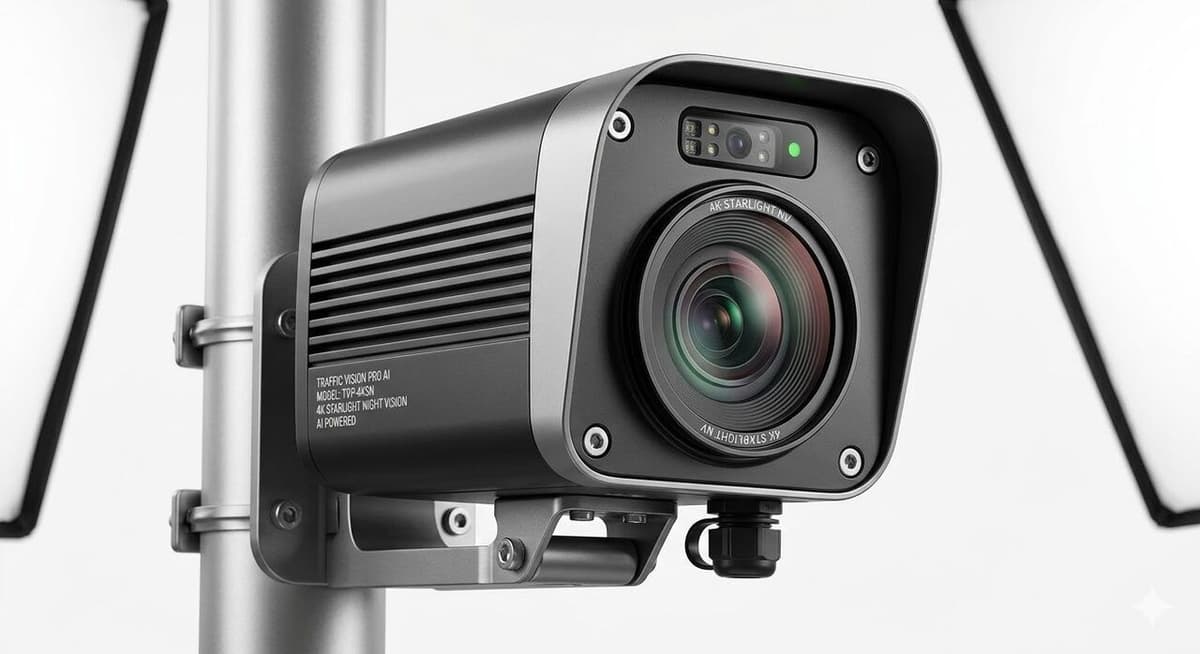
AI enforcement camera projects can reach payback in 18-36 months when 8 cameras detect 29,000 violations in weeks, LPR accuracy reaches 98%, and adaptive coordination cuts stops by 40%, improving both enforcement revenue and corridor efficiency.
Summary
AI enforcement camera projects can reach payback in 18-36 months when 8 cameras detect 29,000 violations in weeks, LPR accuracy reaches 98%, and adaptive coordination cuts stops by 40%, improving both enforcement revenue and corridor efficiency.
Key Takeaways
- Model pilot projects with 3-5 intersections first, because a 1-3 month pilot can validate violation volumes, uptime above 95%, and local fine-collection rates before city-wide rollout.
- Prioritize high-risk corridors where 8 cameras can detect thousands of violations in weeks, as shown by the 29,000-case Greece 2026 benchmark for revenue sensitivity testing.
- Specify AI cameras with 98% license plate recognition and speed detection up to 320 km/h to improve evidence quality, reduce dispute rates, and protect collection efficiency.
- Combine enforcement with adaptive traffic control, because green-wave coordination can reduce stops by 40% and emergency priority can cut response times by 50%.
- Size storage and solar carefully for off-grid sites, using pole-top PV plus LFP batteries to support 24/7 operation and reduce grid-connection costs in rural or developing regions.
- Compare procurement models across FOB Supply, CIF Delivered, and EPC Turnkey, then apply volume discounts of 5% at 50+, 10% at 100+, and 15% at 250+ units.
- Target blended payback of 2-4 years by combining violation revenue, lower manual enforcement labor, and avoided trenching or utility-extension costs on solar-powered deployments.
- Verify compliance with IEC, IEEE, UL, and privacy frameworks, because bankable projects need certified electrical integration, secure evidence chains, and documented cybersecurity controls.
Smart Traffic BOT Project Economics
Smart traffic BOT projects typically achieve 18-36 month payback when violation capture exceeds 2,000-4,000 cases per camera annually, collection rates stay above 65%, and system uptime remains above 95%.
For B2B investors, municipalities, and concession operators, the core question is whether AI enforcement cameras generate enough predictable cash flow to recover capex and operating costs within an acceptable concession period. The answer depends less on headline fine values and more on corridor selection, legal enforceability, collection efficiency, uptime, and procurement structure. A well-designed BOT model converts traffic violations into recurring revenue while also delivering measurable public-safety and congestion benefits.
According to the product deployment benchmark provided for Greece 2026, 8 cameras detected 29,000 violations within weeks. That single data point matters because it demonstrates how quickly revenue assumptions can move from theoretical to bankable when cameras are placed at high-compliance-risk locations. For investors, the practical implication is clear: site quality drives payback more than camera count alone.
SOLAR TODO positions these projects as integrated smart infrastructure rather than isolated camera sales. That distinction matters in BOT financing, because the revenue stack can include not only enforcement income but also reduced labor costs, adaptive traffic optimization, and, in solar-integrated deployments, distributed energy savings or export revenue. For off-grid and weak-grid markets, solar-powered smart traffic poles can materially reduce civil and utility-connection costs.
What drives BOT payback
A BOT payback model should include five variables before any quotation is finalized:
- Violation volume per camera per day
- Average legally collectible fine value
- Actual collection rate after appeals and enforcement leakage
- System uptime and evidence acceptance rate
- Annual O&M, telecom, software, and concession management costs
A simple formula used in early-stage screening is:
- Annual gross revenue = violations per year x average fine value x collection rate
- Annual net cash flow = annual gross revenue - O&M - telecom - software - concession admin
- Payback period = total project investment / annual net cash flow
If a project deploys 20 cameras and each camera confirms 3,000 collectible violations per year, the system produces 60,000 annual cases. If the average collectible value is $35 and the collection rate is 70%, annual gross revenue reaches $1.47 million. After deducting, for example, $250,000 in annual operating costs, annual net cash flow is about $1.22 million; a $2.8 million project would then pay back in roughly 2.3 years.
Revenue Model and Financial Assumptions
AI enforcement camera revenue is most bankable when investors use three scenarios—conservative, base, and aggressive—with collection rates between 55% and 85% and utilization based on verified traffic counts.
The biggest mistake in smart traffic BOT underwriting is assuming that every detected violation becomes collectible revenue. In reality, some cases are rejected due to poor evidence, legal exceptions, plate-recognition errors, or weak collection systems. That is why professional models should use confirmed, not theoretical, violations and should stress-test collection rates.
According to SOLAR TODO product data, license plate recognition can reach 98%, and the system supports 45+ AI detection types, including wrong-way riding, restricted zone entry, helmet non-compliance, triple riding, and overloading. This is particularly relevant in developing markets where motorcycles and e-bikes can represent 60%+ of traffic, expanding the enforcement universe beyond car-only models. A broader violation taxonomy generally improves revenue resilience across different corridors.
Example BOT revenue scenarios
| Scenario | Cameras | Collectible violations per camera/year | Avg. fine value | Collection rate | Annual gross revenue | Estimated annual O&M | Estimated payback |
|---|---|---|---|---|---|---|---|
| Conservative | 12 | 1,800 | $25 | 55% | $297,000 | $120,000 | 4.5-5.5 years |
| Base | 20 | 3,000 | $35 | 70% | $1,470,000 | $250,000 | 2.0-2.8 years |
| Aggressive | 30 | 4,500 | $45 | 85% | $5,163,750 | $420,000 | 1.2-1.8 years |
These ranges are not universal pricing promises; they are planning models for feasibility screening. Actual results depend on local legislation, adjudication speed, public acceptance, and whether the authority allows automated enforcement for each violation category. For procurement managers, the value of this table is that it frames negotiation around measurable project inputs rather than generic ROI claims.
According to the International Energy Agency, “Digitalization can make energy systems more connected, intelligent, efficient, reliable and sustainable.” That principle also applies to traffic infrastructure, where digital evidence, analytics, and automation improve the monetization of public-safety assets. In BOT structures, digitalization increases recoverable value by reducing manual review time and improving evidence consistency.
Secondary value streams beyond fines
In many tenders, the strongest business case is a blended one. Revenue and savings can include:
- Automated violation enforcement income
- Reduced manual traffic police deployment costs
- Lower accident-response and incident-management costs
- Better throughput from adaptive signal coordination
- Solar generation savings or export revenue on integrated poles
- Data services for planning, auditing, and corridor optimization
According to deployment results cited in the product knowledge, green-wave coordination can reduce stops by 40%, and transit or emergency priority can cut response times by 50%. Even when those benefits are not directly monetized as revenue, they improve the political and economic case for concession approval. SOLAR TODO can therefore support projects where the payback case combines enforcement cash flow with broader smart-city operating benefits.
Technical Architecture and Bankability Factors
Bankable AI enforcement systems require 98% LPR accuracy, secure evidence chains, 24/7 uptime, and standards-based electrical integration to keep dispute rates low and revenue leakage controlled.
A BOT investor is not buying cameras alone; they are buying dependable evidence production. Every weak point in the chain—camera optics, edge processing, network latency, power instability, cybersecurity, or evidence storage—can reduce accepted cases and lengthen payback. That is why technical architecture directly affects project finance.
SOLAR TODO combines smart traffic infrastructure with solar integration on pole tops and LFP battery storage for 24/7 operation. This architecture is especially useful in rural highways, border roads, and developing markets where grid extension is slow, expensive, or unreliable. Off-grid operation can remove trenching and utility-connection bottlenecks, which often delay project commissioning more than the hardware itself.
Core technical components
| Component | Typical function | Payback impact |
|---|---|---|
| AI enforcement camera | Detects speed, lane, helmet, wrong-way, overloading, and plate events | Higher detection volume and evidence quality |
| Edge AI processor | Runs classification and filtering locally | Lowers bandwidth cost and speeds event validation |
| LPR engine | Identifies plates with up to 98% accuracy | Improves collectible case conversion |
| Solar PV + LFP battery | Supports 24/7 off-grid or hybrid operation | Reduces utility dependency and civil cost |
| Secure communications | Encrypts data and supports zero-trust access | Protects legal admissibility and uptime |
| Evidence platform | Stores tamper-resistant records | Reduces appeal losses and compliance risk |
According to IEEE (2018), interoperability standards for distributed energy resources are essential for safe grid interaction, and that matters when smart poles export or interact with local power systems. According to UL (2022), energy storage safety standards are critical for battery-based systems, particularly where public infrastructure must operate continuously. These standards are not abstract compliance items; they are risk controls that influence insurance, legal acceptance, and financing terms.
The product architecture also references blockchain-secured evidence chains, GDPR compliance, and end-to-end encryption. For concession operators, these features help reduce legal challenges to automated enforcement. A strong evidence chain can materially protect collection rates, especially in jurisdictions with high appeal volumes.
The International Renewable Energy Agency states, “Renewables are the most cost-competitive power option in most of the world.” In practical BOT terms, that supports the use of solar-integrated traffic poles where diesel backup or new utility service would otherwise raise lifecycle cost. SOLAR TODO can therefore help structure projects where traffic enforcement and distributed clean power reinforce each other.
Applications, Use Cases, and Deployment Strategy
The highest-return use cases are motorcycle-heavy corridors, school zones, bus lanes, toll approaches, and rural highways where 60%+ two-wheeler traffic expands detectable violations and solar power avoids grid delays.
Not every road justifies AI enforcement investment. The best sites combine high traffic volume, repeatable violation behavior, legal clarity, and strong collection mechanisms. In many emerging markets, two-wheeler behavior creates a richer enforcement opportunity set than car-only corridors, especially for helmet, triple-riding, wrong-way, and lane-intrusion detection.
According to SOLAR TODO product data, helmet non-compliance detection reaches 97.7% mAP with 92.7% F1, triple riding exceeds 94%, overloading 4+ exceeds 91%, motor lane intrusion exceeds 93%, and wrong-way riding exceeds 95%. These metrics are commercially important because they support automated enforcement in traffic ecosystems where motorcycles dominate. For public-sector buyers, that means better fit with real local traffic patterns.
Recommended deployment roadmap
- Phase 1, 1-3 months: pilot 3-5 intersections or corridor points
- Phase 2, 3-9 months: expand to 50-100 intersections after KPI validation
- Phase 3, 9-18 months: city-wide rollout with Digital Twin and advanced analytics
This phased approach reduces capital risk and creates a data-backed basis for financing. It also allows the authority to validate adjudication workflows, public communication, and collection mechanisms before scaling. For BOT investors, a pilot is not a delay; it is a revenue-proofing stage.
According to deployment examples in the product knowledge, Pittsburgh achieved a 25% reduction in travel time and 20% lower emissions through AI signal optimization, London reported 10-30% travel-time improvement, and Singapore reduced commute time by 15% using digital twin methods. These outcomes show that enforcement infrastructure can be paired with adaptive management, increasing total project value beyond fines alone.
EPC Investment Analysis and Pricing Structure
EPC turnkey smart traffic delivery typically shortens commissioning by 15-30%, aligns civil, electrical, telecom, and software scopes under one contract, and improves payback certainty versus fragmented procurement.
For B2B buyers, EPC means Engineering, Procurement, and Construction delivered as a coordinated package rather than separate hardware and contractor lots. In smart traffic BOT projects, turnkey scope usually includes site survey, structural design, power design, communications design, equipment supply, installation, testing, commissioning, training, and after-sales support. Where required, it may also include solar pole integration, battery sizing, and interface support for local enforcement platforms.
Three-tier pricing structure
| Commercial model | What is included | Best for |
|---|---|---|
| FOB Supply | Hardware only, ex-port shipment | Buyers with local EPC and integration capacity |
| CIF Delivered | Hardware plus freight and insurance to destination port | Importers seeking logistics simplicity |
| EPC Turnkey | Design, supply, installation, commissioning, and training | Municipalities and concessionaires needing single-point responsibility |
Indicative volume guidance for planning and negotiation:
- 50+ units: 5% discount
- 100+ units: 10% discount
- 250+ units: 15% discount
Typical payment terms:
- 30% T/T deposit + 70% against B/L
- Or 100% L/C at sight
Financing is available for large projects above $1,000K, subject to project scope, buyer profile, jurisdiction, and concession structure. For commercial discussions, buyers can contact cinn@solartodo.com. SOLAR TODO uses an inquiry-to-offline-quotation model rather than an online marketplace workflow, which is more suitable for customized BOT and EPC projects.
ROI and payback versus conventional enforcement
Manual enforcement models require recurring labor, patrol vehicles, shift management, and inconsistent coverage. AI enforcement shifts more cost into upfront capex but lowers marginal monitoring cost and expands operating hours to 24/7. In many corridors, that means annual savings from reduced manual deployment plus higher violation capture.
A practical comparison is:
- Conventional enforcement: lower capex, higher recurring labor, lower consistency
- AI enforcement: higher capex, lower marginal labor, higher coverage and evidence standard
- Solar-powered AI enforcement: slightly higher equipment scope, lower utility dependence, faster deployment in off-grid areas
For many BOT projects, blended payback falls in the 2-4 year range when violation density is high and collection systems are mature. Where utility extension is expensive, solar integration can further improve economics by avoiding trenching, transformers, and recurring grid charges.
FAQ
Smart traffic BOT investors usually ask about payback, legal enforceability, EPC scope, and uptime because those four factors determine whether a 2-4 year return is realistic.
Q: What is a smart traffic BOT project in the context of AI enforcement cameras? A: A smart traffic BOT project is a build-operate-transfer model where an investor or contractor finances and deploys enforcement infrastructure, operates it for a concession period, and recovers costs from agreed revenue streams. In most cases, revenue comes from automated traffic violations, while the public authority retains regulatory control.
Q: How is payback calculated for AI enforcement camera projects? A: Payback is calculated by dividing total project investment by annual net cash flow. Annual net cash flow equals collectible violation revenue minus O&M, telecom, software, and administration costs. Most bankable models use conservative, base, and aggressive scenarios to test collection rates between roughly 55% and 85%.
Q: What payback period is realistic for a well-structured project? A: A realistic payback period for a strong corridor is often 18-36 months, while weaker sites may take 4-5 years. The biggest variables are violation density, fine value, legal collection efficiency, and uptime above 95%. Pilot data is the best way to validate assumptions before scaling.
Q: Why do some AI enforcement projects underperform financially? A: Most underperforming projects suffer from poor site selection, weak legal workflows, low collection rates, or unreliable power and communications. Some also overestimate collectible cases by assuming every detection becomes a valid fine. Financial models should only use confirmed, legally admissible events.
Q: How accurate must the technology be to support revenue collection? A: The technology should deliver high evidence quality, with plate recognition around 98% and stable event classification across target violations. Accuracy matters because rejected or disputed cases reduce cash flow. Strong cybersecurity and tamper-resistant evidence storage also help protect legal admissibility.
Q: What violations generate the best revenue potential in developing markets? A: In many developing markets, motorcycle-related violations generate strong revenue because two-wheelers can exceed 60% of traffic. High-value categories include helmet non-compliance, triple riding, wrong-way riding, lane intrusion, and overloading. These categories also align with safety priorities, which supports public acceptance.
Q: How does solar integration improve project economics? A: Solar integration improves economics by reducing dependence on grid extension, trenching, and recurring utility costs. Pole-top PV with LFP batteries can support 24/7 operation in off-grid or weak-grid areas. This is especially valuable on rural highways, border roads, and fast-deployment corridors.
Q: What does EPC turnkey delivery include for smart traffic projects? A: EPC turnkey delivery usually includes engineering, procurement, civil and electrical installation, communications integration, commissioning, training, and after-sales support. It can also include solar power design, battery sizing, and software integration. This single-point responsibility often reduces interface risk and improves schedule control.
Q: What pricing and payment terms are typical for B2B procurement? A: Smart traffic projects are commonly quoted under FOB Supply, CIF Delivered, or EPC Turnkey structures. Standard payment terms are often 30% T/T plus 70% against B/L, or 100% L/C at sight. Volume discounts typically reach 5% at 50+ units, 10% at 100+, and 15% at 250+.
Q: How should buyers compare AI enforcement with manual traffic enforcement? A: Buyers should compare total lifecycle cost, not just initial capex. Manual enforcement has lower upfront cost but higher recurring labor and inconsistent coverage, while AI systems offer 24/7 operation, better evidence consistency, and lower marginal monitoring cost. The best choice depends on traffic density and legal collection maturity.
Q: What maintenance and uptime targets should be written into contracts? A: Contracts should define uptime targets above 95%, response times for fault repair, spare-parts commitments, and periodic calibration or inspection schedules. Buyers should also specify telecom redundancy, battery health monitoring, and cybersecurity patch management. These clauses directly protect revenue continuity in BOT models.
Q: When should a city or investor start with a pilot instead of a full rollout? A: A pilot is the right approach when violation patterns, legal workflows, or collection performance are still uncertain. A 1-3 month pilot across 3-5 intersections can validate evidence quality, public response, and revenue assumptions. That data then supports financing and concession negotiations for larger phases.
References
Smart traffic BOT decisions should reference recognized standards and energy authorities because certified power, interoperability, and safety frameworks reduce financing and legal risk.
- IEA (2023): Digitalisation and Energy system guidance describing how digital technologies improve efficiency, reliability, and system management.
- IRENA (2024): Renewable Power Generation Costs report showing renewables remain the most cost-competitive new power option in many markets.
- IEEE 1547-2018 (2018): Standard for interconnection and interoperability of distributed energy resources with electric power systems interfaces.
- IEC 62443 (2023): Industrial communication networks and system security framework relevant to cybersecurity for connected traffic infrastructure.
- UL 1973 (2022): Standard for batteries for use in stationary and motive auxiliary power applications, relevant to LFP storage safety.
- NREL (2024): Solar resource and distributed generation analysis tools supporting feasibility assessment for solar-integrated infrastructure.
- IEC 61427 (2022): Secondary cells and batteries for renewable energy storage performance and reliability requirements.
Conclusion
AI enforcement camera BOT projects are financially attractive when 98% LPR accuracy, 95%+ uptime, and disciplined collection rates convert corridor violations into 18-36 month payback.
For municipalities, concessionaires, and EPC buyers, the bottom line is simple: select high-violation corridors, validate revenue with a 3-5 site pilot, and use EPC or solar-integrated deployment where grid and civil costs are high. SOLAR TODO can support customized smart traffic BOT structures that combine enforcement revenue, resilient off-grid power, and scalable city-wide expansion.
About SOLARTODO
SOLARTODO is a global integrated solution provider specializing in solar power generation systems, energy-storage products, smart street-lighting and solar street-lighting, intelligent security & IoT linkage systems, power transmission towers, telecom communication towers, and smart-agriculture solutions for worldwide B2B customers.
About the Author

SOLAR TODO
Solar Energy & Infrastructure Expert Team
SOLAR TODO is a professional supplier of solar energy, energy storage, smart lighting, smart agriculture, security systems, communication towers, and power tower equipment.
Our technical team has over 15 years of experience in renewable energy and infrastructure, providing high-quality products and solutions to B2B customers worldwide.
Expertise: PV system design, energy storage optimization, smart lighting integration, smart agriculture monitoring, security system integration, communication and power tower supply.
Cite This Article
SOLAR TODO. (2026). Smart Traffic BOT Project Payback Analysis: Revenue Projecti. SOLAR TODO. Retrieved from https://solartodo.com/knowledge/smart-traffic-bot-project-payback-analysis-revenue-projections-from-ai-enforcement-cameras
@article{solartodo_smart_traffic_bot_project_payback_analysis_revenue_projections_from_ai_enforcement_cameras,
  title = {Smart Traffic BOT Project Payback Analysis: Revenue Projecti},
  author = {SOLAR TODO},
  journal = {SOLAR TODO Knowledge Base},
  year = {2026},
  url = {https://solartodo.com/knowledge/smart-traffic-bot-project-payback-analysis-revenue-projections-from-ai-enforcement-cameras},
  note = {Accessed: 2026-04-22}
}
Published: April 22, 2026 | Available at: https://solartodo.com/knowledge/smart-traffic-bot-project-payback-analysis-revenue-projections-from-ai-enforcement-cameras
Subscribe to Our Newsletter
Get the latest solar energy news and insights delivered to your inbox.
View All Articles