Smart Solar Streetlight Design, IP Rating & Monitoring

SOLAR TODO
Solar Energy & Infrastructure Expert Team
Watch the video
TL;DR
Smart solar streetlight systems should be specified around actual load, local sun hours, and enclosure protection. For most outdoor projects, IP66 is the safer choice, and remote monitoring with 5-15 minute reporting helps reduce manual inspections and improve uptime. Integrated smart poles can replace 4-6 separate assets, while EPC buyers should compare FOB, CIF, and turnkey scope before pricing.
Smart solar streetlight system design depends on matching 6-15 m pole height, IP65-IP66 enclosure protection, and remote monitoring that can cut outage response time by more than 20%, while integrated poles can reduce visible roadside assets by up to 60%.
Summary
Smart solar streetlight system design depends on matching 6-15 m pole height, IP65-IP66 enclosure protection, and remote monitoring that can cut outage response time by more than 20%, while integrated poles can reduce visible roadside assets by up to 60%.
Key Takeaways
- Define the lighting class first, because pole height of 6-10 m and spacing of 20-30 m directly affect uniformity, battery size, and solar module wattage.
- Select IP66 for luminaires and controller enclosures in dusty or rainy roads, because IEC 60529 ingress protection materially affects failure rate and maintenance intervals.
- Use remote monitoring with fault alarms, dimming, and energy data at 5-15 minute intervals to reduce manual inspection frequency and improve uptime.
- Size solar generation and battery storage with at least 2-3 autonomy days for critical roads, then verify seasonal irradiance using NREL or local meteorological data.
- Compare integrated smart poles against separate CCTV, display, and sensor assets, because one pole can replace 4-6 field devices and reduce civil interfaces by 30-40%.
- Specify corrosion protection, wind resistance above 150 km/h where required, and a 25-year pole design life for municipal and EPC procurement.
- Evaluate EPC pricing in three layers—FOB, CIF, and turnkey—then apply volume discounts of 5%, 10%, or 15% at 50, 100, and 250 units.
- Confirm compliance with IEC 60598, IEC 62722, IEC 60529, and relevant local electrical rules before tender release to avoid redesign and approval delays.
Smart Solar Streetlight System Design Fundamentals
Smart solar streetlight systems work best when lighting load, solar input, battery autonomy, and enclosure protection are balanced around measured site conditions, with typical poles at 6-10 m and protection at IP65-IP66.
For B2B buyers, the design question is not only how bright the road should be, but how the full system performs over 5-10 years with limited field maintenance. A poor design can oversize the battery by 20-30%, undersize the PV module in winter, or leave electronics exposed to dust and water ingress. That directly increases truck rolls, spare parts use, and outage time.
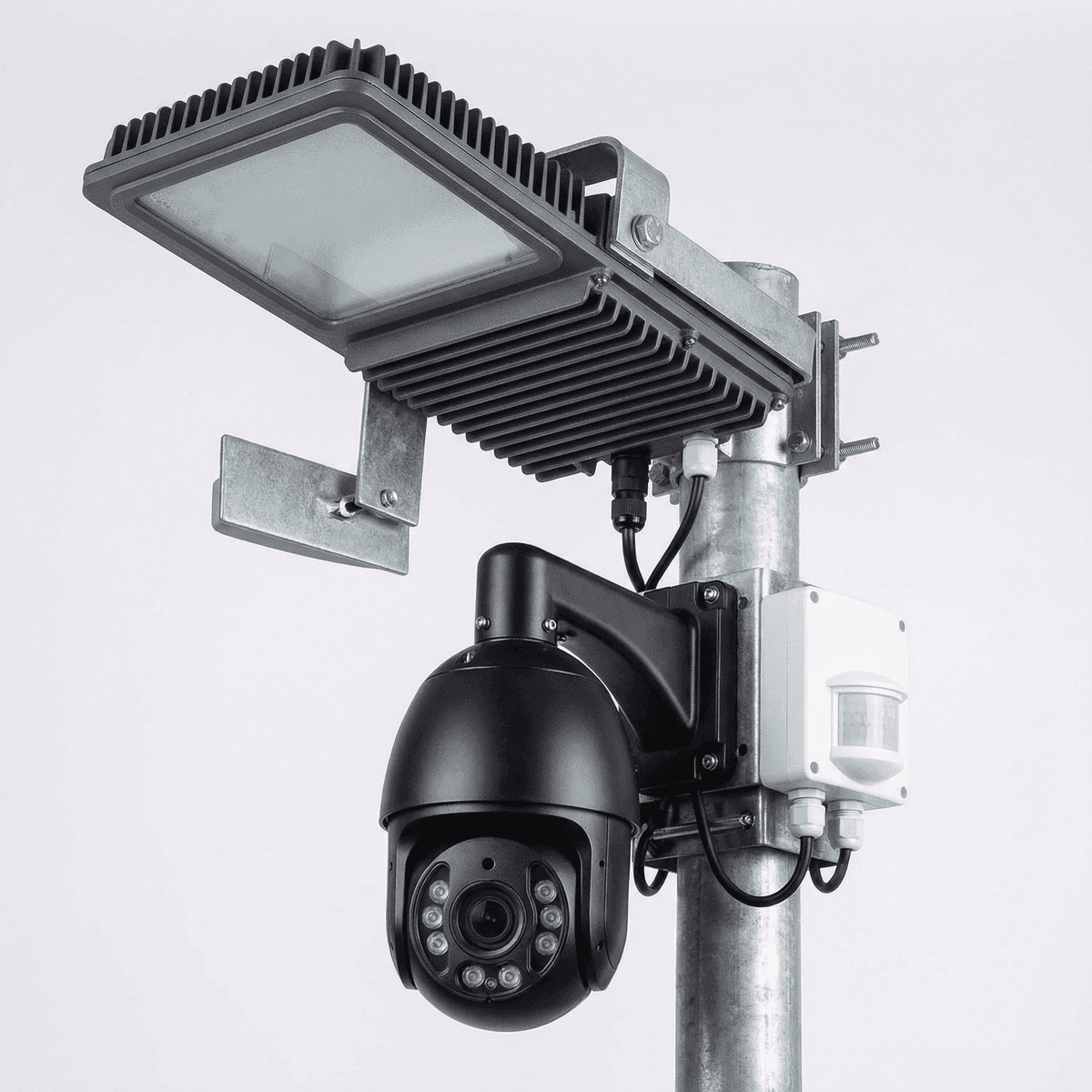
A smart solar streetlight system usually combines an LED luminaire, PV module, lithium battery, charge controller, pole, bracket set, and optional smart devices such as camera, WiFi, environmental sensor, public audio, or LED display. In SOLAR TODO projects, integrated smart poles can consolidate 4-6 roadside functions into 1 structure, which helps reduce foundations, trenching interfaces, and maintenance points. That matters in municipal roads, campuses, parks, transport corridors, and commercial streets.
According to IEA (2024), digitalization and connected infrastructure improve operational visibility across distributed energy assets. According to NREL (2024), solar resource modeling remains essential because seasonal irradiance variation can materially change annual yield and battery charging margins. For solar streetlights, that means the same 80 W or 120 W luminaire may need very different PV and battery sizes in two locations with different winter sun hours.
The International Energy Agency states, "Digital technologies can improve the efficiency, reliability and resilience of energy systems." That statement applies directly to remote-monitored streetlighting, where controller data, battery state, and fault alarms reduce blind maintenance. IRENA also states, "Data and digitalization are becoming central enablers of the energy transition," which supports using networked controls rather than isolated poles.
Core design inputs
The most reliable smart solar streetlight designs start with 8 measurable inputs, including lux target, sun hours, and autonomy days, before any pole or battery is selected.
- Road type and lighting target in lux or luminance
- Pole height, usually 6 m, 8 m, 9 m, or 10 m
- Pole spacing, often 20-30 m depending on optics
- Daily operating hours, commonly 10-14 hours
- Local peak sun hours by month
- Required autonomy, usually 2-3 days minimum
- Ambient temperature range, often -20°C to +55°C or wider
- Wind load and corrosion environment
If the project includes cameras, displays, or WiFi, the energy model must include those auxiliary loads. A 120 W LED luminaire with a 10 W camera and 8 W communication package can materially change battery sizing over 12 hours. In practice, auxiliary electronics often add 10-25% to the nightly load.
Remote Monitoring Selection and Control Architecture
Remote monitoring selection should be based on communication stability, alarm granularity, and power budget, with practical reporting intervals of 5-15 minutes and fault notification in near real time.
Remote monitoring is often the difference between a smart solar streetlight and a standalone solar lamp. A basic controller can switch light on and off, but a monitored controller can report battery voltage, state of charge, PV charging current, LED driver status, door-open alarms, tilt alarms, and communication loss. For municipal fleets above 50 poles, that data reduces manual inspection cost and improves maintenance planning.
The most common communication options are 4G, NB-IoT, LoRaWAN, and, in some hybrid sites, Ethernet or fiber backhaul through a nearby cabinet. Selection depends on local network coverage, data volume, and whether the pole carries only lighting telemetry or also video. A camera-equipped smart pole usually needs higher bandwidth than a light-only node.
What to monitor
A useful remote monitoring platform should capture at least 10 data points per pole, including battery state, PV charging current, and LED driver faults.
- Battery voltage and state of charge
- PV panel current and charging status
- LED power draw and dimming level
- Controller temperature
- Pole door status or unauthorized opening
- Communication uptime
- GPS or asset location tag
- Fault history and alarm timestamps
- Energy generation and consumption logs
- Optional camera, sensor, or display health status
According to NREL (2024), performance data improves operational decision-making for distributed energy assets. In streetlighting, that means identifying whether a failure comes from battery depletion, controller fault, PV shading, or LED driver loss before dispatching a crew. Municipal operators can then carry the right spare part on the first visit.
Selection criteria for B2B procurement
The best remote monitoring platform is the one that matches the project's asset count, cybersecurity needs, and maintenance workflow, not the one with the longest feature list.
Procurement managers should compare platforms using a short matrix. First, confirm whether the system supports individual pole control and group dimming. Second, verify offline data buffering for at least 3-7 days in case of network loss. Third, check whether APIs are available for city platforms or SCADA integration. Fourth, confirm alarm hierarchy, user permissions, and exportable maintenance logs.
For SOLAR TODO smart streetlight projects, buyers often request three control layers: local autonomous control at the pole, remote fleet monitoring at the platform, and manual override for maintenance teams. That structure prevents total loss of lighting if communication fails. Even if the cloud platform is offline, the pole should continue operating by schedule and battery logic.
IP Rating Standards and Environmental Protection
IP rating standards define how well enclosures resist dust and water ingress, and for outdoor smart streetlights the practical baseline is usually IP65 or IP66 under IEC 60529.
IP stands for Ingress Protection and is governed by IEC 60529. The first digit covers solid particle protection from 0 to 6, and the second digit covers water protection from 0 to 9. For streetlighting, the common discussion is IP65 versus IP66 rather than low indoor ratings, because dust, rain, insects, and pressure washing all affect field reliability.
An IP65 enclosure is dust-tight and protected against water jets. An IP66 enclosure is also dust-tight but resists more powerful water jets, which is often preferred for roads with heavy rain, roadside cleaning, desert dust, or coastal exposure. For luminaires, controller boxes, camera housings, and sensor compartments, that extra margin can reduce moisture-related failures.
Practical IP selection guide
Most municipal and EPC streetlight tenders should specify IP66 for luminaires and electronics, while accessory ports and connectors should be checked separately because the lowest-rated component often defines field reliability.
| Component | Typical minimum | Preferred for harsh outdoor use | Why it matters |
|---|---|---|---|
| LED luminaire | IP65 | IP66 | Protects optics, driver, and wiring from dust and jetting rain |
| Controller enclosure | IP65 | IP66 | Prevents moisture ingress into control PCB and terminals |
| Camera housing | IP66 | IP66 | Supports all-weather surveillance uptime |
| Environmental sensor box | IP54 | IP65-IP66 | Depends on sensor vent design and maintenance access |
| Pole handhole/door seals | Weather-sealed | Weather-sealed + gasket check | Weak seals can bypass enclosure rating |
| Connectors and cable glands | IP65 | IP67 where exposed | Cable entry often fails before the main enclosure |
IP rating is not the only environmental requirement. Buyers should also review corrosion protection, UV resistance, thermal range, and impact resistance. A pole with fluorocarbon coating and galvanized steel structure may still fail early if cable glands, gaskets, or battery boxes are not matched to the climate. In coastal or high-salinity zones, material selection is as important as the enclosure code.
According to IEC 60598, luminaires must meet safety requirements for outdoor use. According to IEC 62722, LED luminaire performance should be verified through rated characteristics and endurance criteria. Together with IEC 60529, these standards form the core compliance set for smart streetlight enclosure and performance review.
System Configuration, Use Cases, and Comparison Guide
System selection should match application load and multifunction needs, with 80 W campus poles, 120 W commercial poles, and 200 W tunnel entrance poles serving very different duty profiles.
A simple solar streetlight for a park path may only need an LED luminaire, PV module, battery, and controller. A smart pole on a commercial street may add camera, WiFi, public audio, and display. A tunnel entrance application may prioritize high illuminance, surveillance, and environmental sensing over public connectivity. The correct selection depends on load profile, criticality, and maintenance access.
SOLAR TODO offers multiple smart streetlight configurations that show how selection changes by use case. The 8 m Campus/Park Environmental Smart Streetlight combines an 80 W LED, AI camera, environmental sensor, WiFi, and USB charging in a 5-in-1 layout with IP66 protection and a 25-year design life. The 9 m Commercial Street 6-in-1 with Display uses a 120 W LED, 4K camera, environmental sensing, LED display, WiFi, and IP public audio with more than 150 km/h wind resistance. The 10 m Tunnel Entrance Smart Pole uses a 200 W LED, AI camera, environmental sensor, and LED display, targeting about 300 lux in the critical approach zone.
Comparison table for selection
A comparison table helps EPC buyers match pole height, load, and application before asking for an offline quotation.
| Model | Main application | Pole height | Core load | Functions | Protection | Indicative installed price |
|---|---|---|---|---|---|---|
| 8m Campus/Park Environmental | Campus, park, green corridor | 8 m | 80 W LED | 5-in-1 | IP66 | USD 1,400-1,600 |
| 9m Commercial Street 6-in-1 | Commercial street, mixed-use district | 9 m | 120 W LED | 6-in-1 | IP66 | Project-based quotation |
| 10m Tunnel Entrance Smart Pole | Tunnel entrance, threshold zone | 10 m | 200 W LED | 4-in-1 | IP66 | USD 1,800-2,200 |
Sample deployment scenario (illustrative): a municipality comparing separate assets against a 6-in-1 smart pole may replace 1 passive light pole, 1 CCTV mast, 1 speaker point, 1 environmental node, and 1 signage structure with 1 integrated asset. Based on product data, that can reduce visible street furniture by up to 60% and trenching interfaces by 30-40%. For dense urban roads, that is often a stronger procurement argument than lumens alone.
EPC Investment Analysis and Pricing Structure
EPC investment analysis should compare FOB supply, CIF delivery, and turnkey installation, with typical volume discounts of 5%, 10%, and 15% at 50, 100, and 250 units.
For B2B procurement, price comparison only works when scope is clear. FOB Supply usually covers pole, luminaire, solar module, battery, controller, brackets, and factory testing. CIF Delivered adds freight and insurance to the destination port. EPC Turnkey adds engineering review, foundation interface guidance, installation, commissioning, training, and acceptance support.
A practical three-tier structure looks like this:
| Pricing layer | What it typically includes | Best for |
|---|---|---|
| FOB Supply | Equipment only, ex-factory terms, standard documentation | Importers and local installers |
| CIF Delivered | Equipment, marine freight, insurance, destination port delivery | Buyers needing landed cost visibility |
| EPC Turnkey | Supply, installation, commissioning, testing, training, project coordination | Municipal, campus, and developer projects |
For smart streetlight fleets, volume discounts commonly follow this structure:
- 50+ units: 5% discount
- 100+ units: 10% discount
- 250+ units: 15% discount
Payment terms are commonly 30% T/T in advance and 70% against B/L, or 100% L/C at sight for qualified transactions. Financing may be available for large projects above USD 1,000K. For project discussion, buyers can contact cinn@solartodo.com or call +6585559114.
ROI depends on the baseline alternative. If the comparison is against conventional grid-powered poles plus separate CCTV, display, and sensor assets, integrated smart poles can reduce civil interfaces by 30-40% and maintenance dispatch points from 4-6 assets to 1 location. If the comparison is against non-monitored solar lights, remote monitoring can reduce fault diagnosis time and improve uptime, which is often more valuable than the energy savings alone.
For SOLAR TODO buyers, warranty and lifecycle review should include LED driver life, battery replacement interval, controller warranty, coating system, and spare parts strategy. A 25-year pole design life does not mean every electronic component lasts 25 years. Procurement documents should separate structural life from battery and electronics warranty periods.
FAQ
Smart solar streetlight buyers usually ask about IP66, battery autonomy, remote monitoring, and EPC scope because those 4 items determine most lifecycle cost and maintenance risk.
Q: What is a smart solar streetlight system? A: A smart solar streetlight system is an outdoor lighting unit that combines an LED luminaire, solar panel, battery, controller, and communication functions in one asset. Typical poles are 6-10 m high, and smart versions add remote monitoring, dimming, cameras, sensors, or displays to reduce field maintenance and improve asset visibility.
Q: How do I size the solar panel and battery correctly? A: Start with nightly load in watt-hours, then add losses, local winter sun hours, and at least 2-3 autonomy days for critical roads. For example, a 120 W luminaire running 12 hours uses 1,440 Wh before controller and battery losses, so auxiliary devices must be included in the final energy model.
Q: Why is remote monitoring important for solar streetlights? A: Remote monitoring is important because it shows battery status, charging current, lighting output, and fault alarms without sending a team to every pole. In fleets above 50 units, that can reduce manual inspection frequency and shorten outage response time by more than 20% compared with non-connected assets.
Q: What IP rating should I specify for outdoor smart streetlights? A: Most outdoor projects should specify at least IP65, while IP66 is preferred for rain, dust, roadside washing, and harsher climates. The rating should cover the luminaire, controller enclosure, camera housing, connectors, and cable glands, because one weak component can compromise the whole system.
Q: What standards are most relevant for smart streetlight procurement? A: The core standards usually include IEC 60529 for IP rating, IEC 60598 for luminaire safety, and IEC 62722 for LED luminaire performance. Depending on the market and project, buyers may also review electrical installation rules, battery transport compliance, and local structural or wind-load requirements.
Q: How is a smart integrated pole different from a basic solar streetlight? A: A basic solar streetlight mainly provides lighting, while an integrated smart pole can also support camera surveillance, environmental sensing, WiFi, public audio, or LED display functions. In some layouts, 1 smart pole replaces 4-6 separate roadside devices, which can reduce trenching interfaces by 30-40%.
Q: When should I choose an 8 m, 9 m, or 10 m pole? A: Pole height depends on road width, lux target, and multifunction load. An 8 m pole often suits campuses and parks, a 9 m pole fits commercial streets, and a 10 m pole is common where higher output or broader coverage is needed, such as tunnel entrance threshold lighting.
Q: What maintenance is required after installation? A: Maintenance usually includes cleaning PV modules, checking gasket condition, verifying battery health, tightening terminals, and reviewing controller logs every 6-12 months. In dusty or coastal areas, inspection intervals may need to be shorter because dirt buildup, corrosion, and seal wear can reduce charging and enclosure performance.
Q: How should I compare FOB, CIF, and EPC pricing? A: Compare them by scope, not by headline price. FOB covers factory supply, CIF adds freight and insurance, and EPC turnkey adds engineering, installation, commissioning, and training. For fleet orders, volume discounts often start at 5% for 50 units, 10% for 100 units, and 15% for 250 units.
Q: What payment terms and financing options are typical? A: Common terms are 30% T/T in advance and 70% against B/L, or 100% L/C at sight for approved transactions. For large projects above USD 1,000K, financing may be available depending on project scope, destination market, and buyer qualification.
Q: How long do smart solar streetlight systems last? A: Structural pole life is often designed for 25 years, but electronics and batteries have shorter service intervals. LED luminaires and controllers may last many years if thermal management is correct, while battery replacement timing depends on chemistry, temperature, depth of discharge, and daily cycling profile.
Q: How do I start a project with SOLAR TODO? A: Start by sending road type, pole height, lux target, location, autonomy requirement, and any smart-device needs such as camera or display. SOLAR TODO then reviews the configuration offline, prepares a quotation, and can discuss EPC scope, volume pricing, and financing for qualified projects.
References
Reliable smart solar streetlight specifications should be checked against at least 5 authoritative standards and energy references before tender release.
- IEC 60529 (2013): Degrees of protection provided by enclosures, including IP code definitions for dust and water ingress.
- IEC 60598-1 (2024): Luminaires general requirements and tests for electrical and mechanical safety.
- IEC 62722-2-1 (2023): Luminaire performance requirements for LED luminaires used in general lighting.
- NREL (2024): PVWatts and solar resource methodology used to estimate solar production and seasonal energy yield.
- IEA (2024): Energy digitalization and system efficiency guidance relevant to connected infrastructure and distributed assets.
- IRENA (2023): Digitalization for energy transition analysis supporting data-driven operation of distributed energy systems.
- EN 50556 (2018): Road lighting support systems and integrated infrastructure considerations relevant to smart pole deployment.
Conclusion
Smart solar streetlight system design should prioritize correct load sizing, IP66 protection, and remote monitoring with 5-15 minute data intervals, because those 3 factors drive uptime, maintenance cost, and project bankability.
For municipalities, campuses, and EPC contractors, SOLAR TODO smart streetlight solutions offer a practical path to combine lighting, sensing, and communication on 1 pole with 25-year structural life and project-based offline quotation. The bottom line is simple: specify the right IP rating, verify the energy model, and buy monitoring capability from day one.
About SOLARTODO
SOLARTODO is a global integrated solution provider specializing in solar power generation systems, energy-storage products, smart street-lighting and solar street-lighting, intelligent security & IoT linkage systems, power transmission towers, telecom communication towers, and smart-agriculture solutions for worldwide B2B customers.
About the Author

SOLAR TODO
Solar Energy & Infrastructure Expert Team
SOLAR TODO is a professional supplier of solar energy, energy storage, smart lighting, smart agriculture, security systems, communication towers, and power tower equipment.
Our technical team has over 15 years of experience in renewable energy and infrastructure, providing high-quality products and solutions to B2B customers worldwide.
Expertise: PV system design, energy storage optimization, smart lighting integration, smart agriculture monitoring, security system integration, communication and power tower supply.
Cite This Article
SOLAR TODO. (2026). Smart Solar Streetlight Design, IP Rating & Monitoring. SOLAR TODO. Retrieved from https://solartodo.com/knowledge/smart-solar-streetlight-systems-system-design-remote-monitoring-selection-and-ip-rating-standards
@article{solartodo_smart_solar_streetlight_systems_system_design_remote_monitoring_selection_and_ip_rating_standards,
  title = {Smart Solar Streetlight Design, IP Rating & Monitoring},
  author = {SOLAR TODO},
  journal = {SOLAR TODO Knowledge Base},
  year = {2026},
  url = {https://solartodo.com/knowledge/smart-solar-streetlight-systems-system-design-remote-monitoring-selection-and-ip-rating-standards},
  note = {Accessed: 2026-04-25}
}
Published: April 25, 2026 | Available at: https://solartodo.com/knowledge/smart-solar-streetlight-systems-system-design-remote-monitoring-selection-and-ip-rating-standards
Subscribe to Our Newsletter
Get the latest solar energy news and insights delivered to your inbox.
View All Articles