Smart Agriculture Monitoring Systems Technical Guide

SOLARTODO Editorial Team
Solar Energy & Infrastructure Expert Team
Watch the video
TL;DR
Smart agriculture monitoring systems help farms irrigate by measured need instead of fixed schedules. On 30-50 ha projects, LoRaWAN or 4G LTE platforms using 10-minute data intervals can reduce water use by 20-50%, improve labor efficiency, and often deliver payback in 2-5 years when sensor density, control logic, and EPC scope are specified correctly.
Smart agriculture monitoring systems cut irrigation water use by up to 50%, collect field data every 10 minutes, and support 30-50 ha deployments using LoRaWAN or 4G LTE. This guide explains irrigation control logic, data transmission design, and ROI.
Summary
Smart agriculture monitoring systems cut irrigation water use by up to 50%, collect field data every 10 minutes, and support 30-50 ha deployments using LoRaWAN or 4G LTE. This guide explains irrigation control logic, data transmission design, EPC pricing, and ROI for B2B farm projects.
Key Takeaways
- Deploy soil and weather monitoring at 10-minute intervals to reduce irrigation overuse by up to 20-50% on 30-50 ha farms.
- Select LoRaWAN for 30-40 ha blocks with 1 gateway and solar nodes, or use 4G LTE where backhaul reliability is stronger than local RF coverage.
- Install 10-20 sensing points across distinct irrigation zones, slope changes, and soil types to improve control accuracy within 10 m to 500 m microclimate variation.
- Automate drip irrigation using soil moisture thresholds, evapotranspiration data, and valve control logic to cut pumping hours and stabilize root-zone moisture.
- Compare FOB, CIF, and EPC turnkey pricing early; volume orders above 50 units typically receive 5% discounts, 100+ receive 10%, and 250+ receive 15%.
- Calculate payback using water savings, labor reduction, and yield improvement; many precision-agriculture projects reach payback in about 2-5 years depending on water cost and crop value.
- Verify IEC, IEEE, ISO 11783, and IP67/IP68 compliance points before procurement to reduce integration risk and field failure rates.
- Use SOLAR TODO project design support for 30 ha tea, 40 ha orchard frost, and 50 ha desert reclamation applications where irrigation and climate data must be managed together.
Smart Agriculture Monitoring Systems Overview
Smart agriculture monitoring systems typically reduce irrigation water use by 20-50% while collecting weather and soil data every 10 minutes across 30-50 ha using LoRaWAN or 4G LTE communications.
For B2B farm operators, the core value is not the sensor itself but the control loop. A practical system measures soil moisture, soil temperature, rainfall, solar radiation, wind, humidity, and air temperature, then converts that data into irrigation commands for pumps and valves. On larger sites, this replaces 1-2 manual field checks per week with continuous monitoring and alarm-based intervention.
SOLAR TODO supplies smart agriculture packages that fit different field conditions. The Orchard Frost Early Warning 40ha package covers 40 ha with 10 field sensing points, LoRaWAN communication, solar-powered nodes, and SMS, email, and app alerts. The Tea Garden Precision Monitoring 30ha package supports 30 ha with 15 sensors or devices, 10-minute intervals, and 1 multispectral leaf scanner. The Desert Reclamation Solar+Agriculture 50ha package covers 50 ha with 20 sensors, 4G LTE communication, automated drip irrigation control, and a 500 kW solar PV backbone.
According to IRENA (2023), digitalization and control systems improve renewable-powered agricultural operations by reducing waste and improving asset utilization. According to FAO field guidance used across irrigation programs, irrigation efficiency gains depend on matching water application to crop stage and soil condition rather than fixed time schedules. That is why procurement teams should evaluate monitoring systems as a combined sensing, communications, control, and reporting platform.
The International Energy Agency states, "Digitalization can improve system efficiency, reliability and sustainability across energy end uses." In agriculture, that translates into fewer pump run-hours, tighter irrigation timing, and faster operator response when thresholds are crossed within a 10-minute reporting cycle.
Irrigation Control Logic and Field Architecture
Effective irrigation control uses 3 data layers—soil, weather, and hydraulic status—to trigger valve actions within minutes, not days, and can reduce water use by up to 50% in high-loss operations.
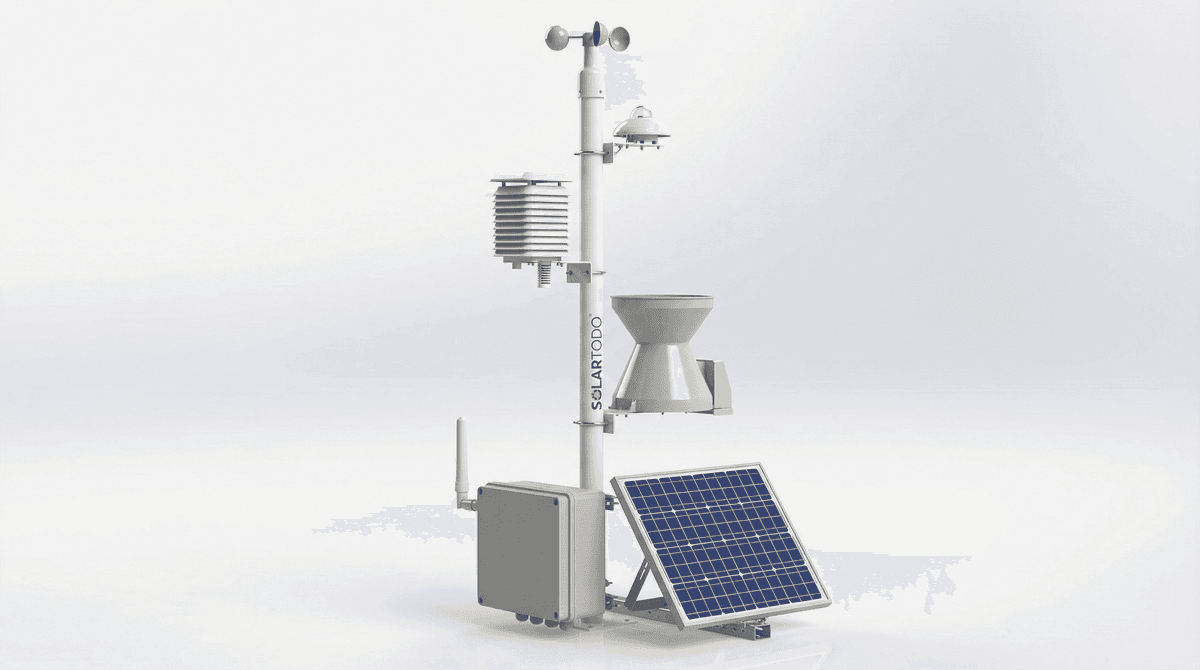
A complete control architecture usually starts with a weather station measuring 8-10 parameters. Common inputs include air temperature, relative humidity, wind speed, wind direction, rainfall, solar radiation, atmospheric pressure, and evapotranspiration. These values help estimate crop water demand and prevent irrigation during rainfall, high-wind drift periods, or low-demand hours.
The second layer is root-zone sensing. Soil probes are placed at representative depths such as 20 cm, 40 cm, or crop-specific root depths, depending on orchard, tea, or reclamation use. In the SOLAR TODO 50 ha desert reclamation configuration, 12 comprehensive soil probes and 4 water-quality monitoring points support automated drip irrigation decisions. This is important where evapotranspiration can exceed 5-10 mm/day and grid power is unstable.
The third layer is actuation. Controllers receive threshold logic from the cloud or edge gateway, then open or close solenoid valves, start pumps, or change irrigation duration by zone. A common B2B rule set includes:
- Start irrigation when volumetric water content drops below a crop-specific threshold for 2 consecutive 10-minute intervals
- Delay irrigation if rainfall exceeds a preset mm value within the last 6-12 hours
- Block irrigation during excessive wind, for example above 8-10 m/s for spray applications
- Reduce runtime when evapotranspiration forecast falls below seasonal baseline
- Trigger alarms when pressure, flow, or water-quality values move outside acceptable range
Practical zoning strategy
A useful zoning plan often needs 1 sensor cluster for each distinct soil type, elevation band, or irrigation block, not one sensor for the entire farm.
Tea estates and orchards often show major microclimate variation across 10 m to 500 m elevation changes. A 30 ha tea site may need 4-6 irrigation zones, while a 40 ha orchard may need 2-4 adjacent orchard zones with separate frost and moisture response thresholds. If procurement teams under-specify sensing density, the automation logic averages away field variability and water savings fall short.
According to NREL (2024), performance modeling accuracy improves when site inputs reflect local conditions rather than generalized assumptions. The same principle applies in irrigation controls: local sensor density improves decision quality. For that reason, SOLAR TODO typically recommends distributed sensing points rather than a single central station for fields above 20 ha.
Data Transmission, Power Design, and System Reliability
LoRaWAN supports low-power field data transmission over long distances, while 4G LTE provides direct backhaul where cellular coverage is stable and the site spans 30-50 ha or more.
Communication design determines whether the data is useful in real operations. LoRaWAN is often the preferred field protocol for orchards, tea gardens, and adjacent irrigation blocks because it supports battery-solar nodes, low bandwidth telemetry, and long range from a central gateway. In the SOLAR TODO Orchard Frost Early Warning 40ha system, LoRaWAN connects 10 field sensing points over 40 ha with solar-powered outdoor nodes and professional cloud monitoring.
4G LTE is more suitable where the site already has strong cellular service, where direct cloud upload is preferred, or where the project combines agriculture monitoring with larger power assets. The SOLAR TODO Desert Reclamation Solar+Agriculture 50ha package uses 4G LTE with 2 gateways and a 500 kW solar PV backbone, which is practical for remote sites that need autonomous operation and centralized oversight.
LoRaWAN vs 4G LTE comparison
The best communication method depends on terrain, node count, power budget, and backhaul availability rather than brand preference.
| Parameter | LoRaWAN | 4G LTE |
|---|---|---|
| Typical farm coverage model | 30-40 ha with 1 gateway | 30-50 ha with cellular backhaul |
| Node power demand | Very low, suitable for small solar kits | Higher than LoRaWAN end nodes |
| Data interval | 10 minutes typical | 10 minutes typical |
| Best use case | Many distributed sensors | Remote sites needing direct cloud link |
| Network dependency | Local gateway plus internet backhaul | Public cellular network |
| Capex structure | Lower node cost, gateway required | Higher modem cost, less local RF planning |
| Failure risk | Gateway placement and RF obstacles | Carrier coverage and SIM management |
Power design matters as much as radio choice. Outdoor nodes should follow common IP67/IP68 enclosure practice and use solar charging with LFP battery storage sized for low-sun periods. For year-round deployment, procurement teams should ask for battery autonomy assumptions, charging current, and expected uptime under winter irradiance or dust conditions. A system that reports every 10 minutes but fails after 3 cloudy days is not a control platform.
IEEE states in IEEE 1547-2018 that interoperability and reliable communications are central to distributed system performance. In agriculture, that principle extends to gateways, cloud dashboards, and controller interfaces. Reliable alarm delivery by SMS, email, and app push is often more valuable than adding another sensor type.
Water Savings ROI, Use Cases, and Performance Economics
Water savings ROI usually comes from 3 measurable lines—reduced water volume, lower labor input, and improved yield stability—with payback commonly landing in the 2-5 year range.
The strongest business case appears where water is expensive, pumping energy is unstable, or crop value is high. In the SOLAR TODO Desert Reclamation Solar+Agriculture 50ha configuration, benchmarked project economics indicate irrigation water use can fall by up to 50%, pesticide use by about 30%, and yield can improve by 15-25% when the farm team follows agronomic response protocols. Those numbers are not automatic; they depend on action after alerts and on correct zone setup.
Sample deployment scenario (illustrative): a 50 ha drip-irrigated site uses 300,000 m3 of water per season. If monitoring and control reduce use by 20%, the farm saves 60,000 m3. At a delivered water and pumping cost of $0.20/m3, annual savings equal $12,000 before labor and yield effects. If labor optimization and crop improvement add another $8,000-$20,000 per year, payback on the monitoring and control package can move into the 2-4 year range.
For orchard operators, ROI is not only about water. The Orchard Frost Early Warning 40ha system adds active frost mitigation support through wind machine control, with 10 sensing points and continuous climate tracking. Frost losses can escalate within 1-3 hours when canopy temperatures cross crop thresholds near 0°C to -2.5°C. Earlier detection protects yield, and that avoided loss can outweigh the monitoring cost in a single severe event.
For tea estates, disease timing and irrigation timing interact. The Tea Garden Precision Monitoring 30ha package combines weather, soil sensing, and 1 multispectral leaf scanner. Faster detection can reduce response delays by several hours to several days, which supports both water efficiency and crop quality management across 30 ha blocks.
Fraunhofer ISE (2024) notes that digital monitoring improves operational transparency in distributed energy and infrastructure assets. In farm operations, transparency means managers can compare zone-by-zone water application, verify valve response, and audit whether irrigation matched evapotranspiration conditions instead of relying on manual assumptions.
EPC Investment Analysis and Pricing Structure
EPC turnkey delivery combines engineering, procurement, installation, commissioning, and operator training into one scope, which reduces interface risk on 30-50 ha smart agriculture projects.
For B2B buyers, pricing must be reviewed in 3 levels because hardware-only comparisons often miss communications, installation labor, and commissioning scope. SOLAR TODO typically structures projects as FOB Supply, CIF Delivered, or EPC Turnkey depending on whether the buyer has local installers, import capability, and controls integration resources.
Three-tier pricing model
The 3-tier model helps procurement teams compare total landed cost against internal execution capability.
| Pricing tier | What it includes | Best fit |
|---|---|---|
| FOB Supply | Equipment only, factory delivery terms, packing list, manuals | Buyers with local freight and installation teams |
| CIF Delivered | Equipment, export handling, sea freight, insurance to destination port | Buyers wanting predictable landed logistics |
| EPC Turnkey | Design, equipment, logistics, installation, commissioning, training, handover | Buyers seeking single-responsibility project delivery |
A typical EPC scope includes sensor layout design, gateway placement, controller programming, valve and pump interface checks, dashboard setup, alarm configuration, SAT/FAT coordination, and operator training. For solar-powered agricultural systems, EPC may also include PV supply, LFP battery sizing, mounting structures, and cable routing. On larger integrated projects above $1,000K, financing is available subject to project review.
Volume pricing guidance should be discussed early in framework agreements. Standard guidance is:
- 50+ units: 5% discount
- 100+ units: 10% discount
- 250+ units: 15% discount
Payment terms are typically 30% T/T deposit and 70% against B/L, or 100% L/C at sight. For quotation requests, buyers can contact [email protected]. Because SOLAR TODO works on an inquiry-to-offline quotation model, final pricing depends on hectare range, sensor count, communication method, valve count, cloud tier, and whether the project is supply-only or EPC turnkey.
ROI review checklist for procurement teams
A sound investment review should quantify at least 6 cost and benefit lines before approval.
- Water volume saved per season in m3
- Pumping energy saved in kWh or fuel liters
- Labor hours reduced per month
- Yield uplift percentage, such as 5-25%
- Loss avoidance from frost, drought, or disease alerts
- Annual cloud, SIM, maintenance, and calibration cost
The International Renewable Energy Agency states, "Data and digital tools can improve planning, operation and maintenance of energy-linked infrastructure." For irrigation projects, the bottom-line question is simple: does the control system save more in water, labor, and crop protection than it costs over 3-5 years?
Selection Guide, Compliance, and Procurement Checklist
The right system choice depends on 5 variables—hectares, crop type, communication method, control depth, and power availability—and those variables determine both ROI and maintenance burden.
B2B buyers should start with field segmentation. A 30 ha tea site with disease pressure needs different sensors than a 40 ha orchard focused on frost events or a 50 ha desert reclamation site focused on water quality and autonomous power. SOLAR TODO offers all 3 reference configurations, which helps buyers compare architecture by use case instead of buying a generic sensor bundle.
Product-fit comparison
The table below summarizes how the three SOLAR TODO configurations align with common farm requirements.
| Product | Coverage | Communications | Main control focus | Key included devices |
|---|---|---|---|---|
| Tea Garden Precision Monitoring 30ha | 30 ha | LoRaWAN | Irrigation timing + AI disease response | 15 sensors/devices, 1 multispectral leaf scanner |
| Orchard Frost Early Warning 40ha | 40 ha | LoRaWAN | Frost alerts + wind machine control | 10 sensing points, professional weather + soil monitoring |
| Desert Reclamation Solar+Agriculture 50ha | 50 ha | 4G LTE | Automated drip irrigation + water quality | 20 sensors, 12 soil probes, 4 water-quality points, 500 kW PV |
Compliance and interoperability should be checked before PO issuance. ISO 11783 matters for agricultural data interoperability. IEEE 1547-2018 matters where distributed power interfaces are included. IEC and UL requirements may apply to power electronics, enclosures, and electrical safety depending on market. Buyers should also verify IP67/IP68 outdoor protection, calibration intervals, and spare parts availability for at least 2 years.
A practical procurement checklist includes 10 items: sensor list, measurement ranges, communication topology, battery autonomy, IP rating, cloud license term, alarm methods, controller I/O count, commissioning scope, and warranty terms. On the SOLAR TODO desert reclamation package, the stated hardware warranty is 2 years with 1 year professional cloud service, which gives buyers a clear baseline for lifecycle budgeting.
FAQ
A well-designed smart agriculture monitoring system usually combines 10-minute data intervals, automated irrigation logic, and 20-50% water savings when the farm team acts on the alerts.
Q: What is a smart agriculture monitoring system? A: A smart agriculture monitoring system is a field platform that collects weather, soil, and equipment data and converts it into irrigation or agronomic actions. Typical systems report every 10 minutes, use LoRaWAN or 4G LTE, and support 30-50 ha deployments with cloud dashboards, alarms, and controller outputs.
Q: How does irrigation control work in these systems? A: Irrigation control works by comparing live field data against preset thresholds such as soil moisture, rainfall, evapotranspiration, and pressure status. When values cross the defined limits for 1-2 reporting cycles, the controller can open valves, start pumps, delay irrigation, or send alarms for operator approval.
Q: What communication method is better, LoRaWAN or 4G LTE? A: LoRaWAN is usually better for low-power distributed sensors across 30-40 ha where one gateway can collect data from many solar nodes. 4G LTE is often better for remote sites needing direct cloud backhaul, especially when the project also includes larger energy assets or limited local RF planning capacity.
Q: How much water can a monitoring and control system save? A: Water savings depend on the baseline practice, crop, and irrigation method, but many projects target 20-50% reduction. The largest gains appear where farms currently irrigate by fixed schedules instead of root-zone measurements, rainfall logic, and evapotranspiration-based control.
Q: What sensors are usually required for a 30-50 ha farm? A: Most 30-50 ha projects need one professional weather station plus multiple soil probes placed by irrigation zone, soil type, or elevation band. A typical package may include 10-20 sensing points, measuring temperature, humidity, rainfall, solar radiation, pressure, wind, soil moisture, soil temperature, and sometimes water quality.
Q: How fast is the ROI for smart agriculture monitoring systems? A: Payback commonly falls in the 2-5 year range when the project cuts water volume, pumping hours, labor, and crop loss. ROI improves when water costs are high, crop value is high, or the system also prevents frost or disease losses that would otherwise occur within hours or days.
Q: What does EPC turnkey delivery include for agriculture monitoring? A: EPC turnkey delivery usually includes engineering design, equipment supply, logistics, installation, commissioning, dashboard setup, controller programming, and operator training. This model reduces interface risk because one contractor manages the full scope from sensor layout to final site acceptance testing.
Q: How are FOB, CIF, and EPC prices different? A: FOB covers equipment supply at factory terms, CIF adds freight and insurance to the destination port, and EPC includes delivery plus installation and commissioning. For larger orders, standard volume guidance is 5% discount at 50+ units, 10% at 100+, and 15% at 250+ units.
Q: What payment terms and financing options are available? A: Standard payment terms are 30% T/T deposit and 70% against B/L, or 100% L/C at sight. Financing may be available for large projects above $1,000K, subject to project review, scope, destination market, and buyer qualification.
Q: What maintenance is required after installation? A: Maintenance usually includes sensor cleaning, calibration checks, battery health review, gateway inspection, SIM or cloud service management, and valve/controller testing. Most operators should plan quarterly visual checks and at least one annual technical inspection, especially for IP67/IP68 outdoor nodes exposed to dust, rain, or heat.
Q: How do I choose between the 30 ha, 40 ha, and 50 ha configurations? A: Choose by agronomic priority and communications design, not only by hectare count. The 30 ha tea package fits disease and irrigation monitoring, the 40 ha orchard package fits frost warning and wind machine control, and the 50 ha desert package fits automated drip irrigation with water-quality monitoring and solar-backed operation.
Q: What warranty and cloud service terms should buyers check? A: Buyers should verify hardware warranty duration, cloud license period, spare parts support, and calibration responsibilities before signing. For example, the desert reclamation package lists a 2-year hardware warranty and 1-year professional cloud service, which should be reflected clearly in the quotation and acceptance documents.
References
Authoritative standards and industry references show that 10-minute telemetry, interoperable control interfaces, and standards-based hardware selection improve reliability and procurement confidence.
- NREL (2024): PVWatts Calculator methodology and site-based performance modeling used for estimating solar-powered system energy availability.
- IEEE (2018): IEEE 1547-2018, standard for interconnection and interoperability of distributed energy resources with electric power system interfaces.
- ISO (2017): ISO 11783 series, agricultural electronics and data communication standard used for interoperability in agricultural equipment environments.
- IRENA (2023): Digitalization and renewable energy integration guidance relevant to monitoring, operation, and infrastructure efficiency.
- IEA (2024): Energy system digitalization and operational efficiency guidance applicable to remote monitoring and control architectures.
- Fraunhofer ISE (2024): Monitoring and performance analysis publications supporting data-driven operation of distributed technical assets.
- WMO (2023): Weather observation guidance for field measurement quality, station siting, and data consistency in environmental monitoring.
- IEC (2021-2023): IEC electrical and equipment safety framework used as a procurement reference for compliant power and control components in outdoor systems.
Conclusion
Smart agriculture monitoring systems deliver the best ROI when 10-minute data, zone-based control, and reliable LoRaWAN or 4G LTE communications are matched to a 30-50 ha farm’s actual irrigation risk.
For most B2B projects, the bottom line is clear: a properly specified SOLAR TODO system can cut water use by 20-50%, improve response time from days to minutes, and justify investment within 2-5 years when EPC scope, communications design, and agronomic action plans are defined before procurement.
About SOLARTODO
SOLARTODO is a global integrated solution provider specializing in solar power generation systems, energy-storage products, smart street-lighting and solar street-lighting, intelligent security & IoT linkage systems, power transmission towers, telecom communication towers, and smart-agriculture solutions for worldwide B2B customers.
About the Author

SOLARTODO Editorial Team
Solar Energy & Infrastructure Expert Team
SOLAR TODO is a professional supplier of solar energy, energy storage, smart lighting, smart agriculture, security systems, communication towers, and power tower equipment.
Our technical team has over 15 years of experience in renewable energy and infrastructure, providing high-quality products and solutions to B2B customers worldwide.
Expertise: PV system design, energy storage optimization, smart lighting integration, smart agriculture monitoring, security system integration, communication and power tower supply.
Cite This Article
SOLARTODO Editorial Team. (2026). Smart Agriculture Monitoring Systems Technical Guide. SOLARTODO. Retrieved from https://solartodo.com/knowledge/smart-agriculture-monitoring-systems-technical-guide-irrigation-control-data-transmission-and-water-savings-roi
@article{solartodo_smart_agriculture_monitoring_systems_technical_guide_irrigation_control_data_transmission_and_water_savings_roi,
  title = {Smart Agriculture Monitoring Systems Technical Guide},
  author = {SOLARTODO Editorial Team},
  journal = {SOLARTODO Knowledge Base},
  year = {2026},
  url = {https://solartodo.com/knowledge/smart-agriculture-monitoring-systems-technical-guide-irrigation-control-data-transmission-and-water-savings-roi},
  note = {Accessed: 2026-09-14}
}
Published: July 12, 2026 | Available at: https://solartodo.com/knowledge/smart-agriculture-monitoring-systems-technical-guide-irrigation-control-data-transmission-and-water-savings-roi
Subscribe to Our Newsletter
Get the latest solar energy news and insights delivered to your inbox.
View All Articles