Overcoming fuel theft in 4G/5G base stations with Telecom…

SOLAR TODO
Solar Energy & Infrastructure Expert Team
Watch the video
TL;DR
Fuel theft at 4G/5G base stations is best reduced by lowering diesel dependence, not just adding guards. A hybrid telecom tower power system with 3-10 kW solar, 5-30 kWh lithium batteries, and remote fuel telemetry can cut generator runtime by 50-80%, reduce refueling frequency, and deliver payback in roughly 2-5 years when avoided theft, lower maintenance, and fewer outages are included.
Telecom tower power solutions can cut diesel runtime by 50-80%, reduce site fuel handling by 70%+, and shrink theft exposure at 4G/5G base stations that often consume 5-20 kWh/day. The practical fix is hybrid power: solar, lithium storage, remote monitoring, and tighter fuel controls.
Summary
Telecom tower power solutions can cut diesel runtime by 50-80%, reduce site fuel handling by 70%+, and shrink theft exposure at 4G/5G base stations that often consume 5-20 kWh/day. The practical fix is hybrid power: solar, lithium storage, remote monitoring, and tighter fuel controls.
Key Takeaways
- Replace diesel-only operation with hybrid solar plus battery systems to reduce generator runtime by 50-80% at off-grid or weak-grid telecom sites.
- Size battery storage for at least 1.0-1.5 days of critical load, which often means 5-30 kWh depending on BTS, cooling, and transmission demand.
- Add remote telemetry with fuel-level sensing, door alarms, and runtime analytics to detect 5-10% abnormal fuel loss before it becomes chronic theft.
- Select compact monopole or shared-pole sites with smaller fenced areas, which can reduce unauthorized access points by 1-2 perimeter zones compared with larger compounds.
- Standardize EPC contracts into FOB, CIF, and turnkey models, and apply volume discounts of 5% at 50+, 10% at 100+, and 15% at 250+ sites.
- Use lithium batteries with 4,000-6,000 cycle capability and hybrid controllers to shift night loads away from diesel for 6-12 hours per day.
- Specify structural and electrical compliance against TIA-222-H, IEC grounding practice, and IEEE backup-power monitoring principles to reduce outage and safety risk.
- Calculate theft-avoidance ROI by combining lower diesel purchases, fewer refueling trips, and reduced outage losses, with payback commonly falling in the 2-5 year range.
Why Fuel Theft Happens at 4G/5G Base Stations
Fuel theft at telecom sites usually comes from repeated diesel handling, low-visibility compounds, and backup systems that may run 6-18 hours per day in weak-grid areas.
At many 4G and 5G base stations, diesel is still the default backup or primary energy source when grid reliability is poor. A single remote site may store hundreds of liters of fuel, while operators often depend on manual refueling logs and periodic site visits. That combination creates a control gap between actual consumption and reported consumption.
The problem is operational, not only criminal. If a site load is 2-5 kW and the generator runs longer than expected because batteries are undersized or degraded, fuel use rises and theft becomes harder to distinguish from inefficiency. According to the International Energy Agency, digital infrastructure electricity demand continues to grow as mobile traffic expands, which means power-system losses matter more in 2025-2030 network planning.
Fuel theft also increases outage risk. When diesel stock is lower than reported, the generator may fail during a grid interruption, causing dropped traffic, SLA penalties, and emergency dispatch costs. For tower companies and mobile network operators, the direct cost is not only lost fuel; it is also truck rolls, technician time, and degraded network availability.
The International Energy Agency states, "Digitalisation is transforming energy systems and creating new demand patterns," which is directly relevant to telecom power planning because every extra hour of backup runtime increases both fuel exposure and operating cost. In practice, the best anti-theft strategy is to reduce diesel dependence first, then tighten control of the remaining fuel chain.
Telecom Tower Power Solutions That Reduce Theft Exposure
Hybrid telecom power systems reduce fuel theft by cutting diesel runtime 50-80%, shifting 6-12 hours of daily load to batteries, and making every liter consumed easier to verify.
The most effective solution is a layered architecture: solar PV, lithium battery storage, hybrid controller, rectifier, remote monitoring, and a right-sized generator. Instead of treating diesel as the main energy source, the system uses diesel as the last backup layer. This reduces site deliveries, lowers stored fuel volume, and narrows the window for siphoning or false reporting.
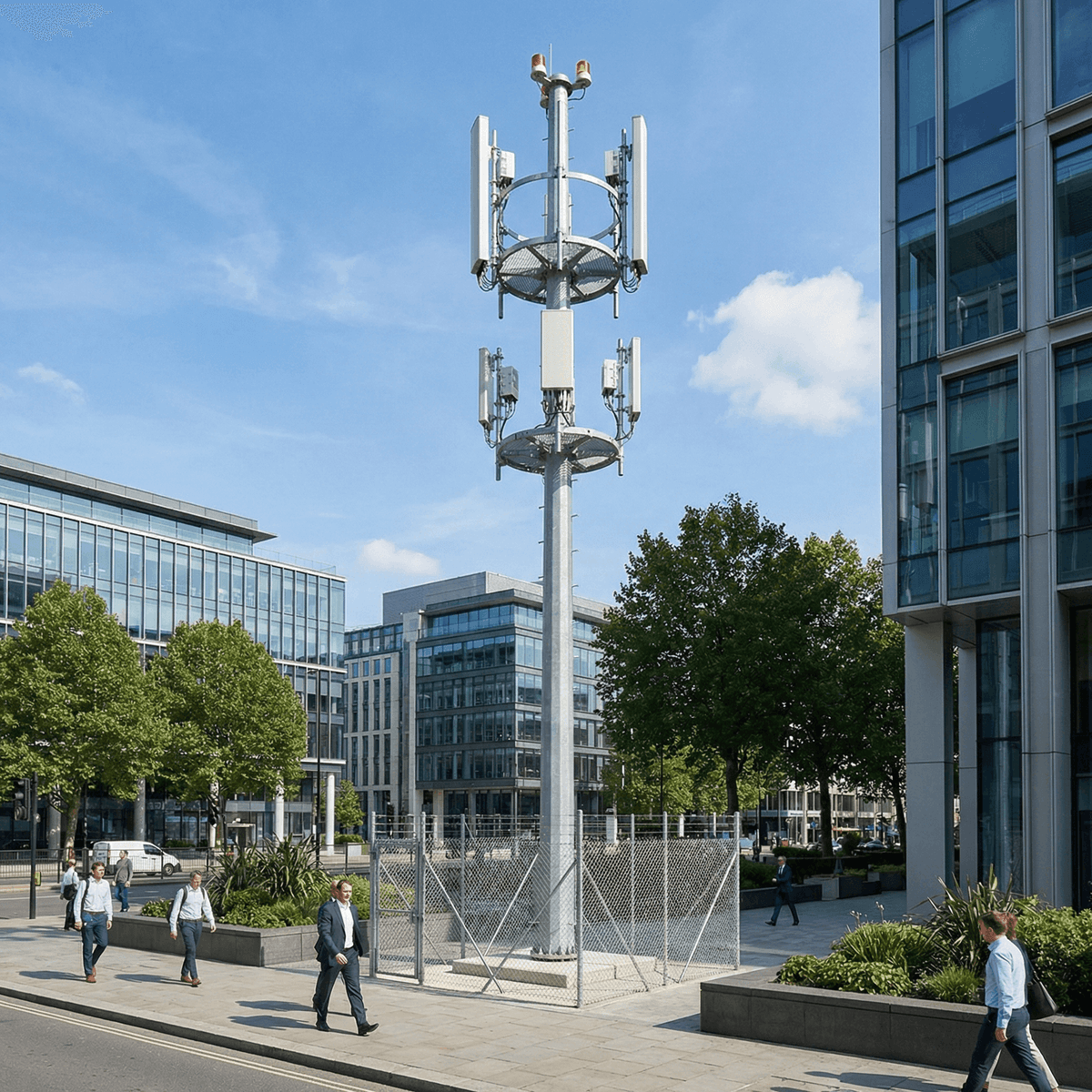
For many B2B buyers, the power solution must match the tower format. SOLAR TODO supplies telecom tower structures and related energy systems for corridor, industrial, and shared-infrastructure deployment. A compact tower footprint matters because a smaller site often has fewer access points, less fencing complexity, and simpler surveillance coverage than a larger diesel-centric compound.
Hybrid architecture for 4G/5G sites
A practical hybrid telecom site often combines 3-10 kW of solar PV, 5-30 kWh of lithium storage, and a generator sized only for peak deficit or extended autonomy. For a base station with a 2.5 kW average load, a 20 kWh battery can cover about 8 hours before depth-of-discharge limits and conversion losses are considered.
This architecture changes the theft equation in four ways:
- It reduces diesel deliveries per month.
- It lowers on-site fuel inventory.
- It creates digital records for runtime, charging, and discharge cycles.
- It separates abnormal fuel use from normal power demand.
According to NREL (2024), solar-plus-storage modeling improves forecast accuracy for distributed energy operation when load and irradiance are measured together. For telecom operators, that means expected generator runtime can be benchmarked against battery state-of-charge, PV yield, and actual BTS load instead of relying on handwritten fuel logs.
Remote monitoring and fuel accountability
Remote telemetry should be treated as mandatory, not optional, when theft risk is material. A standard monitoring package can include fuel-level sensors, generator controller data, battery SOC, rectifier alarms, cabinet door contacts, and tower-site intrusion alerts. If a site historically consumes 300 liters per month and telemetry shows runtime consistent with only 220 liters, the 80-liter gap can be flagged immediately.
IEEE states in backup-power monitoring practice that measurement and interoperability improve reliability decisions. In telecom use, the same principle applies to theft control: if runtime hours, output kWh, and fuel-level changes do not align, operators can identify loss within 1 service cycle instead of after 2-3 months.
Tower type and site layout matter
Tower selection does not stop theft by itself, but it affects site security design. A 40 m monopole with about a 3 m footprint can simplify fencing and camera coverage compared with a larger compound around legacy power shelters. SOLAR TODO's 40m Monopole Industrial Zone Coverage Slip-Joint and 45m Monopole Highway Corridor Flanged are relevant where operators need high-capacity wireless coverage with limited land take.
For mixed utility corridors, the 12m Distribution Telecom Shared Pole can reduce duplicate infrastructure by 30-50% versus separate power and telecom poles in short rights-of-way. Fewer separate structures can mean fewer isolated assets to patrol, especially on routes below 5 km where service access is already constrained.
Technical Design Priorities for Anti-Theft Telecom Power Systems
The best anti-theft design combines 40-50 m/s structural planning, 4,000-6,000 battery cycles, and metered power data so operators can compare fuel use against real site load.
A power system should be specified from the load upward. Start with the telecom demand profile: radio units, baseband, microwave, cooling, aviation lights if required, and auxiliary security devices. A small rural 4G site may average 1.5-2.5 kW, while a multi-band 5G macro site with active cooling can move toward 4-8 kW. Once the real load is known, battery autonomy and generator sizing become measurable rather than approximate.
Recommended design stack
For most weak-grid and off-grid telecom projects, procurement teams should evaluate these design elements:
- Solar PV array sized to offset daytime base load, often 3-10 kW per site.
- Lithium battery bank sized for 6-24 hours of autonomy, often 5-30 kWh.
- Hybrid controller with generator auto-start logic and SOC thresholds.
- Fuel tank sensor with tamper alarm and event log.
- DC rectifier and distribution with remote communications.
- CCTV, access control, and cabinet door status.
- Grounding and lightning protection aligned with IEC electrical safety practice.
The battery chemistry matters. Lithium iron phosphate is common because 4,000-6,000 cycles at partial depth of discharge can materially reduce lifecycle cost versus frequent generator operation. If diesel runtime falls from 12 hours per day to 3 hours per day, maintenance intervals, oil use, and refueling frequency also decline.
Comparison of common telecom power approaches
The table below summarizes how buyers typically compare diesel-heavy and hybrid configurations.
| Power approach | Typical diesel runtime | Fuel theft exposure | Typical capex | Opex trend | Best use case |
|---|---|---|---|---|---|
| Diesel-only BTS power | 12-24 h/day | High | Low initial | High | Short-term emergency deployment |
| Generator + lead-acid backup | 6-18 h/day | High to medium | Medium | High | Legacy retrofit with limited budget |
| Solar + lithium + generator hybrid | 2-8 h/day | Low to medium | Medium to high | Lower | Weak-grid and off-grid 4G/5G sites |
| Solar + lithium, no generator | 0 h/day | Very low | High | Lowest | Stable solar resource and low critical load |
According to IRENA (2024), solar PV generation costs remain among the lowest-cost electricity options globally, supporting the business case for replacing diesel runtime with solar energy wherever site irradiance and land or canopy space are available. For telecom networks, the decision is less about headline LCOE and more about avoided fuel loss, avoided outages, and lower service logistics.
UL notes in stationary battery safety guidance that certified storage systems improve installation consistency and hazard control. For tower operators, that matters because anti-theft upgrades should not create new compliance gaps in battery rooms, outdoor cabinets, or generator interfaces.
EPC Investment Analysis and Pricing Structure
A telecom tower hybrid power EPC package can reduce diesel cost exposure by 30-70% and often reaches payback in 2-5 years when fuel theft, truck rolls, and outage losses are included.
For B2B procurement, EPC means Engineering, Procurement, and Construction delivered as one coordinated scope. In telecom power, that usually includes load assessment, structural interface review, solar and battery sizing, equipment supply, civil and electrical installation, commissioning, remote monitoring setup, and performance documentation. Where tower and power packages are combined, SOLAR TODO can align tower selection with the energy architecture to reduce interface risk.
Three commercial models are commonly used:
- FOB Supply: equipment supplied ex-works or FOB port, with buyer managing freight, customs, and installation.
- CIF Delivered: equipment supplied with freight and insurance to destination port, with local installation by buyer or local EPC.
- EPC Turnkey: full delivery including design review, supply, installation, testing, and handover.
Indicative volume pricing guidance for multi-site programs should follow a standard framework:
- 50+ sites: about 5% discount.
- 100+ sites: about 10% discount.
- 250+ sites: about 15% discount.
Payment terms for telecom infrastructure orders commonly follow:
- 30% T/T deposit + 70% against B/L.
- 100% L/C at sight for qualified transactions.
Financing can be considered for larger projects above $1,000K, especially when the operator can document diesel savings and network uptime benefits across a portfolio of sites. For quotation support, EPC discussion, and project packaging, contact [email protected].
Sample ROI logic for anti-theft upgrades
Sample deployment scenario (illustrative): a remote base station uses 400 liters of diesel per month before upgrade. After adding 5 kW solar, 20 kWh lithium storage, and telemetry, diesel use drops to 160 liters per month. If 40 liters per month of prior consumption was theft or unverified loss, the site avoids both 240 liters of technical fuel use and 40 liters of shrinkage each month.
That type of site can produce savings from four lines at once:
- Lower fuel purchases.
- Fewer refueling trips.
- Lower generator maintenance hours.
- Fewer outage incidents caused by empty tanks.
For portfolios of 50-250 sites, these savings often justify hybrid conversion faster than diesel-price analysis alone. The procurement decision should therefore compare total cost of ownership over 3-5 years, not generator capex only.
Use Cases and Selection Guide for SOLAR TODO Telecom Tower Projects
The right telecom tower power solution depends on whether the site is a 12 m shared pole, a 40 m industrial monopole, or a 45 m highway monopole with 3-10 kW solar and 5-30 kWh storage.
SOLAR TODO products are relevant where power reliability and physical security must be addressed together. A 45 m monopole along a highway corridor may prioritize compact land use, controlled access, and remote telemetry because service visits are expensive and roadside fuel handling creates repeated exposure. A 40 m industrial-zone monopole may prioritize colocation, CCTV backhaul, and cleaner battery-backed operation where diesel noise and emissions are operational concerns.
For lower-height utility sharing, the 12 m distribution telecom shared pole is useful when the project combines 10 kV distribution and telecom equipment on one structure. In those cases, power-system design must respect both telecom uptime and electrical clearance requirements. If the route is short and access is frequent, operators may choose smaller battery banks and tighter telemetry thresholds. If the route is remote, higher battery autonomy usually makes better economic sense.
Practical selection checklist
Use the following shortlist during specification and RFQ review:
- Define average and peak site load in kW, not only generator size in kVA.
- Set battery autonomy target at 6, 12, or 24 hours based on outage history.
- Quantify monthly diesel use and suspected loss in liters.
- Select tower footprint based on land, access control, and maintenance method.
- Require remote monitoring points for fuel, SOC, runtime, and intrusion.
- Compare 3-year and 5-year TCO, not first cost only.
- Verify structural design references such as TIA-222-H and local code checks.
BloombergNEF has repeatedly highlighted the importance of bankable supply chains for energy assets, and that applies to telecom batteries, controllers, and PV modules as much as to generation projects. Buyers should therefore request certification, warranty terms, spare-parts planning, and data visibility before awarding multi-site contracts.
The International Renewable Energy Agency states, "Renewables are powering down the fossil fuel age," and while telecom towers are a small part of total energy demand, that statement fits tower portfolios where diesel dependence is still driving avoidable cost and loss. SOLAR TODO should be evaluated where the buyer needs both telecom structure supply and power-system coordination under one B2B process.
FAQ
Fuel theft in telecom towers can be reduced fastest by combining 5-30 kWh batteries, remote fuel telemetry, and hybrid controls that cut generator runtime to 2-8 hours per day.
Q: What causes fuel theft at 4G/5G base stations most often? A: Fuel theft usually happens where diesel deliveries, manual logs, and low-visibility compounds overlap. If a site runs a generator 6-18 hours per day and has no live fuel sensor, operators cannot easily separate normal consumption from siphoning, false reporting, or unapproved use.
Q: How do hybrid telecom power systems reduce fuel theft? A: Hybrid systems reduce theft by cutting diesel dependence first. When solar PV and 5-30 kWh of battery storage carry part of the load, the generator runs fewer hours, fuel deliveries become less frequent, and abnormal fuel loss is easier to identify from telemetry.
Q: What battery size is typical for a telecom base station anti-theft upgrade? A: Many projects use 5-30 kWh depending on whether the BTS load is near 1.5 kW or above 5 kW. A common target is 6-12 hours of autonomy, which covers evening operation and reduces night generator runtime when theft risk is often higher.
Q: Is solar power practical for 4G/5G telecom towers in weak-grid areas? A: Yes, solar is practical where daytime irradiance can offset a meaningful share of site load. Arrays in the 3-10 kW range are common for telecom support, especially when paired with lithium storage and a generator for extended low-sun or emergency periods.
Q: How can operators verify whether fuel loss is theft or real generator consumption? A: The best method is to compare four data points: generator runtime, output energy, battery charging records, and tank-level change. If measured runtime and delivered kWh do not match the reported fuel draw, the operator has a defensible basis for investigation.
Q: What role does tower type play in preventing fuel theft? A: Tower type affects site layout, fencing, and surveillance coverage. A compact 40 m or 45 m monopole site can be easier to secure than a larger compound because there are fewer perimeter lines, fewer blind spots, and less room for unsecured fuel handling.
Q: What is included in an EPC telecom tower power package? A: EPC usually includes load study, power-system sizing, equipment supply, installation, commissioning, and monitoring setup. In a turnkey package, the contractor also coordinates civil works, electrical integration, test records, and handover documents for the full site.
Q: How are telecom tower power projects usually priced? A: Pricing is commonly structured as FOB Supply, CIF Delivered, or EPC Turnkey. For portfolio orders, a practical volume guide is 5% discount at 50+ sites, 10% at 100+, and 15% at 250+, subject to scope, battery size, and logistics.
Q: What payment terms are typical for B2B telecom tower projects? A: Standard terms often include 30% T/T in advance and 70% against B/L. For some international contracts, 100% L/C at sight is also used, especially where the buyer requires bank-backed trade terms and the order value is substantial.
Q: What payback period should buyers expect from anti-theft power upgrades? A: Many hybrid upgrades pay back in about 2-5 years when diesel savings, lower maintenance, fewer refueling trips, and avoided theft are included. The exact result depends on site load, local fuel price, outage frequency, and how much unverified fuel loss existed before retrofit.
Q: What maintenance is required after shifting from diesel-heavy systems to hybrid power? A: Maintenance usually shifts from frequent fuel and engine service toward periodic battery, controller, and PV inspection. Generators still need scheduled checks, but lower runtime can reduce oil-change frequency and service visits compared with diesel-dominant operation.
Q: Why consider SOLAR TODO for telecom tower power projects? A: SOLAR TODO is relevant when the buyer wants tower structure supply and power-system coordination in one B2B workflow. That is useful for 12 m shared poles, 40 m industrial monopoles, and 45 m highway monopoles where site footprint, uptime, and energy logistics must be planned together.
References
- NREL (2024): PVWatts and distributed solar performance modeling used to estimate PV output and hybrid system contribution.
- IEA (2024): Energy and digitalisation analysis describing rising electricity demand from digital infrastructure and the need for efficient power systems.
- IRENA (2024): Renewable Power Generation Costs report showing solar PV remains one of the lowest-cost electricity sources globally.
- IEEE (2018): IEEE 1547-2018, interconnection and interoperability principles relevant to monitored distributed energy resources.
- UL (2023): Stationary battery and energy storage safety certification framework used for safer battery system deployment.
- TIA (2022): TIA-222-H structural standard for antenna supporting structures and monopoles.
- IEC (2021): IEC 61215-1 photovoltaic module qualification requirements relevant to telecom-site solar generation.
- IEC (2023): IEC 61730-1 photovoltaic module safety qualification requirements for construction and testing.
Conclusion
Hybrid telecom tower power systems are the most practical way to reduce fuel theft because they can cut generator runtime by 50-80% and make every remaining liter auditable through telemetry.
For 4G/5G base stations with recurring diesel loss, SOLAR TODO can support a combined tower-and-power approach that improves uptime, lowers fuel handling, and often pays back within 2-5 years when theft and service costs are counted together.
About SOLARTODO
SOLARTODO is a global integrated solution provider specializing in solar power generation systems, energy-storage products, smart street-lighting and solar street-lighting, intelligent security & IoT linkage systems, power transmission towers, telecom communication towers, and smart-agriculture solutions for worldwide B2B customers.
About the Author

SOLAR TODO
Solar Energy & Infrastructure Expert Team
SOLAR TODO is a professional supplier of solar energy, energy storage, smart lighting, smart agriculture, security systems, communication towers, and power tower equipment.
Our technical team has over 15 years of experience in renewable energy and infrastructure, providing high-quality products and solutions to B2B customers worldwide.
Expertise: PV system design, energy storage optimization, smart lighting integration, smart agriculture monitoring, security system integration, communication and power tower supply.
Cite This Article
SOLAR TODO. (2026). Overcoming fuel theft in 4G/5G base stations with Telecom…. SOLAR TODO. Retrieved from https://solartodo.com/knowledge/overcoming-fuel-theft-in-4g5g-base-stations-with-telecom-tower-power-solutions
@article{solartodo_overcoming_fuel_theft_in_4g5g_base_stations_with_telecom_tower_power_solutions,
  title = {Overcoming fuel theft in 4G/5G base stations with Telecom…},
  author = {SOLAR TODO},
  journal = {SOLAR TODO Knowledge Base},
  year = {2026},
  url = {https://solartodo.com/knowledge/overcoming-fuel-theft-in-4g5g-base-stations-with-telecom-tower-power-solutions},
  note = {Accessed: 2026-05-10}
}
Published: May 10, 2026 | Available at: https://solartodo.com/knowledge/overcoming-fuel-theft-in-4g5g-base-stations-with-telecom-tower-power-solutions
Subscribe to Our Newsletter
Get the latest solar energy news and insights delivered to your inbox.
View All Articles