Maximizing construction timeline with Power Transmission…

SOLARTODO Editorial Team
Solar Energy & Infrastructure Expert Team
Watch the video
TL;DR
To maximize construction timeline in mountainous terrain, choose tower types that reduce footprint, simplify transport, and match actual span and loading conditions. Compact monopoles in 18m, 25m, and 40m classes can cut occupied area by 50-85%, while early EPC sequencing, split-package procurement, and route-specific foundation planning can reduce overall schedule risk by 15-30%.
Mountain transmission projects can cut schedule risk by 15-30% when tower type, access planning, and modular erection are matched to terrain. Compact monopoles at 18m, 25m, or 40m reduce footprint by 50-85%, while pre-engineered logistics and EPC sequencing shorten civil and erection windows.
Summary
Mountain transmission projects can cut schedule risk by 15-30% when tower type, access planning, and modular erection are matched to terrain. Compact monopoles at 18m, 25m, or 40m reduce footprint by 50-85%, while pre-engineered logistics and EPC sequencing shorten civil and erection windows.
Key Takeaways
- Prioritize route optimization within 6-12m constrained corridors to reduce access-road work and cut mountain civil time by 15-25%.
- Select compact steel monopoles such as 18m 10kV, 25m 66kV, or 40m 220kV options to reduce footprint by 50-85% versus lattice structures.
- Standardize spans at 100m, 150m, or 300m during early design to limit redesign cycles and improve fabrication predictability.
- Use slip-joint or flanged segmented shafts to simplify mountain transport, lower crane dependency, and shorten erection windows by several days per structure.
- Check loading to IEC 60826, ASCE 10-15, and local wind or 15mm ice criteria before procurement to avoid late-stage structural revisions.
- Phase procurement into foundation steel, shaft sections, and hardware packages so crews can start civil works 2-4 weeks earlier.
- Compare FOB, CIF, and EPC turnkey pricing early; projects ordering 50+, 100+, or 250+ structures can target 5%, 10%, and 15% volume discounts.
- Plan inspection intervals around a 50-year design life, with periodic bolt, coating, and alignment checks to prevent outage-driven schedule losses.
Why mountainous terrain delays transmission tower construction
Mountain transmission schedules improve when developers reduce rework, minimize heavy-access requirements, and match tower geometry to spans of 100m to 300m under site-specific wind and ice loads.
Mountainous terrain slows transmission work because every activity takes longer than on flat ground. Survey crews face steep gradients, rock outcrops, unstable cut slopes, and narrow working platforms that may be only 6-12m wide. Foundation excavation often shifts from standard soil methods to rock drilling, bench cutting, or micropile solutions, and each change can add days or weeks if not identified during route selection.
The tower choice directly affects this timeline. A conventional lattice structure may require a larger assembly area, more loose members, and more manual sorting at altitude. By contrast, tubular or polygonal monopoles reduce small-part handling and can lower the occupied footprint by roughly 50-85%, depending on voltage class and cross-arm arrangement. For corridor-constrained mountain roads, that smaller footprint often matters more than raw steel tonnage.
According to IEC 60826 loading methodology, line structures must be checked for wind, ice, broken-wire, and reliability conditions, and those checks become more sensitive in exposed ridges and valleys. According to IEA (2024), transmission expansion is a critical bottleneck for power-system growth, and delayed line delivery can constrain generation integration. The International Energy Agency states, "Grid expansion and modernization need to accelerate rapidly to meet climate and energy security goals."
For B2B buyers, the schedule problem is rarely one issue. It is usually a stack of issues: access, transport, foundation uncertainty, weather windows, and erection sequencing. SOLAR TODO typically addresses these risks by aligning route class, structure family, and delivery packaging before fabrication starts, rather than leaving logistics decisions until steel is already in production.
Tower configurations that shorten mountain construction timelines
Compact segmented steel poles can shorten mountain erection schedules by 10-20% when 18m, 25m, or 40m structures are selected to match access width, span length, and crane availability.
The practical question is not only which tower carries the load, but which tower can be delivered, lifted, and installed with the fewest site interventions. In mountain projects, segmented shafts with slip-joint or flanged connections are useful because they break the structure into transportable sections. That reduces the need for long trailers on switchback roads and lowers dependence on oversized lifting equipment at each pad.
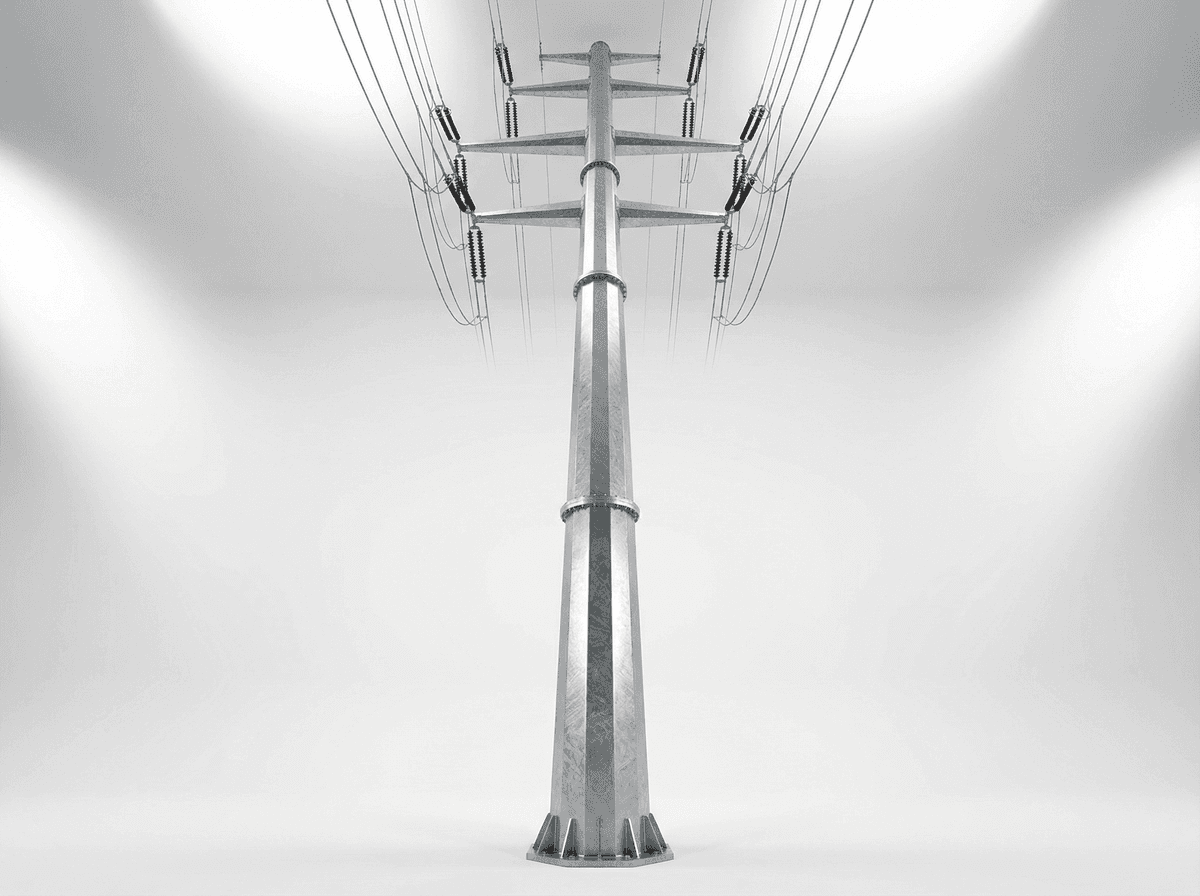
For medium-voltage and sub-transmission routes, the 18m 10kV Tapered Monopole Urban Aesthetic Slip-Joint and the 25m 66kV Octagonal Double Circuit Pole Slip-Joint are relevant references from the SOLAR TODO power_tower range. The 18m model is configured for a typical 100m design span and 2 circuits, while the 25m model is configured for a 150m design span, 66kV, and Class B wind with 15mm ice. In constrained rights-of-way, the 25m octagonal pole can reduce footprint by about 70-85% versus a conventional 66kV lattice tower.
For higher-voltage corridor upgrades, the 40m 220kV Dodecagonal Transmission Pole Flanged is a useful option where a 300m design span and 2 circuits are required. Its 12-sided shaft improves section efficiency compared with many 8-sided alternatives, while the flanged segmentation helps staged erection on steep sites. This matters when mountain work fronts are open for only short weather windows, often 4-8 workable hours per day during difficult seasons.
Recommended structure-selection logic
A practical mountain selection process should screen 4 variables before tender issue:
- Voltage class: 10kV, 66kV, or 220kV define clearance, insulator, and load envelope.
- Design span: 100m, 150m, or 300m affects tower count, angle locations, and foundation quantity.
- Access constraint: roads below 4m width or sharp switchbacks favor shorter segmented sections.
- Loading case: wind exposure, 15mm radial ice, and broken-wire conditions drive shaft diameter and base reactions.
Comparison of tower options for mountain schedule control
| Model | Voltage | Height | Circuit | Design Span | Connection | Timeline Advantage in Mountains |
|---|---|---|---|---|---|---|
| 18m Tapered Monopole Slip-Joint | 10kV | 18m | 2 | 100m | Slip-joint | Fewer parts, smaller pad, easier transport on narrow roads |
| 25m Octagonal Double Circuit Pole | 66kV | 25m | 2 | 150m | Slip-joint | 70-85% smaller footprint than many lattice alternatives |
| 40m Dodecagonal Transmission Pole | 220kV | 40m | 2 | 300m | Flanged | Better staged erection and transport segmentation for HV routes |
| Conventional lattice tower | Varies | Varies | 1-2 | Varies | Bolted members | Flexible but slower assembly on steep, space-limited sites |
According to ASCE 10-15, transmission structures should be designed with explicit consideration of strength, stability, and serviceability under governing load cases. According to EN 50341 guidance used in many overhead-line projects, route-specific topography and climatic loading can materially change support selection. That is why early tower-family selection saves time: it avoids redesign after geotechnical or logistics findings arrive.
Construction planning methods that compress the schedule
Mountain transmission timelines improve most when route survey, geotechnical checks, access design, foundation release, and steel packaging are sequenced as parallel workstreams instead of linear handoffs.
The biggest avoidable delay is waiting for perfect information before starting anything. A better method is controlled parallelization. Survey and LiDAR interpretation can release a preliminary spotting plan, while geotechnical teams verify high-risk foundations first, such as ridge crests, river crossings, and rock-cut benches. If 20% of foundations carry 80% of the uncertainty, those locations should be investigated in the first mobilization.
Procurement should also be split into packages. Foundations, anchor bolts, shaft sections, and line hardware do not always need the same release date. By releasing long-lead steel and anchor materials first, EPC teams can start civil works 2-4 weeks earlier than a single-package approval process. SOLAR TODO supports this approach because segmented power_tower supply can be aligned with erection sequence rather than shipped as one undifferentiated batch.
According to NREL (2024), standardized project workflows and digital resource modeling improve predictability in energy infrastructure planning. According to IRENA (2024), transmission and grid investment must rise significantly to support renewable integration, making schedule certainty a financial issue rather than only a construction issue. IRENA states, "Grid infrastructure is a prerequisite for the energy transition," which is especially true where mountain terrain restricts access and seasonal work windows.
Field methods that save time in difficult terrain
Several execution methods consistently reduce mountain delays:
- Use helicopter, winch, or cable-assisted delivery only for isolated pads where road building would exceed the steel-installation value.
- Preassemble repeatable cross-arm or bracket kits at a lower staging yard to reduce high-altitude assembly hours by 20-40%.
- Build temporary platforms sized only to the pole base and crane outrigger envelope, not to full lattice laydown dimensions.
- Sequence foundations by geology class so rock-drilling crews and concrete crews do not wait on each other.
- Install double-circuit structures where practical to reduce total structure count per kilometer by about 35-50% versus single-circuit alternatives.
Risk controls that protect schedule
Mountain projects lose time when weather and logistics are treated as exceptions. They should be baseline design inputs. Wind shutdown thresholds for lifting, concrete curing temperature limits, and road closure triggers should be defined before mobilization. A 50-year design-life structure still fails the business case if the project misses the energization milestone by 6 months because logistics planning started too late.
EPC Investment Analysis and Pricing Structure
For mountain power_tower projects, EPC planning usually saves 5-15% in total installed cost by reducing rework, access duplication, and idle crew time across civil, steel, and stringing packages.
EPC in this context means Engineering, Procurement, and Construction delivered as one coordinated scope. That typically includes route support design, structure calculations to IEC 60826 or ASCE 10-15, foundation interface data, tower fabrication, galvanizing, packing, shipping coordination, erection guidance, and project controls. For mountain sites, EPC value comes from integrating logistics with structural design, not from steel supply alone.
The commercial structure is usually evaluated in 3 tiers:
| Pricing Tier | What It Includes | Best Use Case |
|---|---|---|
| FOB Supply | Tower steel, bolts, drawings, factory packing | Buyers with local freight and erection capability |
| CIF Delivered | FOB scope plus ocean freight and destination delivery terms | Import projects needing landed-cost visibility |
| EPC Turnkey | Engineering, supply, logistics coordination, erection support, and project execution management | Mountain projects with high schedule and interface risk |
Volume pricing guidance for planning purposes is typically:
- 50+ structures: target about 5% discount
- 100+ structures: target about 10% discount
- 250+ structures: target about 15% discount
Payment terms commonly used are 30% T/T and 70% against B/L, or 100% L/C at sight. Financing may be available for large projects above $1,000K, subject to project review and buyer qualification. For commercial discussions, SOLAR TODO can be contacted at [email protected] or +6585559114.
ROI and payback logic versus conventional alternatives
The ROI case in mountains is usually driven by schedule compression and reduced civil scope rather than by steel price alone. If a compact monopole reduces pad size, access widening, and assembly labor, the installed cost delta can offset a higher per-ton steel price. Sample deployment scenario (illustrative): if a 66kV route uses compact double-circuit poles and cuts structure count and access work enough to save 8-12% on civil and erection packages, payback can occur within the first project cycle through avoided delay costs and earlier energization.
Compared with conventional lattice alternatives, compact monopoles can reduce occupied footprint by 50-85% and simplify permitting in narrow corridors. On projects with liquidated damages or delayed-revenue exposure, bringing energization forward by even 30-60 days can produce a stronger financial result than negotiating a lower unit steel rate. Procurement managers should therefore compare total installed cost, not only factory price.
Use cases and selection guide for mountainous terrain
Mountain routes achieve the fastest delivery when tower type, foundation concept, and transport method are selected together for each 100m, 150m, or 300m span class.
Different mountain scenarios need different structure logic. A 10kV feeder extension across steep municipal roads may benefit from an 18m slip-joint monopole because the structure can be transported in shorter sections and erected with a smaller crew footprint. A 66kV suburban-to-industrial link in broken terrain may favor a 25m octagonal double-circuit pole because fewer total structures are needed and the right-of-way remains compact.
For higher-voltage line diversions or substation exits, a 40m 220kV dodecagonal flanged pole can be useful where corridor width is limited but span length must remain near 300m. In these cases, the key selection question is whether the route is access-limited, load-limited, or permit-limited. The answer determines whether compact geometry, higher section efficiency, or reduced structure count creates the main schedule benefit.
Quick selection matrix
| Project Condition | Recommended Direction | Why It Helps Timeline |
|---|---|---|
| Narrow road reserve of 6-12m | Use monopole geometry | Smaller base and less laydown area |
| Sharp switchbacks and short trailers | Use slip-joint or flanged sections | Easier transport in segmented lengths |
| High circuit density requirement | Use double-circuit structures | Fewer total structures and foundations |
| Exposed ridge with wind and 15mm ice | Verify route-specific loading early | Avoid redesign after fabrication release |
| Short dry-season work window | Prepackage erection sequence by tower number | Faster unloading and field identification |
SOLAR TODO is most relevant where buyers need a manufacturer that understands both structure supply and project interface risk. That matters in mountain work because the tower is only one part of the schedule equation. Packaging, galvanizing sequence, mark numbering, transport section length, and erection method all affect whether a line is energized on time.
FAQ
Q: What is the fastest tower type for mountainous transmission routes? A: There is no single fastest type for every route, but segmented monopoles are often quicker in mountains because they reduce laydown area and loose-part assembly. For 10kV, 66kV, and some 220kV applications, 18m, 25m, or 40m segmented poles can shorten field erection compared with lattice structures when access is limited.
Q: Why do monopoles help construction timelines in steep terrain? A: Monopoles help because they usually need a smaller working footprint and fewer field-assembled members. In constrained corridors, footprint reductions of about 50-85% versus conventional lattice options can lower excavation, benching, and temporary platform work, which directly saves time.
Q: How should EPC contractors plan foundations in mountainous areas? A: EPC contractors should classify foundations by geology and investigate the highest-risk 20% first. Rock cuts, ridge tops, and unstable slopes should be released early so drilling, anchor design, or foundation redesign does not stop the full erection sequence later.
Q: What standards matter most when selecting power transmission towers for mountain projects? A: The main structural references are IEC 60826 for loading methodology and ASCE 10-15 for steel transmission structure design. Depending on market and utility practice, EN 50341, ASTM material standards, and local line-clearance rules should also be checked before procurement.
Q: How much schedule improvement is realistic with better tower selection? A: A realistic improvement range is often 10-20% in erection efficiency and 15-30% in overall schedule risk reduction when tower type, access planning, and packaging are aligned early. The exact result depends on road conditions, weather windows, and foundation uncertainty.
Q: When should buyers choose double-circuit structures in mountain corridors? A: Double-circuit structures are useful when right-of-way is constrained and the route must carry 2 circuits on one support. In some projects, they reduce the number of structures per kilometer by about 35-50% compared with single-circuit layouts, which lowers foundation count and access work.
Q: What is included in EPC turnkey pricing for mountain tower projects? A: EPC turnkey pricing usually includes engineering, tower fabrication, galvanizing, shipping coordination, erection planning, and project execution management. It is different from FOB or CIF because it prices interface control, which is often the main source of delay in mountain construction.
Q: What payment terms are common for international tower supply? A: Common terms are 30% T/T in advance and 70% against B/L, or 100% L/C at sight. For large projects above $1,000K, financing may be available subject to project review, commercial terms, and buyer credit assessment.
Q: How do buyers compare FOB, CIF, and EPC offers correctly? A: Buyers should compare total installed cost, not only factory price. A lower FOB rate can become more expensive if mountain logistics, access duplication, or erection delays add 8-12% to field cost, while a higher EPC price may reduce total project risk.
Q: What maintenance planning supports the original schedule business case? A: Maintenance protects the 50-year design-life value by preventing unplanned outages and emergency access work. Periodic inspections should check bolts, galvanizing condition, alignment, and hardware wear at intervals defined by utility practice and site exposure severity.
References
- IEC (2019): IEC 60826, design criteria of overhead transmission lines covering wind, ice, and reliability loading methodology.
- ASCE (2015): ASCE 10-15, design of lattice steel transmission structures and related structural practice used in line projects.
- EN 50341 (2012): Overhead electrical lines exceeding AC 1 kV, covering design framework and route-related considerations.
- IEA (2024): Electricity Grids and Secure Energy Transitions, describing the need for faster transmission expansion and grid modernization.
- IRENA (2024): World Energy Transitions Outlook, highlighting grid infrastructure investment requirements for renewable integration.
- NREL (2024): Grid planning and energy infrastructure analysis resources supporting digital modeling and project predictability.
- ASTM (2023): ASTM material and coating standards commonly referenced for structural steel and galvanizing quality control in utility structures.
Conclusion
Mountain transmission projects move faster when structure selection, access design, and EPC sequencing are decided together, with compact monopoles often cutting footprint by 50-85% and reducing schedule risk by 15-30%. For buyers managing 10kV to 220kV routes, SOLAR TODO should be evaluated on total installed cost, logistics fit, and delivery sequencing rather than unit steel price alone.
About SOLARTODO
SOLARTODO is a global integrated solution provider specializing in solar power generation systems, energy-storage products, smart street-lighting and solar street-lighting, intelligent security & IoT linkage systems, power transmission towers, telecom communication towers, and smart-agriculture solutions for worldwide B2B customers.
About the Author

SOLARTODO Editorial Team
Solar Energy & Infrastructure Expert Team
SOLAR TODO is a professional supplier of solar energy, energy storage, smart lighting, smart agriculture, security systems, communication towers, and power tower equipment.
Our technical team has over 15 years of experience in renewable energy and infrastructure, providing high-quality products and solutions to B2B customers worldwide.
Expertise: PV system design, energy storage optimization, smart lighting integration, smart agriculture monitoring, security system integration, communication and power tower supply.
Cite This Article
SOLARTODO Editorial Team. (2026). Maximizing construction timeline with Power Transmission…. SOLARTODO. Retrieved from https://solartodo.com/knowledge/maximizing-construction-timeline-with-power-transmission-towers-in-mountainous-terrain
@article{solartodo_maximizing_construction_timeline_with_power_transmission_towers_in_mountainous_terrain,
  title = {Maximizing construction timeline with Power Transmission…},
  author = {SOLARTODO Editorial Team},
  journal = {SOLARTODO Knowledge Base},
  year = {2026},
  url = {https://solartodo.com/knowledge/maximizing-construction-timeline-with-power-transmission-towers-in-mountainous-terrain},
  note = {Accessed: 2026-08-30}
}
Published: July 5, 2026 | Available at: https://solartodo.com/knowledge/maximizing-construction-timeline-with-power-transmission-towers-in-mountainous-terrain
Subscribe to Our Newsletter
Get the latest solar energy news and insights delivered to your inbox.
View All Articles