Intelligent Traffic System & AI Market Forecast 2026–2040

SOLARTODO Editorial Team
Solar Energy & Infrastructure Expert Team
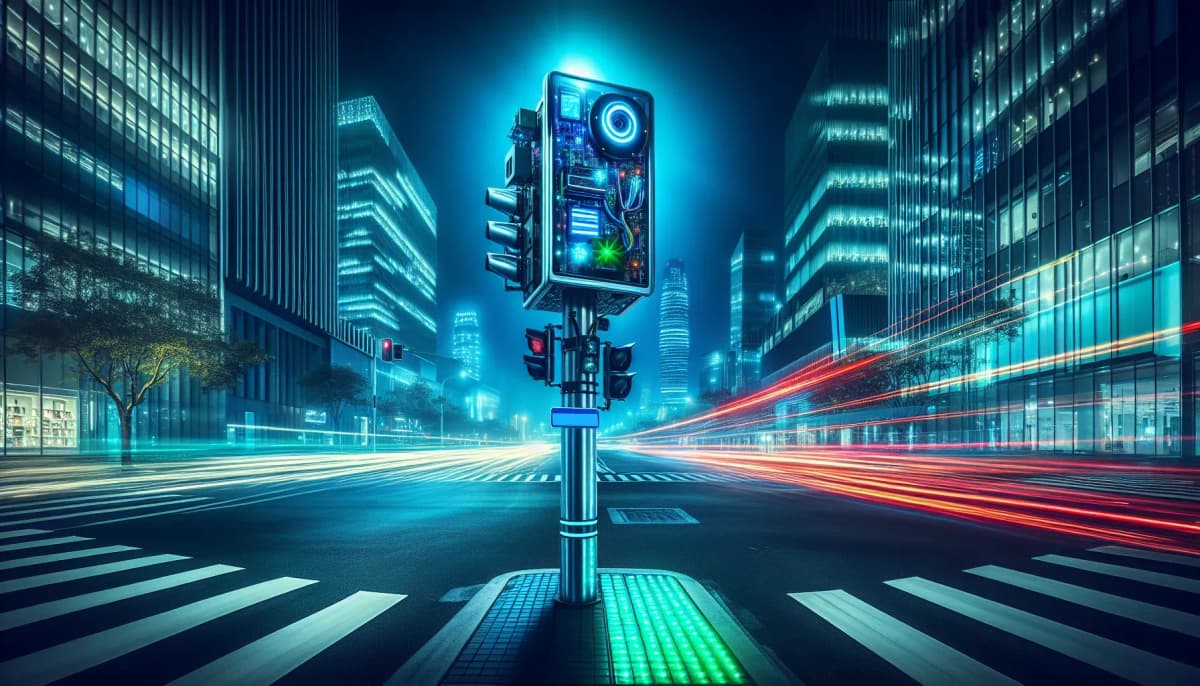
Global ITS will reach about US$63–65B by 2029 (MarketsandMarkets 2024), while AI in transportation will exceed US$30B by 2032 (Allied 2024). China invests >US$80B/yr in ITS, the US >US$40B/yr, creating strong demand for SOLAR TODO’s smart-traffic solutions.
Intelligent Traffic System & AI Market Forecast 2026–2040
TL;DR: The intelligent traffic system (ITS) market is projected to grow from roughly US$42–45 billion in 2024 to about US$75–80 billion by 2030 (MarketsandMarkets 2024). AI in transportation will exceed US$30 billion by 2032 (Allied 2024), with strong growth in V2X and smart signals. China, the US, Europe, GCC, and Southeast Asia lead investments, creating major opportunities for SOLAR TODO’s integrated smart-traffic solutions through 2040.
Global intelligent transportation systems (ITS) and AI traffic management are entering a scale-up phase. According to MarketsandMarkets (2024), the ITS market will reach about US$63–65 billion by 2029, while Allied Market Research (2024) projects AI in transportation to exceed US$30 billion by 2032, driven by smart cities, EVs, and connected vehicles.
SOLAR TODO’s smart-traffic portfolio is positioned to serve this accelerating demand with integrated hardware, software, and communications solutions.
Key Takeaways
- According to MarketsandMarkets (2024), the global ITS market is projected to grow from about US$42–45 billion in 2024 to roughly US$63–65 billion by 2029, at around 8–9% CAGR.
- Allied Market Research (2024) estimates the AI in transportation market at about US$3–4 billion in 2022, forecast to exceed US$30 billion by 2032, with a CAGR above 20%.
- Grand View Research (2024) values the smart traffic signals market at roughly US$3 billion in 2023, expected to surpass US$8 billion by 2030, growing near 15% CAGR.
- According to MarketsandMarkets (2024), the V2X (vehicle-to-everything) communication market is projected to reach around US$15–20 billion by 2030, driven by connected and autonomous vehicles.
- IEA (2024) reports global EV stock surpassed 40 million in 2023, with public charging points exceeding 4 million; this underpins strong demand for integrated traffic and charging management.
- China invests over US$80 billion per year in ITS and digital transport infrastructure, while the US invests over US$40 billion per year; Europe and the Middle East are rapidly scaling smart city traffic projects (various national transport ministries, 2023–2024).
- Asia-Pacific is the largest smart city market, while the Middle East is the fastest-growing, with Saudi Arabia and UAE committing hundreds of billions of dollars to smart urban projects through 2030 (McKinsey 2023; Strategy& 2023).
- SOLAR TODO can capture value by bundling AI traffic control, smart streetlighting, and EV-ready infrastructure, especially in fast-growing regions such as China, Southeast Asia, and the Gulf states.
1. Market Definition and Scope
1.1 What counts as Intelligent Traffic & AI systems?
For this report, we combine several overlapping segments:
- Intelligent Transportation Systems (ITS): Advanced traffic management, traveler information, tolling, incident detection, and integrated corridor management.
- AI Traffic Management: Computer vision, predictive analytics, and optimization algorithms for signals, congestion, and safety.
- Smart Traffic Signals: Adaptive signal control, connected signals, and sensor-based intersections.
- V2X (Vehicle-to-Everything): Communication between vehicles, infrastructure, pedestrians, and networks.
- Traffic Camera AI Enforcement: Automated violation detection (speed, red light, bus lane, etc.).
- Connected Vehicle Platforms: Telematics and cloud platforms for real-time traffic and fleet optimization.
- EV Charging & Grid-Integrated Traffic: Charging infrastructure integrated with traffic and parking management.
SOLAR TODO’s smart-traffic product line sits at the intersection of these segments, integrating AI cameras, controllers, communications, and cloud platforms.
1.2 Core market size indicators
- According to MarketsandMarkets (2024), the global ITS market is expected to reach around US$63–65 billion by 2029, up from roughly US$42–45 billion in 2024.
- Allied Market Research (2024) estimates the AI in transportation market will exceed US$30 billion by 2032, up from about US$3–4 billion in 2022, implying a CAGR above 20%.
2. Historical ITS & AI Adoption Timeline (2020–2026)
2.1 Key milestones
- 2020–2021: COVID-19 temporarily reduced traffic volumes but accelerated digitalization and remote traffic control. According to TomTom (2022), congestion levels dropped 19% globally in 2020 vs. 2019, then rebounded in 2021.
- 2021–2022: Large infrastructure stimulus packages in the US, EU, and China included ITS and smart city components. The US Infrastructure Investment and Jobs Act (IIJA) allocates US$500+ billion for transport over 2022–2026, with billions earmarked for ITS and smart corridors (US DOT 2022).
- 2022–2023: AI-based video analytics and adaptive signals move from pilots to scaled deployments in China, the US, and Europe. Grand View Research (2024) notes that smart traffic signals adoption accelerated in dense urban areas post-2022.
- 2023–2024: EV adoption and connected vehicles create demand for integrated traffic, parking, and charging management. IEA (2024) reports 14 million EVs sold in 2023, up from 10 million in 2022.
- 2025–2026 (emerging): Early 5G-Advanced and C-V2X corridors, plus AI enforcement cameras, become standard in new smart city districts in China, UAE, and Saudi Arabia (Huawei 2024; UAE Smart Dubai Office 2023).
2.2 ITS & AI traffic market evolution 2020–2026
| Segment / Year | 2020 Approx. Market Size | 2023 Approx. Market Size | 2026E Approx. Market Size | Source |
|---|---|---|---|---|
| Global ITS | ~US$30–32B | ~US$38–40B | ~US$48–50B | MarketsandMarkets 2024 |
| AI in Transportation | ~US$1–1.5B | ~US$2.5–3B | ~US$5–6B | Allied Market Research 2024 |
| Smart Traffic Signals | ~US$1.5–1.8B | ~US$3B | ~US$4.5–5B | Grand View Research 2024 |
| V2X Communication | <US$1B | ~US$2–3B | ~US$4–5B | MarketsandMarkets 2024 |
Note: Values are rounded ranges based on reported CAGRs and base years; see sources for precise figures.
SOLAR TODO can leverage this early growth phase to standardize modular smart-traffic solutions that scale with city budgets and technology maturity.
3. Global ITS & AI Traffic Market 2025–2030
3.1 ITS market outlook to 2030
According to MarketsandMarkets (2024):
- The ITS market is projected to grow at ~8–9% CAGR (2024–2029).
- This implies a rise from roughly US$42–45 billion in 2024 to US$63–65 billion by 2029.
Assuming growth moderates slightly after 2029, the market could approach US$75–80 billion by 2030 under a base-case scenario.
3.2 AI traffic management & smart signals to 2030
- Allied Market Research (2024) projects AI in transportation to exceed US$30 billion by 2032, from about US$3–4 billion in 2022, at a CAGR above 20%.
- Grand View Research (2024) estimates the smart traffic signals market at about US$3 billion in 2023, expected to surpass US$8 billion by 2030, with a CAGR near 15%.
These segments are outpacing the broader ITS market, reflecting rapid adoption of AI analytics and adaptive control.
3.3 Segment comparison to 2030
| Segment | 2023 Market Size (approx.) | 2030E Market Size (approx.) | CAGR (approx.) | Source |
|---|---|---|---|---|
| Global ITS | ~US$38–40B | ~US$75–80B | ~9% | MarketsandMarkets 2024 |
| AI in Transportation | ~US$2.5–3B | ~US$18–22B (2030 est.) | >20% | Allied Market Research 2024 |
| Smart Traffic Signals | ~US$3B | >US$8B | ~15% | Grand View Research 2024 |
| V2X Communication | ~US$2–3B | ~US$15–20B (2030) | >25% | MarketsandMarkets 2024 |
SOLAR TODO’s smart-traffic line can align with these high-growth niches by integrating AI controllers, V2X-ready roadside units, and cloud analytics.
4. V2X, Connected Vehicles, and AI Enforcement
4.1 V2X and connected vehicle platforms
- MarketsandMarkets (2024) projects the V2X communication market to reach around US$15–20 billion by 2030, driven by connected and autonomous vehicles.
- According to the International Transport Forum (2023), connected vehicles could represent 30–40% of new car sales globally by 2030, up from less than 10% in 2020.
These trends require dense roadside units, edge computing, and secure communications—areas where SOLAR TODO can bundle telecom towers, power, and smart-traffic controllers.
4.2 AI traffic camera enforcement
- According to Berg Insight (2023), the number of traffic enforcement cameras worldwide exceeded 100,000 units in 2022, with a growing share using AI-based video analytics.
- MarketsandMarkets (2023) estimates the video analytics market (including traffic) at about US$8–9 billion in 2022, projected to surpass US$20 billion by 2027, at a CAGR above 18%.
AI enforcement is increasingly integrated with smart signals and central traffic management, creating opportunities for SOLAR TODO to supply unified camera, storage, and analytics systems.
5. EV Charging, Smart Streets, and Traffic Integration
5.1 EV adoption and charging infrastructure
- IEA (2024) reports global EV stock surpassed 40 million vehicles in 2023, up from about 26 million in 2022.
- Public charging points exceeded 4 million in 2023, up from 2.7 million in 2022, with China accounting for more than half of global public chargers (IEA 2024).
These EV trends are reshaping traffic patterns, parking demand, and grid loads.
5.2 Smart city and smart street integration
- McKinsey Global Institute (2018, updated 2023) identifies Asia-Pacific as the largest smart city market, with smart mobility as a core investment pillar.
- Strategy& (PwC) (2023) notes that Middle East smart city investments (Saudi Arabia, UAE, Qatar) are among the fastest-growing globally, with cumulative commitments exceeding US$500 billion through 2030.
SOLAR TODO can integrate smart streetlighting, traffic signals, EV chargers, and security cameras on shared poles and power systems, reducing CAPEX and OPEX for city clients.
6. Regional ITS & AI Traffic Market Analysis
6.1 Annual ITS-related investment by region
While precise ITS-only investment data is fragmented, multiple national and regional sources indicate the following approximate annual spending on ITS and digital transport infrastructure in the mid-2020s:
| Region / Country | Approx. Annual ITS & Digital Transport Spend (mid-2020s) | Notes | Source |
|---|---|---|---|
| China | >US$80B per year | Includes smart highways, city ITS, digital rail, and logistics corridors | China NDRC 2023; MIIT 2023 |
| United States | >US$40B per year | Includes IIJA-funded smart corridors, transit ITS, and digital tolling | US DOT 2022; FHWA 2023 |
| Europe (EU+UK) | ~US$30–35B per year | Includes CEF, national programs, and city ITS | European Commission 2023 |
| Middle East (GCC) | ~US$10–15B per year | Driven by Saudi, UAE, Qatar smart city projects | Strategy& 2023; World Bank 2023 |
| Southeast Asia | ~US$8–12B per year | Includes Indonesia, Thailand, Malaysia, Vietnam smart mobility | ADB 2023; World Bank 2023 |
These figures highlight where SOLAR TODO’s smart-traffic solutions can find the largest near-term opportunities, especially in China, the US, and GCC smart cities.
6.2 Smart city market by region
| Region | Smart City Market Status (2023–2024) | Growth Outlook to 2030 | Source |
|---|---|---|---|
| Asia-Pacific | Largest regional market by revenue | Strong double-digit CAGR; China, India, ASEAN leading | McKinsey 2023 |
| North America | Mature but growing | High adoption of AI traffic and EV integration | IDC 2023 |
| Europe | Advanced regulation-driven market | Focus on sustainability, MaaS, and safety | European Commission 2023 |
| Middle East | Fastest-growing region | Mega-projects (NEOM, Dubai, Lusail) drive >15% CAGR | Strategy& 2023 |
| Latin America | Emerging, selective deployments | Focus on congestion and safety in major metros | IDB 2023 |
SOLAR TODO can tailor offerings by region: high-integration systems for Gulf mega-projects, cost-optimized modular systems for Southeast Asia and Latin America.
6.3 Regional ITS & AI traffic characteristics
China
- China is the largest ITS market, with over US$80 billion per year in digital transport investment (China NDRC 2023).
- According to Huawei (2024), several Chinese cities have deployed citywide AI traffic management platforms covering thousands of intersections, reducing congestion by 10–20%.
United States
- The US IIJA provides US$500+ billion for transport over 2022–2026, including significant funding for smart corridors, connected vehicles, and EV charging (US DOT 2022).
- ITS America (2023) notes that over 70% of large US metropolitan areas now operate centralized traffic management centers.
Europe
- The European Commission (2023) reports that over 300 European cities are engaged in smart mobility pilots, including cooperative ITS and MaaS.
- EU regulations on road safety and emissions are accelerating adoption of adaptive signals, low-emission zones, and integrated enforcement.
Middle East (UAE, Saudi Arabia)
- Strategy& (2023) estimates GCC smart city investments at US$250–300 billion committed through 2030, with mobility as a core pillar.
- Dubai’s Roads and Transport Authority (RTA) reports that smart traffic systems have helped cut congestion by up to 25% on key corridors (RTA 2023).
Southeast Asia
- The Asian Development Bank (2023) highlights Jakarta, Bangkok, Manila, and Ho Chi Minh City as priority cities for congestion-reducing ITS.
- Many ASEAN cities are leapfrogging to cloud-based traffic management and AI cameras, favoring cost-effective, modular solutions—an area where SOLAR TODO can compete strongly.
7. Forecast 2030–2040: Intelligent Traffic & AI Market
7.1 Macro drivers to 2040
Key structural drivers include:
- Urbanization: UN DESA (2019, updated 2022) projects that 68% of the world’s population will live in cities by 2050, up from 56% in 2020.
- Vehicle growth: The International Transport Forum (2023) expects global vehicle stock to grow by 40–60% by 2040, with strong growth in emerging markets.
- Safety and climate targets: WHO (2018) reports 1.35 million road deaths annually; Vision Zero and climate policies are pushing cities to adopt ITS and AI enforcement.
- EV and autonomy: IEA (2024) and multiple OEM roadmaps indicate EVs could reach 35–50% of new car sales by 2030, and higher by 2040, requiring smart charging and traffic integration.
7.2 Market size scenarios 2030–2040
Based on current CAGRs and expected maturation, we can outline indicative scenarios (not official forecasts from any single source, but derived from published growth rates):
| Market Segment | 2030E Size (approx.) | 2040E Size (illustrative, assuming slower CAGR post-2030) | Basis | Source |
|---|---|---|---|---|
| Global ITS | ~US$75–80B | ~US$130–150B (4–5% CAGR 2030–2040) | Derived from MarketsandMarkets 2024 | |
| AI in Transportation | ~US$18–22B | ~US$60–80B (10–12% CAGR 2030–2040) | Derived from Allied Market Research 2024 | |
| Smart Traffic Signals | >US$8B | ~US$20–25B (9–10% CAGR 2030–2040) | Derived from Grand View Research 2024 | |
| V2X Communication | ~US$15–20B | ~US$50–70B (10–11% CAGR 2030–2040) | Derived from MarketsandMarkets 2024 |
These ranges suggest that by 2040, AI-enabled components (AI traffic management, V2X, AI enforcement) could represent over half of total ITS value, up from less than 20% today.
7.3 Technology trends shaping 2040
- Edge AI & 5G-Advanced: Low-latency processing at intersections and roadside units will enable real-time optimization and safety interventions.
- Integrated mobility platforms: Cities will increasingly integrate traffic, public transport, micro-mobility, and parking into unified platforms.
- Energy-traffic convergence: Smart grids, EV charging, and traffic management will be co-optimized to reduce peak loads and emissions.
- Autonomous and cooperative driving: Higher levels of automation will require dense V2X and high-definition mapping.
SOLAR TODO can future-proof its smart-traffic portfolio by ensuring V2X readiness, edge AI capability, and integration with energy systems.
8. Strategic Implications for SOLAR TODO and B2B Buyers
- Bundle solutions: Combine smart traffic signals, AI cameras, telecom/power towers, and smart streetlights into integrated packages to reduce installation and maintenance costs.
- Target high-growth regions: Focus on China, GCC, and Southeast Asia, where ITS and smart city investments exceed US$100 billion per year collectively (NDRC 2023; Strategy& 2023; ADB 2023).
- Offer modular upgrades: Design systems that can start with basic adaptive control and later add V2X, AI enforcement, and EV integration.
- Leverage data platforms: Provide cloud-based analytics and APIs so cities can integrate SOLAR TODO systems with existing control centers.
- Align with standards: Support global ITS and V2X standards (e.g., ETSI, IEEE, SAE) to ensure interoperability and long-term viability.
- Focus on resilience: Integrate backup power (solar + storage) and secure communications to keep traffic systems running during outages.
Frequently Asked Questions
1. How big is the intelligent traffic system market today?
According to MarketsandMarkets (2024), the global intelligent transportation system (ITS) market is around US$42–45 billion in 2024 and is projected to reach US$63–65 billion by 2029, at roughly 8–9% CAGR. This includes advanced traffic management, traveler information, tolling, and related digital infrastructure deployed by cities, highways, and transit agencies.
2. How fast is the AI traffic management market growing?
Allied Market Research (2024) estimates the AI in transportation market at about US$3–4 billion in 2022, forecast to exceed US$30 billion by 2032, implying a CAGR above 20%. This growth is driven by AI-based video analytics, predictive congestion management, and optimization of signals and corridors, especially in large urban areas.
3. Which regions are investing the most in ITS and AI traffic?
China leads with over US$80 billion per year in digital transport and ITS investments (China NDRC 2023). The United States invests over US$40 billion per year, supported by the Infrastructure Investment and Jobs Act (US DOT 2022). Europe spends around US$30–35 billion per year, while GCC countries and Southeast Asia together add another US$20–25 billion annually (European Commission 2023; Strategy& 2023; ADB 2023).
4. What is the outlook for smart traffic signals by 2030?
Grand View Research (2024) values the smart traffic signals market at roughly US$3 billion in 2023 and expects it to surpass US$8 billion by 2030, with a CAGR near 15%. Adoption is strongest in dense urban corridors where adaptive control can reduce delays by 10–30%. SOLAR TODO’s smart-traffic solutions can integrate adaptive signals with AI cameras and smart streetlighting.
5. How important is V2X for future traffic systems?
MarketsandMarkets (2024) projects the V2X communication market to reach around US$15–20 billion by 2030, growing above 25% CAGR from early 2020s levels. As connected and autonomous vehicles scale, V2X will be critical for safety and efficiency. SOLAR TODO can support this trend with V2X-ready roadside units, telecom towers, and integrated power systems.
6. How do EVs and charging infrastructure affect traffic management?
IEA (2024) reports global EV stock exceeded 40 million vehicles in 2023, with public charging points surpassing 4 million. High EV penetration changes traffic flows around charging hubs and can create local congestion. Integrating EV charging with traffic signals, parking guidance, and smart streetlighting—areas where SOLAR TODO operates—helps cities manage both mobility and grid impacts.
7. Which region has the largest smart city market for traffic solutions?
McKinsey (2023) identifies Asia-Pacific as the largest smart city market by revenue, with China, India, and ASEAN countries leading deployments in smart mobility and traffic systems. The Middle East is the fastest-growing region, with mega-projects like NEOM and Dubai’s smart city initiatives driving double-digit growth (Strategy& 2023). These regions are prime targets for SOLAR TODO’s smart-traffic offerings.
8. What benefits do AI traffic systems deliver for cities?
AI traffic systems can reduce congestion, improve safety, and optimize infrastructure use. Dubai’s RTA reports that smart traffic systems have cut congestion by up to 25% on key corridors (RTA 2023). Studies cited by Grand View Research (2024) show adaptive signals can reduce average delays by 10–30%. These gains translate into lower emissions, shorter travel times, and better public satisfaction.
9. How should cities plan for ITS investments through 2040?
Cities should adopt a phased roadmap: start with data collection (sensors, cameras), then deploy adaptive signals and centralized control, and finally integrate V2X, AI enforcement, and EV charging. MarketsandMarkets (2024) and Allied Market Research (2024) both highlight that modular, scalable architectures reduce risk. SOLAR TODO supports this approach with upgradeable smart-traffic platforms.
10. What role can SOLAR TODO play in intelligent traffic projects?
SOLAR TODO provides smart-traffic solutions that combine AI-enabled controllers, smart streetlights, telecom/power towers, and security systems. In fast-growing markets like China, GCC, and Southeast Asia—where ITS investments exceed US$100 billion per year collectively (NDRC 2023; Strategy& 2023; ADB 2023)—SOLAR TODO can deliver turnkey packages that reduce deployment complexity and lifecycle costs.
11. How do smart streetlights link to intelligent traffic systems?
Smart streetlights provide power, mounting points, and communications for traffic sensors, cameras, and V2X units. According to IEA (2022), lighting can account for 15–20% of municipal electricity use, so LED and smart controls offer major savings. By integrating smart lighting with traffic and security, SOLAR TODO helps cities cut energy costs while expanding digital coverage.
12. What is the long-term market potential to 2040?
Derived from MarketsandMarkets (2024) and Allied Market Research (2024), the global ITS market could reach US$130–150 billion by 2040, while AI in transportation could grow to US$60–80 billion. V2X and smart signals may add another US$70–95 billion combined. This suggests a total intelligent traffic and AI ecosystem well above US$250 billion annually by 2040.
References
- MarketsandMarkets (2024): Global Intelligent Transportation System (ITS) Market – size, segmentation, and forecast to 2029
- Allied Market Research (2024): AI in Transportation Market – global opportunity analysis and industry forecast to 2032
- Grand View Research (2024): Smart Traffic Management / Smart Traffic Signals Market – global industry insights and forecast to 2030
- International Energy Agency (IEA) (2024): Global EV Outlook 2024 – electric vehicle stock and public charging infrastructure
- Strategy& (PwC Middle East) (2023): Smart cities in the GCC – investment outlook, including mobility and ITS components
- McKinsey Global Institute (2023): Smart cities: Digital solutions for a more livable future – regional smart city market updates
- US Department of Transportation (US DOT) (2022): Infrastructure Investment and Jobs Act (IIJA) – transportation and ITS-related funding programs
- China National Development and Reform Commission (NDRC) (2023): Guidelines and statistics on digital infrastructure and intelligent transportation investments
About the Author

SOLARTODO Editorial Team
Solar Energy & Infrastructure Expert Team
SOLAR TODO is a professional supplier of solar energy, energy storage, smart lighting, smart agriculture, security systems, communication towers, and power tower equipment.
Our technical team has over 15 years of experience in renewable energy and infrastructure, providing high-quality products and solutions to B2B customers worldwide.
Expertise: PV system design, energy storage optimization, smart lighting integration, smart agriculture monitoring, security system integration, communication and power tower supply.
Cite This Article
SOLARTODO Editorial Team. (2026). Intelligent Traffic System & AI Market Forecast 2026–2040. SOLARTODO. Retrieved from https://solartodo.com/knowledge/intelligent-traffic-system-ai-market-forecast-2026-2040
@article{solartodo_intelligent_traffic_system_ai_market_forecast_2026_2040,
  title = {Intelligent Traffic System & AI Market Forecast 2026–2040},
  author = {SOLARTODO Editorial Team},
  journal = {SOLARTODO Knowledge Base},
  year = {2026},
  url = {https://solartodo.com/knowledge/intelligent-traffic-system-ai-market-forecast-2026-2040},
  note = {Accessed: 2026-09-14}
}
Published: July 1, 2026 | Available at: https://solartodo.com/knowledge/intelligent-traffic-system-ai-market-forecast-2026-2040
Subscribe to Our Newsletter
Get the latest solar energy news and insights delivered to your inbox.
View All Articles