Engineering Smart Solar Streetlight Systems for smart city…

SOLARTODO Editorial Team
Solar Energy & Infrastructure Expert Team
Watch the video
TL;DR
For smart city projects, the best smart solar streetlight design checks the full pole assembly at about 150 km/h wind resistance, sizes storage for 2-3 nights, and compares rebates before procurement. Integrated poles using 80-200 W LEDs can cut lighting energy use by 50-70%, replace 4-5 separate roadside assets, and often reach a 4-7 year payback when civil and maintenance savings are included.
Smart solar streetlight systems for smart city corridors must balance structural safety, energy autonomy, and digital payload capacity. Typical poles face wind speeds above 150 km/h, cut lighting energy use by 50-70% versus HID, and can qualify for LED or controls rebates that improve payback to roughly 4-7 years.
Summary
Smart solar streetlight systems for smart city corridors must balance structural safety, energy autonomy, and digital payload capacity. Typical poles face wind speeds above 150 km/h, cut lighting energy use by 50-70% versus HID, and can qualify for LED or controls rebates that improve payback to roughly 4-7 years.
Key Takeaways
- Calculate pole loading for at least 150 km/h wind resistance when cameras, displays, WiFi, and PV modules are mounted on one 8-10 m pole.
- Size LED lighting at 80-200 W and target 170 lm/W efficacy to reduce grid-equivalent lighting energy use by 50-70% versus legacy HID systems.
- Match battery autonomy to 2-3 nights minimum and verify operation from -40°C to +55°C for municipal outdoor reliability.
- Consolidate 4-6 field functions into 1 pole to cut visible street furniture by up to 60% and trenching interfaces by 30-40%.
- Specify IP66 equipment, galvanized steel poles, and IEC 60598 or IEC 62722 compliant luminaires for 25-year infrastructure life targets.
- Compare rebate pathways early because LED and networked control incentives can reduce installed project cost by 10-25% in some utility programs.
- Use EPC pricing tiers to evaluate budget: FOB supply, CIF delivered, and turnkey EPC, with 5%, 10%, and 15% volume discounts at 50, 100, and 250 units.
- Verify ROI using maintenance and civil-work savings, because replacing 4 separate roadside assets with 1 smart pole often shortens payback to 4-7 years.
Why smart solar streetlight systems matter for digital infrastructure
Smart solar streetlight systems support lighting, sensing, surveillance, and communications on one pole, and well-specified projects can combine 80-200 W LED lighting, 2-3 nights of storage autonomy, and 150 km/h wind resistance in a single municipal asset.
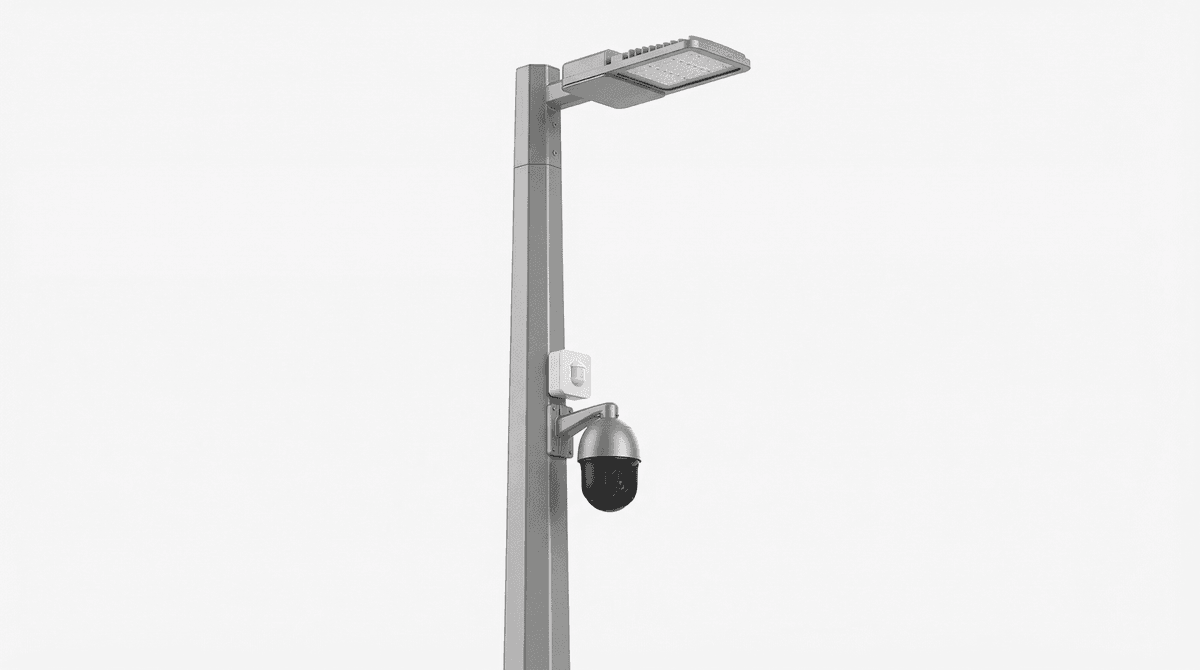
For city engineers and EPC buyers, the core issue is not only lighting performance. The pole must also carry cameras, environmental sensors, wireless devices, and sometimes an LED display without exceeding structural limits. A conventional layout may require 4 separate roadside assets, 4 foundations, and multiple cable routes, while an integrated smart pole reduces those interfaces to 1 location.
According to the International Energy Agency, “digitalization is making energy systems around the world more connected, intelligent, efficient, reliable and sustainable.” That statement matters at street level because lighting poles are often the most repeatable urban asset, with spacing commonly around 25-30 m on commercial roads. When a city adds sensing and communications to that existing rhythm, it gains a practical digital infrastructure backbone.
According to IEA (2023), LED and connected lighting systems can materially reduce electricity demand in public lighting portfolios. According to IRENA (2023), energy efficiency and electrification remain central to urban decarbonization pathways. In practical procurement terms, this means a smart solar streetlight is no longer just a luminaire decision; it is a combined decision about structure, power, controls, maintenance, and data services.
SOLAR TODO uses this integrated approach across smart streetlight configurations from 6 m to 15 m. For example, the 8 m Campus/Park Environmental Smart Streetlight combines an 80 W LED, AI camera, environmental sensor, WiFi module, and USB charging interface in 1 IP66 pole, while the 9 m Commercial Street 6-in-1 with Display combines 120 W lighting with surveillance, display, audio, and connectivity. These examples show how smart city poles can replace 5 separate field devices with 1 coordinated asset.
Wind load design for smart solar streetlight structures
Wind load design for smart solar streetlight systems should be checked at the complete-assembly level, because a 10 m pole with PV modules, camera brackets, and displays can see much higher projected area and overturning moment than a standard lighting column.
The most common procurement mistake is evaluating the pole, luminaire, and solar kit as separate items. Structurally, the city receives 1 assembled system. The pole shaft, arm, battery compartment, PV bracket, camera mount, display enclosure, and wiring all contribute to drag area and dynamic response. A pole rated for 150 km/h without accessories may not remain compliant once additional equipment adds 0.3-1.2 m2 of exposed area.
What must be checked in wind calculations
Wind calculations should include pole height, basic wind speed, terrain category, gust effects, shape coefficients, and the projected area of every mounted device. For an 8-10 m smart pole, the difference between a bare luminaire and a multi-function assembly can increase base moment by 20-50% depending on bracket geometry and display size.
At minimum, engineering reviews should verify:
- Pole height: typically 8 m, 9 m, or 10 m
- Basic wind resistance target: often 150 km/h or higher
- Pole geometry: octagonal tapered steel or round tube
- Material and coating: galvanized steel with fluorocarbon finish
- Foundation reaction: uplift, shear, and overturning moment
- Accessory area: PV panel, camera, sensor, WiFi, speaker, display
- Fatigue exposure: repeated gusting over a 20-25 year design life
Relevant standards depend on jurisdiction, but utility and roadway buyers commonly benchmark against structural loading methods such as ASCE 7 for wind actions and material/fabrication standards such as ASTM steel specifications. For overhead and line-adjacent applications, engineers may also reference IEC 60826, ASCE 74, or EN 50341 principles for wind and ice loading methodology. The exact code path should be confirmed by the local engineer of record.
A practical rule for procurement teams is to request a complete pole loading schedule. That schedule should list each mounted device, its frontal area in m2, mounting elevation in m, weight in kg, and resulting moment contribution in N·m or kN·m. Without that schedule, the buyer cannot compare bids accurately, especially when one supplier assumes a 120 W luminaire only and another includes a display and camera package.
SOLAR TODO typically recommends galvanized steel poles with complete accessory loading review before final approval. On tunnel entrance or commercial street projects, this matters even more because LED displays and cameras are often mounted at 6-9 m elevations where moment arms are large. A 25-year structural life target is realistic only when pole, bracket, anchor cage, and foundation are checked as one system.
Solar power architecture, storage sizing, and controls
A smart solar streetlight works best when the PV array, battery, LED load, and digital devices are sized together, because a 120 W luminaire plus camera, WiFi, and display can create a nightly energy demand 20-60% higher than lighting alone.
The electrical design starts with the load profile. Lighting may run 10-12 hours per night, while cameras and sensors may run 24 hours. A simple 80 W luminaire operating 12 hours consumes about 0.96 kWh nightly. Add a 15 W camera, 8 W sensor suite, and 10 W communications load over 24 hours, and daily consumption rises by about 0.79 kWh, bringing the total near 1.75 kWh per day before controller losses.
Typical sizing logic
Battery autonomy should usually cover 2-3 nights, especially where rainy periods or dust reduce PV yield. For a 1.75 kWh daily load, 2 nights of autonomy means 3.5 kWh usable storage. If the battery chemistry and depth-of-discharge policy allow 80% usable capacity, the nominal battery bank should be around 4.4 kWh.
PV sizing depends on solar resource and seasonal derating. If a site has 4.5 peak sun hours and the system derating factor is 0.75, a 1.75 kWh daily load requires roughly 520 W of PV under average conditions. If the city wants stronger winter resilience, the design may move toward 600-800 W. This is why digital payloads materially affect solar streetlight economics.
According to NREL (2024), solar production modeling must account for irradiance, temperature, and system losses rather than nameplate wattage alone. According to IEC 62722, LED performance declarations should be tied to measurable luminaire characteristics, not generic claims. For buyers, the implication is clear: ask for an energy balance sheet showing daily load in Wh, battery autonomy in nights, PV generation assumptions, and controller efficiency.
Controls also change the economics. Motion dimming, adaptive schedules, and remote fault reporting can reduce energy demand and maintenance dispatches. According to NREL studies on connected outdoor lighting, networked controls improve operational visibility and outage response compared with non-connected systems. The International Energy Agency states, “Digital technologies are transforming the way electricity is produced, traded, delivered and consumed,” which supports the use of remote monitoring in public lighting fleets.
SOLAR TODO smart streetlight configurations show the practical range. The 8 m campus model uses an 80 W LED at 170 lm/W, IP66 protection, and operation from -40°C to +55°C. The 9 m commercial model uses a 120 W LED at 170 lm/W with recommended 28 m spacing and wind resistance above 150 km/h. These figures help buyers estimate how much PV and battery capacity will be needed when digital functions are added.
Utility rebates, EPC investment analysis, and pricing structure
Utility rebates can reduce smart streetlight project cost by 10-25% in some programs, while integrated EPC delivery can improve total payback to roughly 4-7 years when energy, maintenance, and civil-work savings are counted together.
Rebates for fully off-grid solar streetlights vary widely by market, and some utilities focus only on LED retrofits or networked controls rather than stand-alone solar systems. However, many municipal projects can still capture value through three channels: LED fixture incentives, adaptive control incentives, and broader smart-city or carbon-reduction grants. The procurement team should screen these programs before final specification because rebate eligibility often depends on DLC-style performance thresholds, control capability, or pre-approval before purchase.
What EPC turnkey delivery includes
EPC means Engineering, Procurement, and Construction. In a smart streetlight package, that usually includes lighting layout, pole and foundation review, bill of materials, factory integration, shipment coordination, installation supervision, commissioning, and handover documents. For larger municipal programs, it may also include remote platform setup, spare parts planning, and financing support.
Three-tier pricing model
For B2B buyers, the most useful pricing framework is:
| Pricing Tier | What it Includes | Typical Use |
|---|---|---|
| FOB Supply | Pole, luminaire, PV, battery, controller, accessories ex-factory | Importers and local installers |
| CIF Delivered | FOB scope plus sea freight and insurance to destination port | Distributors and EPC firms managing inland works |
| EPC Turnkey | Delivered equipment plus installation, testing, commissioning, and project management | Municipal and developer projects |
Using available product references from SOLAR TODO, installed smart pole budgets can vary by function count and height. The 8 m 5-in-1 campus or park model is typically USD 1,400-1,600 per installed unit. The 10 m tunnel entrance 4-in-1 pole is typically USD 1,800-2,200 per installed unit. A commercial street 6-in-1 configuration will usually sit between those ranges depending on display size, communications hardware, and foundation conditions.
Volume pricing, payment terms, and financing
Standard volume guidance should be built into early budgeting:
- 50+ units: about 5% discount
- 100+ units: about 10% discount
- 250+ units: about 15% discount
Typical payment terms are 30% T/T deposit and 70% against B/L, or 100% L/C at sight. Financing may be available for larger projects above USD 1,000K, subject to project profile and country risk review. For quotations and financing discussions, buyers can contact [email protected] or call +6585559114.
ROI logic versus conventional roadside assets
A fair ROI model must compare the smart pole against the full conventional alternative, not against a lighting pole alone. If the conventional scheme needs 1 lighting pole, 1 CCTV mast, 1 environmental node, 1 speaker point, and 1 digital signage structure, the integrated pole can reduce visible street furniture by up to 60% and trenching interfaces by 30-40%. Those civil and maintenance savings often matter as much as electricity savings.
Sample deployment scenario (illustrative): if a city replaces a conventional 120 W HID-equivalent corridor layout with 120 W LED smart poles at 170 lm/W, lighting energy use may drop by 50-70% versus legacy HID. If rebate support covers 10-20% of fixture and controls cost, and maintenance dispatch points fall from 5 assets to 1 location, simple payback can move into the 4-7 year range depending on labor rates and local electricity tariffs.
Application design and product selection guide
The right smart solar streetlight configuration depends on road class, digital payload, and structural exposure, and most city projects fit into 8 m park roads, 9 m commercial streets, or 10 m threshold and tunnel approaches.
The buyer should first classify the corridor. A campus path or park road usually prioritizes moderate lighting, environmental sensing, and public WiFi. A commercial street usually adds display, public audio, and higher surveillance density. A tunnel entrance or threshold zone prioritizes luminance transition, glare control, and traffic monitoring, often at 10 m height with higher lux targets.
Comparison of relevant smart pole configurations
| Configuration | Main Functions | Pole Height | LED Power | Key Specs | Typical Installed Budget |
|---|---|---|---|---|---|
| 8m Campus/Park Environmental Smart Streetlight | LED + AI camera + environmental sensor + WiFi + USB | 8 m | 80 W | IP66, 170 lm/W, -40°C to +55°C, 25-year design life | USD 1,400-1,600 |
| 9m Commercial Street 6-in-1 with Display | LED + 4K camera + environmental sensor + LED display + WiFi + IP audio | 9 m | 120 W | IP66, 170 lm/W, 28 m spacing, >150 km/h wind resistance | Project-specific |
| 10m Tunnel Entrance Smart Pole | LED + AI camera + environmental sensor + LED display | 10 m | 200 W | 300 lux target zone, IP66, 34,000 lm, 150 km/h wind resistance | USD 1,800-2,200 |
For selection, procurement managers should ask five direct questions:
- What is the required mounting height: 8 m, 9 m, or 10 m?
- What is the full device list and projected wind area in m2?
- What is the nightly load in Wh and required autonomy in nights?
- Which standards apply: IEC 60598, IEC 62722, local wind code, utility interconnection or rebate rules?
- Is the comparison based on 1 integrated pole versus 4-5 separate roadside assets?
SOLAR TODO can support this comparison process with offline quotation, configuration review, and financing discussion for larger projects. That matters because the correct answer is rarely the cheapest pole ex-factory. The correct answer is the lowest total cost solution that remains structurally compliant at 150 km/h, electrically balanced through poor-weather periods, and eligible for available incentive pathways.
FAQ
Smart solar streetlight buyers usually ask about wind rating, battery autonomy, rebates, and payback first because those 4 factors decide whether a project is technically bankable and operationally practical.
Q: What is a smart solar streetlight system in a smart city project? A: A smart solar streetlight system is a pole that combines solar power, battery storage, LED lighting, and digital devices such as cameras, sensors, WiFi, audio, or displays. Typical municipal configurations use 80-200 W LED luminaires, IP66 enclosures, and 2-3 nights of battery autonomy to support both lighting and data functions.
Q: How is wind load different for a smart pole compared with a normal lighting pole? A: Wind load is higher because the smart pole carries more exposed equipment. A camera, PV module, display, and communication box can add 0.3-1.2 m2 of projected area, which can raise overturning moment by 20-50% on an 8-10 m pole if the assembly is not checked as one structure.
Q: What wind resistance should municipalities specify? A: Many city buyers use 150 km/h as a practical minimum for integrated smart poles, but the exact requirement depends on local code, terrain, and risk category. The correct specification should come from the project wind map and structural calculation, not from a generic catalog statement.
Q: How do I size the battery for a smart solar streetlight? A: Start with total daily energy use in Wh, including lighting, camera, sensor, and communications loads. Then multiply by the required autonomy, usually 2-3 nights, and divide by usable battery depth of discharge. A 1.75 kWh daily load with 2 nights autonomy typically needs about 4.4 kWh nominal storage at 80% usable capacity.
Q: What utility rebates are available for smart solar streetlights? A: Rebate structures vary by country and utility, but common categories include LED fixture incentives, networked lighting control incentives, and municipal decarbonization grants. Many programs require pre-approval and measured performance data, so buyers should check eligibility before issuing the final purchase order.
Q: How much can a smart solar streetlight project save versus conventional infrastructure? A: Savings come from three areas: electricity, civil works, and maintenance. Compared with legacy HID systems, LED lighting can cut energy use by 50-70%, and integrated poles can reduce visible street furniture by up to 60% and trenching interfaces by 30-40% when replacing multiple standalone assets.
Q: What standards should be checked before procurement? A: Buyers should review luminaire safety and performance standards such as IEC 60598 and IEC 62722, plus local structural codes for wind and foundation design. If the project includes grid interaction, communications, or utility approval, additional local electrical and controls requirements may also apply.
Q: What does EPC turnkey include for smart streetlight projects? A: EPC turnkey usually includes engineering review, procurement, logistics, installation, testing, commissioning, and handover documentation. In larger projects above USD 1,000K, it may also include financing support, remote platform setup, spare parts planning, and phased deployment management.
Q: What are the usual pricing and payment terms from SOLAR TODO? A: Pricing is commonly structured as FOB Supply, CIF Delivered, or EPC Turnkey depending on scope. Standard payment terms are 30% T/T and 70% against B/L, or 100% L/C at sight, and volume guidance is typically 5% off at 50+ units, 10% at 100+, and 15% at 250+ units.
Q: How long is the expected service life of a smart pole system? A: A properly specified galvanized steel smart pole can target a 25-year structural design life, while LED modules and batteries follow their own replacement cycles. The key is to match IP66 enclosure protection, corrosion treatment, thermal design, and maintenance planning to the local environment.
Q: When should a city choose an 8 m, 9 m, or 10 m smart pole? A: An 8 m pole is commonly used for campus roads, parks, and pedestrian corridors with moderate lighting demand. A 9 m pole fits commercial streets with higher device density, while a 10 m pole is more suitable for threshold zones, wider roads, or tunnel entrance applications requiring higher illuminance.
Q: How can buyers request a quotation or financing discussion? A: Buyers should prepare the road class, pole height, device list, wind requirement, and quantity first because those 5 inputs determine structural and electrical scope. SOLAR TODO handles inquiry-based offline quotation, and project teams can contact [email protected] or +6585559114 for pricing and financing review.
References
A smart solar streetlight specification is strongest when it cites at least 5 recognized authorities, because standards and public-energy sources make wind, lighting, and rebate decisions easier to defend in procurement reviews.
- NREL (2024): PVWatts methodology and solar resource modeling guidance for estimating PV energy yield and system losses.
- IEC 60598 (2024): Luminaire safety requirements used for outdoor lighting equipment assessment.
- IEC 62722 (2014): Luminaire performance requirements for LED luminaires and declared operating characteristics.
- IEA (2023): Energy Efficiency and digital energy system guidance supporting LED and connected lighting benefits in public infrastructure.
- IRENA (2023): Urban energy transition and efficiency findings relevant to municipal decarbonization and electrification planning.
- ASCE 7-22 (2022): Minimum design loads and associated criteria for buildings and other structures, including wind actions relevant to pole design.
- IEC 60826 (2017): Design criteria for overhead transmission lines, often referenced for environmental loading methodology in utility-side reviews.
- EN 50341 (2022): Overhead electrical line design framework relevant to structural loading practices in some jurisdictions.
Conclusion
Smart solar streetlight systems deliver the best value when 150 km/h structural checks, 2-3 night battery autonomy, and rebate eligibility are evaluated together rather than as separate line items.
For smart city digital infrastructure, SOLAR TODO recommends comparing complete integrated poles against the full conventional asset mix, because 1 smart pole can replace 4-5 roadside devices, cut lighting energy use by 50-70%, and support a practical 4-7 year payback when incentives and maintenance savings are included.
About SOLARTODO
SOLARTODO is a global integrated solution provider specializing in solar power generation systems, energy-storage products, smart street-lighting and solar street-lighting, intelligent security & IoT linkage systems, power transmission towers, telecom communication towers, and smart-agriculture solutions for worldwide B2B customers.
Further Reading
About the Author

SOLARTODO Editorial Team
Solar Energy & Infrastructure Expert Team
SOLAR TODO is a professional supplier of solar energy, energy storage, smart lighting, smart agriculture, security systems, communication towers, and power tower equipment.
Our technical team has over 15 years of experience in renewable energy and infrastructure, providing high-quality products and solutions to B2B customers worldwide.
Expertise: PV system design, energy storage optimization, smart lighting integration, smart agriculture monitoring, security system integration, communication and power tower supply.
Cite This Article
SOLARTODO Editorial Team. (2026). Engineering Smart Solar Streetlight Systems for smart city…. SOLARTODO. Retrieved from https://solartodo.com/knowledge/engineering-smart-solar-streetlight-systems-for-smart-city-digital-infrastructure-wind-load-design-and-utility-rebates
@article{solartodo_engineering_smart_solar_streetlight_systems_for_smart_city_digital_infrastructure_wind_load_design_and_utility_rebates,
  title = {Engineering Smart Solar Streetlight Systems for smart city…},
  author = {SOLARTODO Editorial Team},
  journal = {SOLARTODO Knowledge Base},
  year = {2026},
  url = {https://solartodo.com/knowledge/engineering-smart-solar-streetlight-systems-for-smart-city-digital-infrastructure-wind-load-design-and-utility-rebates},
  note = {Accessed: 2026-08-30}
}
Published: July 5, 2026 | Available at: https://solartodo.com/knowledge/engineering-smart-solar-streetlight-systems-for-smart-city-digital-infrastructure-wind-load-design-and-utility-rebates
Subscribe to Our Newsletter
Get the latest solar energy news and insights delivered to your inbox.
View All Articles