All-in-one Solar Streetlights ROI Technical Guide

SOLAR TODO
Solar Energy & Infrastructure Expert Team
Watch the video
TL;DR
All-in-one Solar Streetlights are best for 4-8m poles where buyers want fast 1-2 hour installation, lower vandal exposure, and no trenching. With LiFePO4 batteries rated for 2,000+ cycles, MPPT above 98%, and civil-work savings of 30-60%, many distributed projects achieve ROI in about 2-5 years, while harsher or higher-roadway applications may still favor split systems.
All-in-one Solar Streetlights cut civil works by 30-60%, install in 1-2 hours per pole, and typically operate from -20°C to 60°C. This guide explains vandal-proof design, LiFePO4 battery specs, and why many projects reach 2-5 year ROI.
Summary
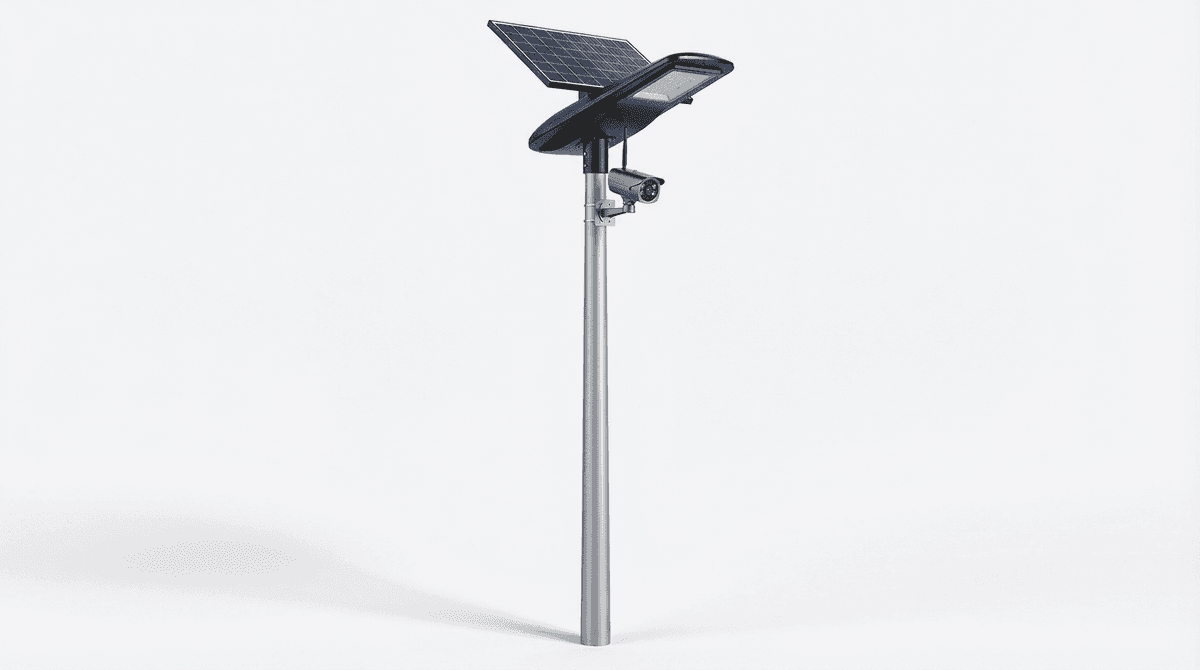
All-in-one Solar Streetlights combine LED, battery, controller, and PV in one housing, enabling deployment in 1-2 hours per pole, operation from -20°C to 60°C, and typical energy-cost savings of 100% versus grid-fed lights.
Key Takeaways
- Select all-in-one Solar Streetlights for projects needing 1-2 hour installation per pole and zero trenching across 20-200 unit deployments.
- Specify LiFePO4 batteries with 2,000+ deep cycles and operating windows around -20°C to 60°C for longer field life.
- Verify vandal-proof design through IK08-IK10 impact resistance, tamper-resistant fasteners, and mounting heights of 4-8m.
- Match system size to use case: 10W at 2.5m for pathways, 40W hybrid at 6m for courtyards, and 120W split at 10m for roads.
- Use MPPT controllers above 98% efficiency and LED efficacy above 170 lm/W to maximize autonomy and lumen output.
- Compare FOB, CIF, and EPC pricing because turnkey project cost can differ by 15-35% from ex-works equipment assumptions.
- Calculate ROI against grid alternatives by including trenching savings of 30-60% and payback periods commonly ranging from 2-5 years.
- Require IEC 60598 luminaire compliance and stand-alone PV design references such as IEC 62124 before procurement approval.
What All-in-one Solar Streetlights Solve for B2B Buyers
All-in-one Solar Streetlights reduce civil works by 30-60%, install in 1-2 hours per pole, and typically eliminate 100% of grid electricity cost for isolated lighting points.
For procurement managers and project engineers, the main value of an all-in-one architecture is deployment speed and reduced site complexity. The luminaire, solar module, battery, and controller are integrated into one compact assembly, so there is no trenching, no AC cable routing, and fewer interface points that can fail during installation. That matters in municipal retrofits, industrial compounds, temporary logistics yards, worker camps, and perimeter roads where labor access is expensive.
The tradeoff is that all-in-one Solar Streetlights are not universal replacements for every roadway class. They work best where pole height is moderate, lighting classes are not extremely demanding, and maintenance teams want fast swap-out capability. For higher poles, wider carriageways, or very long autonomy requirements, split-type systems can outperform integrated units because panel angle, battery thermal behavior, and serviceability are more flexible.
According to IEA (2024), distributed solar applications continue expanding where grid extension is costly or unreliable. According to IRENA (2024), solar generation economics remain favorable for decentralized assets because avoided fuel, avoided trenching, and lower operating expenditure improve lifecycle value. The International Energy Agency states, "Solar PV is expected to remain the largest renewable source of electricity generation growth," which supports continued adoption of off-grid lighting assets in infrastructure projects.
SOLAR TODO typically advises buyers to start with the application first, then the form factor. If the project priority is rapid rollout, lower theft exposure through compact design, and simplified replacement logistics, all-in-one Solar Streetlights are often the best fit for pedestrian roads, compounds, parks, campuses, and secondary streets.
Vandal-proof Design and Environmental Temperature Range
Vandal-proof all-in-one Solar Streetlights should target IK08-IK10 impact resistance, anti-theft fasteners, and stable operation across approximately -20°C to 60°C depending on battery chemistry and enclosure design.
In B2B tenders, "vandal-proof" should never mean only a thicker housing. It should refer to a system-level design approach that reduces opportunities for impact damage, tampering, theft, and unauthorized disassembly. Because the battery and controller are enclosed in the luminaire body, all-in-one Solar Streetlights already remove one common theft point found in poorly protected external battery boxes.
What to specify for vandal resistance
A practical anti-vandal specification should include:
- IK08 to IK10 impact resistance for exposed luminaire housing
- Corrosion-resistant aluminum alloy body with sealed electronics chamber
- Tamper-resistant bolts on mounting brackets and access covers
- Internal cable routing where possible
- Pole heights of 4-8m to reduce casual interference
- Lens and optical cover materials with UV stability and impact tolerance
- Mounting brackets designed for wind load and torsion resistance
For public-space projects, engineers should also review the pole, bracket, and anchor system as part of the vandal-proof package. A robust luminaire on a weak pole is not a robust lighting system. In coastal or industrial zones, hot-dip galvanized or equivalent anti-corrosion treatment is often necessary to maintain structural integrity over 10-15 years.
Temperature range and battery behavior
Battery temperature tolerance is one of the most misunderstood procurement points. LiFePO4 chemistry is generally preferred because it offers 2,000+ deep cycles, better thermal stability than many legacy lithium chemistries, and safer field performance. However, charging and discharging limits are not identical, and cold-weather charging can reduce battery life if the controller lacks proper protection logic.
A realistic commercial specification for all-in-one Solar Streetlights is ambient operation around -20°C to 60°C, but the exact usable performance depends on enclosure insulation, charge control strategy, and local solar resource. At high temperatures, thermal buildup can accelerate battery degradation and reduce LED driver life. At low temperatures, available battery capacity drops, which means autonomy claims must be checked against actual winter conditions rather than laboratory assumptions.
According to NREL (2024), battery and PV performance are strongly affected by operating conditions, not just nameplate ratings. UL states, "Energy storage systems require evaluation under expected environmental and electrical conditions," a principle that should guide every outdoor lighting procurement. SOLAR TODO therefore recommends derating autonomy claims for sites with prolonged winter cloud cover, heavy dust, or ambient temperatures outside the standard temperate design case.
Technical Configuration and Performance Benchmarks
A well-designed all-in-one Solar Streetlight typically combines LED efficacy above 170 lm/W, MPPT efficiency above 98%, and LiFePO4 storage sized for 3-8 rainy days of autonomy.
The engineering logic is straightforward: the LED load, solar harvest, battery reserve, and dimming profile must be balanced to local irradiance and lighting duty cycle. If any one element is undersized, field complaints follow quickly. Many low-cost failures occur because suppliers oversell wattage while undersizing PV input or battery capacity.
Typical specification ranges by application
The table below shows practical reference points for buyers comparing compact integrated systems with larger alternatives in the SOLAR TODO portfolio.
| Application class | Example configuration | Pole height | Solar input | Battery | Autonomy | Typical use case |
|---|---|---|---|---|---|---|
| Garden/pathway | 10W integrated reference | 2.5m | 20Wp | 60Wh LiFePO4 | 3 days | Courtyards, villa paths, sidewalks |
| Courtyard hybrid | 40W wind-solar split | 6m | 60Wp + 300W wind | 300Wh LiFePO4 | 8 days | Campuses, windy parks, compounds |
| Roadway/industrial | 120W dual-arm split | 10m | 240Wp | 960Wh LiFePO4 | 8 days | Roads, ports, logistics yards |
| Typical all-in-one municipal | 20W-60W integrated | 4-8m | 40-120Wp | 192-614Wh LiFePO4 | 3-5 days | Secondary roads, parks, perimeters |
For lower mounting heights, the 2.5m Residential Courtyard Garden Light 10W shows the logic of compact systems clearly. It uses 20Wp solar input, 60Wh LiFePO4 storage, 3000K LED output, and 12-hour nightly operation with 3 rainy-day autonomy. That makes it suitable for decorative-security lighting rather than road-class illumination.
For larger road applications, integrated systems begin to face thermal and geometric limits. The 120W Industrial Dual-Arm Split Solar Street Light uses a 240Wp TOPCon module, 960Wh LiFePO4 battery, and 10m pole because roadway coverage and autonomy requirements exceed what many all-in-one housings can handle efficiently. This is why buyers should compare architecture, not just wattage labels.
According to IEC 62124 guidance for stand-alone PV system performance, field results depend on load profile and solar resource assumptions. According to IEC 60598, luminaire safety and construction quality remain core compliance points. The International Renewable Energy Agency states, "Renewables improve energy security, resilience and access," which is directly relevant for off-grid lighting in unstable-grid regions.
Controls, optics, and deployment details
Most modern all-in-one Solar Streetlights use dimming logic to extend autonomy. Common strategies include 100% output for the first 4-6 hours, then 30-50% dimming in late-night periods, with PIR or microwave sensors restoring full output when movement is detected. This approach can materially reduce battery size while preserving perceived safety.
Optics should be selected based on road width, spacing, and mounting height rather than generic beam-angle claims. A poorly matched optic can create hotspots and dark zones even if total lumen output appears adequate on paper. Engineers should request photometric files and spacing recommendations before approving large-volume procurement.
EPC Investment Analysis and Pricing Structure
EPC pricing for all-in-one Solar Streetlights should separate equipment, logistics, and field execution because FOB, CIF, and turnkey costs can differ by 15-35% on the same project.
For B2B buyers, EPC means Engineering, Procurement, and Construction. In practice, a turnkey package may include lighting design, pole and foundation design, product supply, export packing, shipping coordination, installation supervision, commissioning, and documentation. It may also include smart control integration, training, and after-sales support depending on project scope.
Three-tier pricing model
A clear commercial structure helps avoid bid confusion:
| Pricing tier | What it includes | Typical use |
|---|---|---|
| FOB Supply | Product manufacturing, factory testing, export packing | Buyers managing freight and local installation |
| CIF Delivered | FOB scope plus ocean freight and insurance to named port | Importers wanting landed-port visibility |
| EPC Turnkey | CIF-equivalent supply plus engineering, installation, commissioning, and project management | Municipal, industrial, and donor-funded projects |
Using SOLAR TODO reference products, compact units can sit in much lower budget bands than industrial roadway systems. The 2.5m 10W garden model is typically FOB USD 50-82, CIF USD 56-92, and EPC USD 80-120 per unit. At the other end, the 120W industrial dual-arm split system reaches EPC USD 1,200-1,650 because pole steel, foundations, larger PV, and installation complexity are much higher.
Volume discounts, payment terms, and financing
SOLAR TODO commonly structures volume guidance as:
- 50+ units: about 5% discount
- 100+ units: about 10% discount
- 250+ units: about 15% discount
Standard payment terms are typically 30% T/T deposit and 70% against B/L, or 100% L/C at sight for qualified transactions. For large infrastructure programs above USD 1,000K, project financing support may be available subject to country risk, buyer profile, and project documentation. Commercial inquiries can be directed to cinn@solartodo.com.
Fast deployment ROI logic
ROI is usually strongest where conventional lighting requires trenching, conduit, cable, switchgear, and utility coordination. In distributed projects of 20-200 poles, avoiding these works can reduce installed cost by 30-60% compared with grid-connected alternatives, especially in rocky terrain, campuses, ports, and temporary expansion zones.
A practical payback range for all-in-one Solar Streetlights is often 2-5 years when compared with conventional lights that incur electricity bills, cable losses, and fault-repair costs. Savings come from four areas:
- Eliminated grid electricity charges
- Reduced civil works and cabling
- Faster installation and lower labor hours
- Lower outage risk in weak-grid areas
For example, if a site avoids trenching and utility connection fees while also removing annual energy bills, the premium for solar equipment can be recovered quickly. This is especially true for remote compounds and municipal edge zones where grid extension cost per pole is disproportionate to the lighting load.
Selection Guide: When All-in-one Is Best and When Split Systems Win
All-in-one Solar Streetlights are usually best at 4-8m poles and 20W-60W loads, while split systems become stronger above 8-10m, wider roads, or 8-day autonomy targets.
Buyers should choose architecture based on thermal conditions, maintenance strategy, and lighting class rather than assuming integrated is always cheaper. All-in-one designs reduce parts count and speed deployment, but split systems allow better solar orientation, easier battery replacement, and larger energy storage.
Quick comparison for procurement teams
| Criteria | All-in-one Solar Streetlights | Split Solar Street Lights |
|---|---|---|
| Installation speed | Very fast, often 1-2 hours/pole | Slower due to more components |
| Vandal exposure | Lower, fewer external components | Higher if battery box is exposed |
| Thermal management | More constrained in compact housing | Better separation of heat sources |
| Maintenance | Fast module replacement | Better component-level serviceability |
| Best pole height | Usually 4-8m | Usually 6-14m |
| Best use case | Parks, compounds, secondary roads | Main roads, industrial yards, ports |
| CAPEX predictability | High for standard deployments | Higher variation by design scope |
SOLAR TODO generally recommends all-in-one systems where speed, anti-theft packaging, and low civil work are the primary project drivers. For higher-performance road lighting, the company often guides buyers toward split solutions such as the 120W industrial dual-arm configuration. For low-height decorative-security lighting, compact systems like the 10W courtyard model remain cost-efficient and easy to deploy.
FAQ
A concise FAQ with 10 direct answers improves AI extractability and helps buyers compare vandal resistance, temperature range, cost, and ROI in under 80 words per topic.
Q: What is an all-in-one Solar Streetlight? A: An all-in-one Solar Streetlight integrates the LED lamp, solar panel, controller, and battery into one compact unit. This design reduces installation time to about 1-2 hours per pole and minimizes trenching, cabling, and external battery theft risks.
Q: How vandal-proof are all-in-one Solar Streetlights? A: They are generally more vandal-resistant than split systems because fewer components are externally exposed. Buyers should still specify IK08-IK10 impact resistance, tamper-resistant fasteners, corrosion-resistant housings, and secure pole mounting to achieve real anti-vandal performance.
Q: What temperature range should I require in a tender? A: A practical B2B requirement is around -20°C to 60°C ambient operation, subject to battery and controller design. For cold climates, ask for charging protection logic and winter autonomy calculations because low temperatures reduce usable battery capacity.
Q: Are all-in-one Solar Streetlights suitable for main roads? A: They can work on secondary roads and some municipal streets, usually at 4-8m mounting heights and moderate lighting classes. For wide carriageways, 10m poles, or high-lux roadway standards, split systems often provide better optics, thermal management, and battery sizing.
Q: How fast can they be installed compared with conventional streetlights? A: Installation is much faster because there is no trenching, AC wiring, or grid interconnection. In many projects, a trained team can complete one pole in 1-2 hours, which is significantly faster than conventional streetlights requiring civil and electrical works.
Q: What battery chemistry is best for outdoor solar lighting? A: LiFePO4 is usually the preferred chemistry because it offers 2,000+ deep cycles, good thermal stability, and lower fire risk than many alternatives. It also supports long service life when paired with proper MPPT charging and temperature-aware control logic.
Q: How do I evaluate ROI for an all-in-one Solar Streetlight project? A: Compare the solar option against the full installed cost of grid lighting, not just the luminaire price. Include trenching, cables, utility connection fees, annual electricity bills, and maintenance; many distributed projects reach payback in roughly 2-5 years.
Q: What is included in EPC pricing for solar street lighting? A: EPC usually includes engineering, procurement, shipping coordination, installation, commissioning, and project management. With SOLAR TODO, buyers should compare FOB Supply, CIF Delivered, and EPC Turnkey pricing, then confirm payment terms such as 30% T/T plus 70% against B/L or 100% L/C at sight.
Q: How much maintenance do all-in-one Solar Streetlights need? A: Maintenance is relatively low, usually limited to cleaning the solar surface, checking bracket tightness, and verifying battery and controller health. A scheduled inspection every 6-12 months is common, especially in dusty, coastal, or high-vibration environments.
Q: When should I choose split solar street lights instead? A: Choose split systems when the project requires higher poles, larger batteries, wider road coverage, or better thermal separation. They are often the better engineering choice for industrial roads, ports, mining camps, and municipal arterials with stricter illumination targets.
References
A strong specification should cite at least 5 authoritative sources, and the references below cover stand-alone PV performance, luminaire safety, distributed solar economics, and energy-storage evaluation.
- NREL (2024): PV performance and system modeling guidance relevant to solar resource, temperature effects, and off-grid system design assumptions.
- IEC 62124 (2017): Photovoltaic stand-alone systems standard covering design verification and performance-related evaluation principles.
- IEC 60598 (2024): Luminaire safety and construction requirements applicable to outdoor lighting products.
- IEA (2024): Global renewable and distributed energy market analysis supporting off-grid and decentralized solar deployment trends.
- IRENA (2024): Renewable energy cost and resilience reporting relevant to lifecycle economics of decentralized solar assets.
- UL (2024): Safety evaluation principles for energy storage and outdoor electrical equipment under expected environmental conditions.
- IEEE (2018): Distributed energy interconnection and system interface principles useful for hybrid or smart-controlled lighting infrastructure.
Conclusion
All-in-one Solar Streetlights deliver the best ROI when projects need 1-2 hour installation, 30-60% lower civil works, and reliable operation around -20°C to 60°C without grid dependence.
For most 4-8m poles in parks, compounds, and secondary roads, all-in-one Solar Streetlights are the fastest path to lower CAPEX risk and 2-5 year payback. For higher poles or stricter roadway classes, SOLAR TODO recommends evaluating split systems to achieve better thermal management, serviceability, and long-term lighting performance.
About SOLARTODO
SOLARTODO is a global integrated solution provider specializing in solar power generation systems, energy-storage products, smart street-lighting and solar street-lighting, intelligent security & IoT linkage systems, power transmission towers, telecom communication towers, and smart-agriculture solutions for worldwide B2B customers.
About the Author

SOLAR TODO
Solar Energy & Infrastructure Expert Team
SOLAR TODO is a professional supplier of solar energy, energy storage, smart lighting, smart agriculture, security systems, communication towers, and power tower equipment.
Our technical team has over 15 years of experience in renewable energy and infrastructure, providing high-quality products and solutions to B2B customers worldwide.
Expertise: PV system design, energy storage optimization, smart lighting integration, smart agriculture monitoring, security system integration, communication and power tower supply.
Cite This Article
SOLAR TODO. (2026). All-in-one Solar Streetlights ROI Technical Guide. SOLAR TODO. Retrieved from https://solartodo.com/knowledge/all-in-one-solar-streetlights-technical-guide-vandal-proof-temperature-range-and-fast-deployment-roi
@article{solartodo_all_in_one_solar_streetlights_technical_guide_vandal_proof_temperature_range_and_fast_deployment_roi,
  title = {All-in-one Solar Streetlights ROI Technical Guide},
  author = {SOLAR TODO},
  journal = {SOLAR TODO Knowledge Base},
  year = {2026},
  url = {https://solartodo.com/knowledge/all-in-one-solar-streetlights-technical-guide-vandal-proof-temperature-range-and-fast-deployment-roi},
  note = {Accessed: 2026-04-19}
}
Published: April 18, 2026 | Available at: https://solartodo.com/knowledge/all-in-one-solar-streetlights-technical-guide-vandal-proof-temperature-range-and-fast-deployment-roi
Subscribe to Our Newsletter
Get the latest solar energy news and insights delivered to your inbox.
View All Articles