solution case

27m Flanged Sectional Monopole — Nicaragua Project Case Study

March 28, 2026Updated: March 28, 202615 min readFact CheckedAI Generated
27m Flanged Sectional Monopole — Nicaragua Project Case Study

TL;DR

A 27m flanged sectional monopole was the right fit for the Nicaragua project because it combined easier transport, 45 m/s wind resistance, and hot-dip galvanized durability for 25+ years. For telecom buyers, the main lesson is clear: sectional monopoles reduce logistics risk and support efficient 4G/5G rollout when access constraints make single-piece towers less practical.

A 27m flanged sectional monopole deployed in Nicaragua delivered 45 m/s wind resistance, easier sectional transport, and a 25+ year corrosion-protection strategy. The case shows how SOLAR TODO reduced logistics risk while supporting scalable 4G/5G site rollout.

Summary

A 27m flanged sectional monopole deployed in Nicaragua delivered fast logistics, 45 m/s wind resistance, and simplified field assembly for a 4G/5G site. The case shows how sectional transport reduced installation constraints while hot-dip galvanized steel supports a 25+ year corrosion-protection strategy.

Key Takeaways

  • Choose a 27m flanged sectional monopole when transport access is limited, because segmented sections reduce hauling complexity versus a single-piece 27m shaft.
  • Specify wind survival at 45 m/s or higher for coastal and storm-exposed telecom sites to improve uptime and structural resilience.
  • Use hot-dip galvanized steel with a 25+ year corrosion-protection design target to lower repainting and lifecycle maintenance costs.
  • Plan antenna loading early; a 27m monopole for 4G/5G typically supports up to 6 antennas depending on local code, wind zone, and mounting configuration.
  • Shorten site schedules by using bolted flange connections, which simplify field erection, crane time, and quality inspection compared with more complex assemblies.
  • Validate structural design against IEC and IEEE-aligned electrical and infrastructure practices, especially grounding, lightning protection, and equipment integration.
  • Compare monopole CAPEX of roughly $18,000-$28,000 for urban-class 25m systems as a benchmark when budgeting nearby 27m telecom deployments.
  • Improve project ROI by combining tower design, foundation planning, and passive infrastructure readiness so one site can support future co-location revenue.

Nicaragua Project Overview

A 27m flanged sectional monopole is a practical telecom tower solution for constrained-access sites because it combines near-urban monopole economics with sectional logistics, 45 m/s wind performance, and a corrosion-protected steel structure designed for 25+ years. In the Nicaragua project, these factors reduced transport risk, accelerated erection, and supported reliable 4G/5G deployment.

This case study focuses on a telecom infrastructure project in Nicaragua where site access, transport limitations, and long-term durability were the key engineering constraints. The selected solution was a 27m flanged sectional monopole from SOLAR TODO, configured to balance structural efficiency, installation speed, and future network expansion. For B2B buyers, the project is relevant because it demonstrates how tower segmentation can solve practical execution challenges without moving to a much larger lattice design.

The business problem was straightforward: the operator needed a tower tall enough to deliver target radio coverage, but the route to site and local handling conditions made a long single-piece monopole inefficient to ship and difficult to erect. A sectional flanged design addressed those issues while preserving the compact footprint typically preferred in telecom deployments. That matters in regional rollouts where schedule certainty and logistics cost can determine total project viability.

According to the International Energy Agency, "Digital connectivity is becoming an essential part of economic development," and telecom infrastructure remains a foundational enabler of that connectivity. In emerging and mixed-terrain markets such as Nicaragua, the tower design decision is therefore not only a structural choice but also a service-availability decision. SOLAR TODO positioned the 27m flanged sectional monopole as a fit-for-purpose answer to those conditions.

Technical Solution and Engineering Rationale

The Nicaragua installation used a monopole architecture rather than a lattice tower because the project prioritized a smaller footprint, lower visual impact, and faster site execution. A 27m height class is often selected when operators need better line-of-sight than a short rooftop or 20m-class pole can provide, but do not require the capacity and land take of a 40m+ heavy-duty structure. That middle range is common in suburban, peri-urban, and transport-corridor telecom planning.

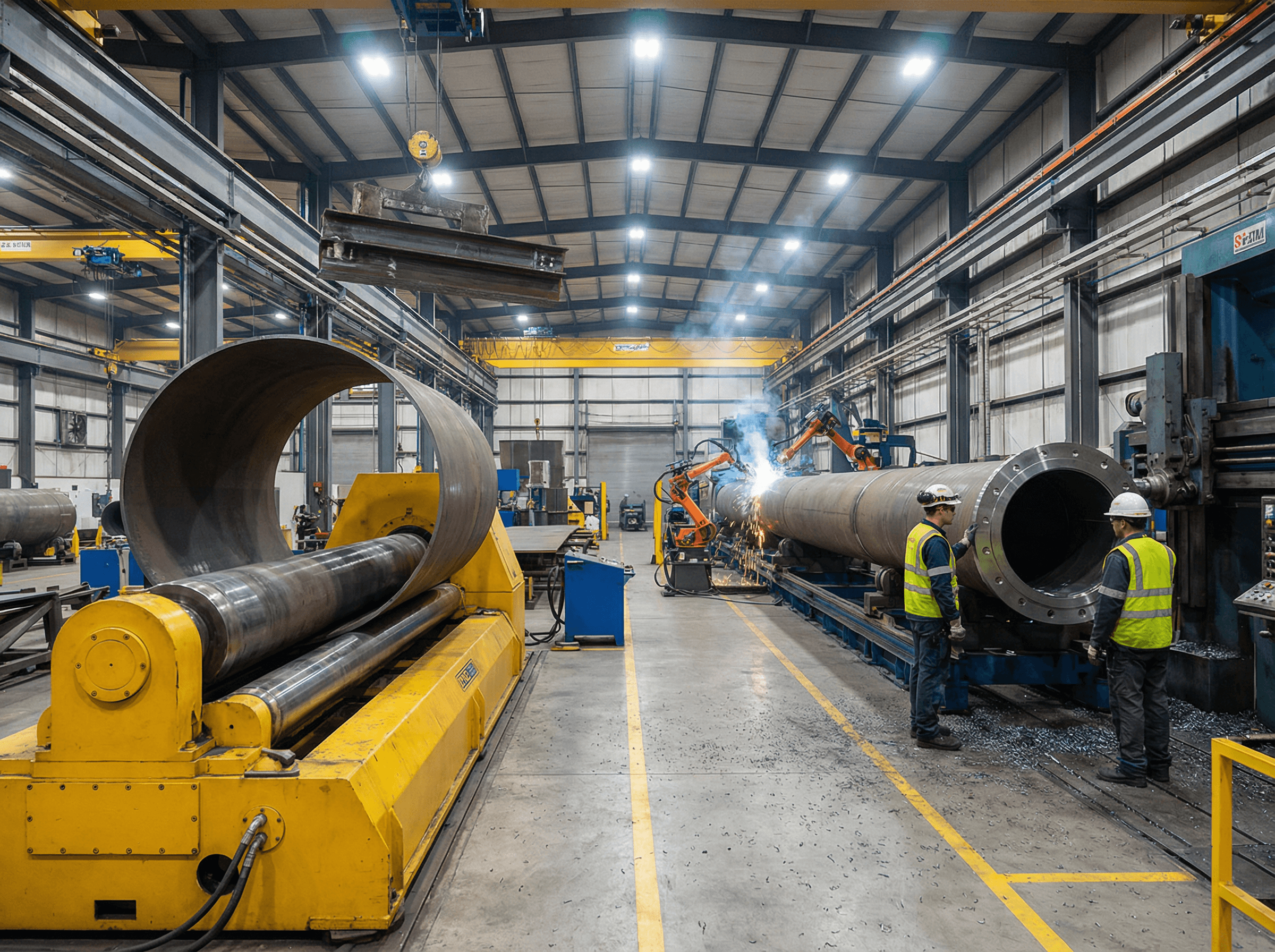
The defining feature of this project was the flanged sectional construction. Instead of transporting one full-length shaft, the pole was divided into manageable steel sections joined on site through bolted flange interfaces. This approach improves route flexibility, reduces escort and trailer constraints, and simplifies unloading where local lifting equipment is limited. For Nicaragua, where road conditions and site access can vary significantly by region, that was a decisive engineering advantage.

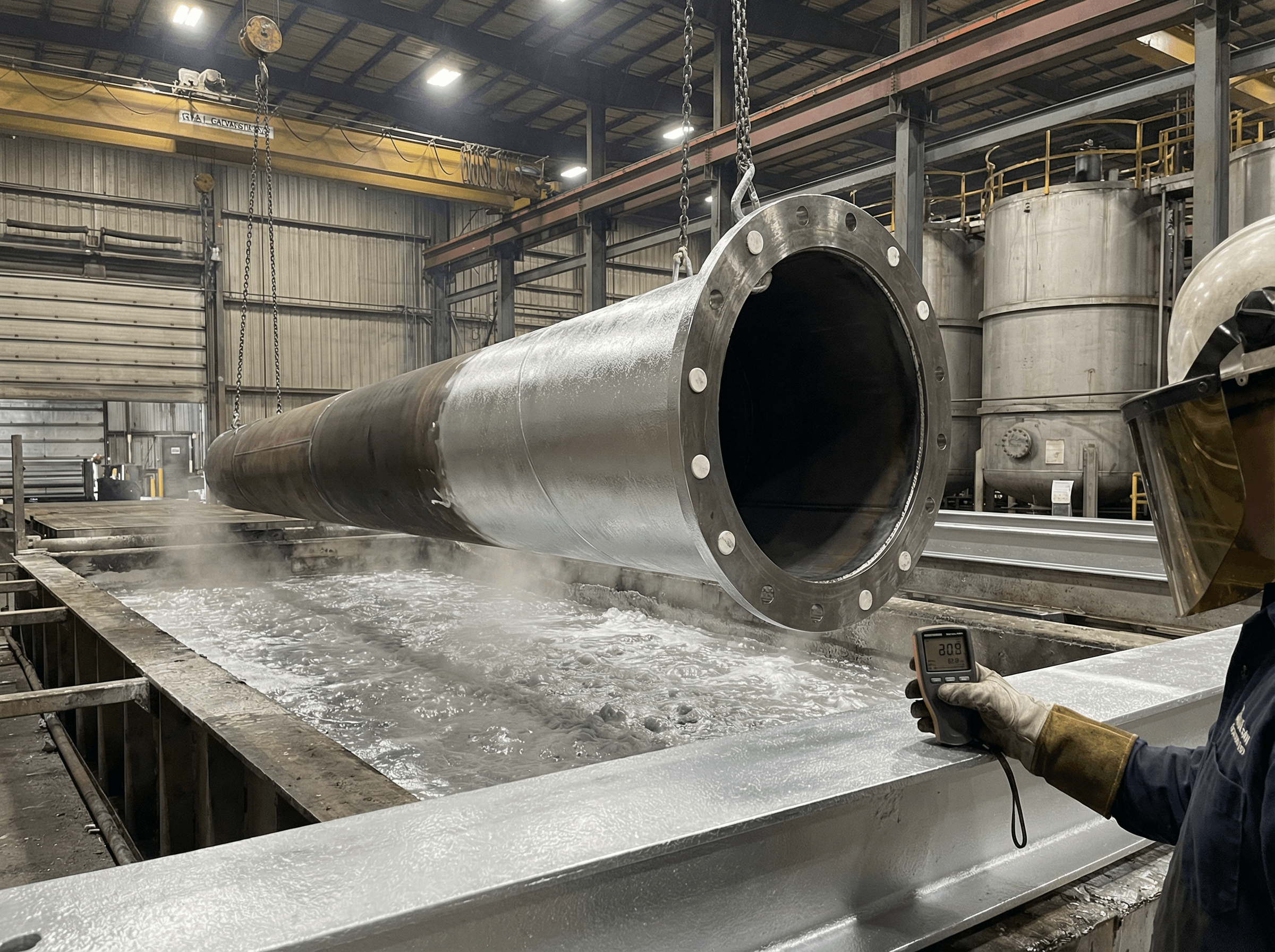
SOLAR TODO used hot-dip galvanized steel for the monopole structure. In telecom infrastructure, galvanization is not a cosmetic choice; it is a lifecycle cost control measure that helps protect the tower in humid, high-UV, and potentially saline environments. The 25+ year corrosion-protection target aligns with the long asset life expected by tower companies, mobile network operators, and infrastructure investors.

From a loading perspective, the 27m monopole was designed for typical 4G/5G base station use cases. Based on comparable urban monopole configurations, this class can support up to 6 antennas, subject to final wind loading, mounting arrangement, feeder routing, and local code checks. The Nicaragua case prioritized current carrier equipment while preserving some headroom for future upgrades, which is important as radio access networks evolve from 4G densification to broader 5G coverage.

Why sectional flanges mattered on this project

Flanged sectional poles create a more controllable installation process. Each section can be inspected before lifting, bolt torques can be verified at each interface, and erection can proceed in a staged sequence that reduces field uncertainty. For project managers, that means fewer logistics bottlenecks and clearer quality-control checkpoints.

The design also supports better contingency planning. If a route restriction, customs issue, or handling problem affects one section, replacement logistics are easier than for a single-piece tower. In cross-border or remote projects, that modularity can materially reduce schedule risk and spare-parts exposure.

According to NREL (2024), infrastructure modeling and project planning accuracy improve when site-specific constraints are incorporated early in the design process. While NREL's work is energy-focused, the principle applies directly here: transport, wind, corrosion, and maintenance access should be treated as first-order design variables, not afterthoughts.

Structural and electrical integration considerations

A monopole project is not only about steel. The Nicaragua site required coordination between tower design, foundation engineering, grounding, lightning protection, and radio equipment integration. The tower had to interface with antenna mounts, cable ladders, feeder management, and base equipment in a way that supported safe commissioning and future maintenance.

IEEE states that interoperability and safe interconnection standards are essential for reliable power and equipment performance at distributed infrastructure sites. In telecom practice, that translates into disciplined grounding, surge protection, and electrical bonding across the passive and active system. For tropical and storm-prone regions, lightning performance is especially important because service interruptions often originate from inadequate protection rather than structural failure.

Project Execution in Nicaragua

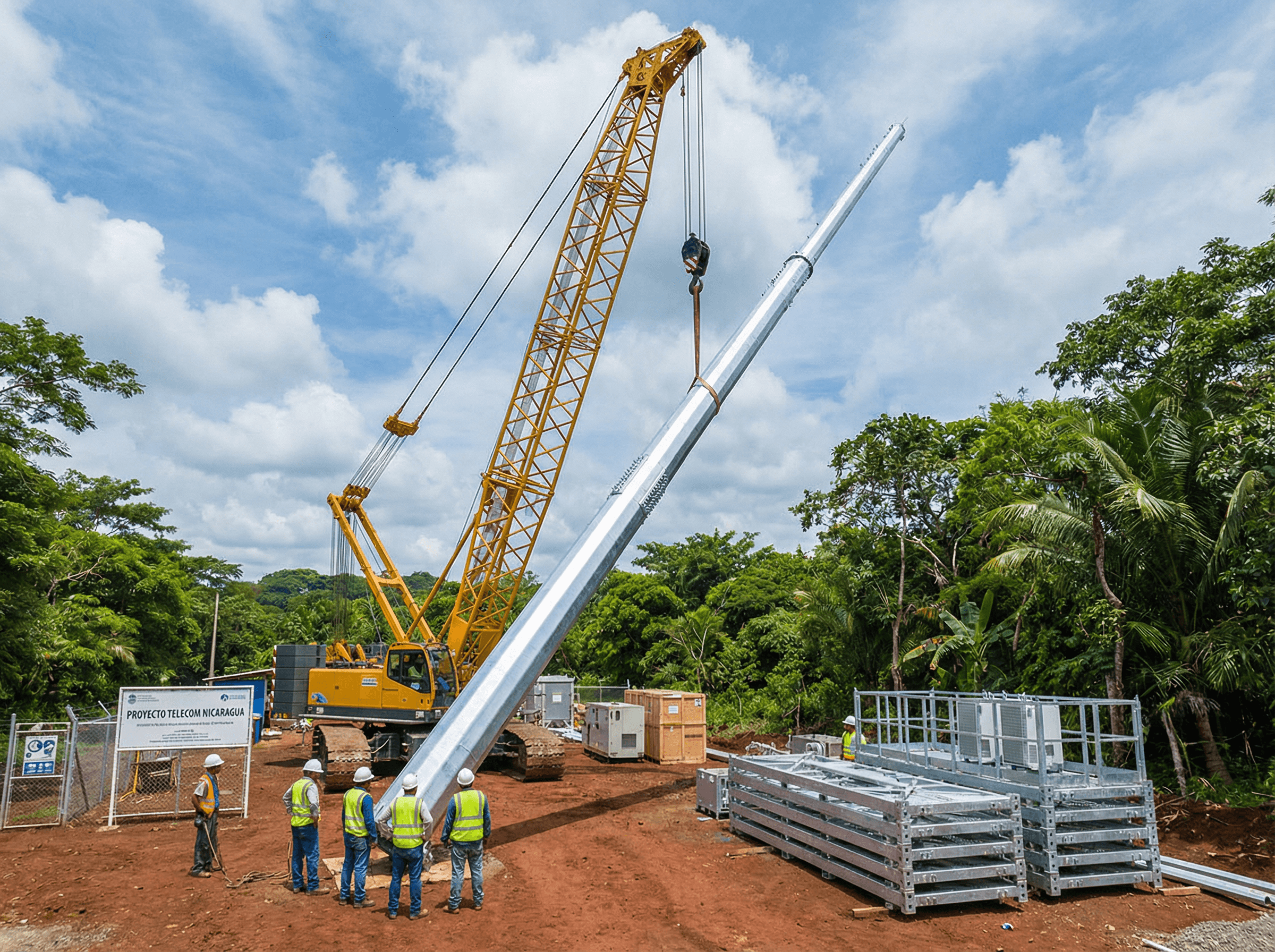
The Nicaragua project moved through four practical phases: site survey, foundation and anchor preparation, sectional delivery, and monopole erection with equipment integration. Each phase was optimized around local execution realities rather than idealized factory assumptions. That is one reason the case is useful for procurement and deployment teams.

During the site survey, the project team evaluated access roads, turning radius, laydown area, crane positioning, and geotechnical conditions. These factors directly influenced the decision to use a flanged sectional monopole. A non-sectional alternative would have increased transport complexity and potentially required route modification or specialized handling equipment.

Foundation planning was equally important. Even when the superstructure is efficient, monopole performance depends on proper load transfer into the foundation system. The engineering team therefore aligned pole geometry, anchor-bolt layout, and soil conditions before finalizing the erection sequence. This reduced rework risk during installation.

Delivery and assembly benefited from the sectional design. Sections were easier to stage on a constrained site, and bolted flange connections allowed the erection crew to follow a controlled sequence with measurable inspection points. Compared with a more cumbersome one-piece delivery strategy, the project achieved better site handling and lower exposure to transport-related delays.

Installation and commissioning lessons

One lesson from the Nicaragua case is that sectional towers are often selected for logistics, but their real value appears during commissioning. Because sections are assembled in sequence, teams can verify tolerances, bolt tension, and alignment before antennas and accessories are mounted. That lowers the probability of discovering geometry or fit-up issues after RF equipment is already in place.

A second lesson is that monopole projects benefit from designing for future loading, not only initial loading. The operator's immediate need was a live 4G/5G site, but the passive infrastructure was evaluated with expansion in mind. That can improve long-term ROI by reducing the need for structural retrofits when additional antennas or upgraded radios are introduced.

The International Renewable Energy Agency notes that durable infrastructure and lifecycle planning are central to lowering total system cost in long-life assets. Although IRENA's core focus is energy, the same asset-management logic applies to telecom towers: a slightly more deliberate upfront design can materially reduce OPEX over 20-25 years.

Performance, Cost, and Business Impact

For B2B stakeholders, the Nicaragua project demonstrates that tower selection should be evaluated on total delivered value rather than steel tonnage alone. A monopole may appear more expensive per ton than some alternatives, but its smaller footprint, simpler permitting profile, and faster field execution can improve total project economics. In this case, the sectional format added further value by reducing transport friction.

As a market reference, a 25m urban 4G/5G monopole typically falls in the $18,000-$28,000 range, depending on antenna count, wind rating, and accessories. A 27m flanged sectional monopole for a project like Nicaragua would be budgeted relative to that benchmark, with adjustments for sectional fabrication, local foundation requirements, and project-specific logistics. For procurement teams, this provides a realistic early-stage CAPEX anchor.

The business upside extends beyond initial deployment. A properly designed monopole can support future co-location or equipment upgrades, creating a path to higher asset utilization. If the tower owner later adds a tenant or expands antenna loading within design limits, the passive infrastructure begins to generate stronger long-term returns.

According to IEA PVPS (2024), long-life infrastructure economics improve when systems are designed for operational durability and modular upgrades. That principle is directly applicable here. The Nicaragua project did not treat the tower as a one-time installation; it treated it as a platform asset.

Comparison of tower options for similar projects

The following table shows how a 27m flanged sectional monopole fits within common telecom tower choices relevant to Nicaragua-style deployments.

Tower optionTypical heightAntenna capacityWind survivalLogistics profileTypical use caseIndicative cost
Sectional monopole27mUp to 6 antennasAround 45 m/sEasier transport in sectionsConstrained-access 4G/5G siteProject-specific, near 25m monopole benchmark
Urban monopole25m6 antennas45 m/sGood in standard delivery routesUrban and suburban macro site$18,000-$28,000
Camouflaged pine tree tower70m4 antennasProject-specific scenic designComplex fabrication and deliveryScenic or urban compliance area$120,000-$160,000
Heavy-duty lattice broadcast tower120mUp to 30 antennas55 m/sLarge transport and erection scopeBroadcast or high-capacity multi-tenant site$280,000-$380,000

For this Nicaragua case, the 27m sectional monopole offered the best balance of coverage height, manageable transport, and moderate CAPEX. A camouflaged structure would have been unnecessary, and a heavy-duty lattice tower would have exceeded the loading and site requirements. The result was a right-sized passive infrastructure choice rather than an overbuilt one.

Selection Guidance for Procurement and Engineering Teams

If you are evaluating a monopole for Latin American telecom deployment, the Nicaragua case suggests five practical selection criteria. First, confirm route and site access before finalizing tower geometry. Second, define wind and corrosion requirements early. Third, align antenna loading with both current and future network plans. Fourth, integrate grounding and lightning protection from the start. Fifth, compare lifecycle cost, not just procurement price.

SOLAR TODO is particularly relevant when the project requires a broad telecom tower portfolio rather than a one-size-fits-all product. The company supports configurations from 25m urban monopoles to 120m heavy-duty lattice broadcast towers, which helps buyers standardize sourcing while still matching each site to the correct structure. In Nicaragua, that flexibility mattered because the project team needed a solution tailored to access and deployment conditions.

Authority guidance supports this disciplined selection approach. IEC standards emphasize qualification, safety, and repeatable engineering practices across infrastructure components, while UL and IEEE frameworks reinforce safe installation and system integration. When buyers apply those standards alongside local geotechnical and wind analysis, they reduce technical and commercial risk.

The U.S. Department of Energy notes that resilient infrastructure planning should consider environment, operations, and maintenance together rather than in isolation. That is the central lesson of this case study. The 27m flanged sectional monopole worked not because it was the tallest or cheapest option, but because it best matched the real project constraints.

SOLAR TODO also benefits buyers by supporting future-ready tower planning. In markets where tenancy, radio upgrades, or hybrid power retrofits may be added later, a well-specified monopole can become a scalable platform asset instead of a fixed single-use structure. That is a meaningful distinction for tower companies, EPCs, and operator procurement teams managing multi-site portfolios.

FAQ

Q: What is a 27m flanged sectional monopole? A: A 27m flanged sectional monopole is a steel telecom tower made from multiple bolted sections that assemble into a 27-meter structure on site. It is used for 4G/5G deployments where transport access, compact footprint, and faster field erection are more important than the very high capacity of a lattice tower.

Q: Why was a sectional monopole selected for the Nicaragua project? A: The sectional design was selected because it simplified transport and handling under site-access constraints. Delivering several shorter steel sections is often easier and less risky than moving one full-length pole, especially when road conditions, turning radius, or local lifting equipment create execution challenges.

Q: How much wind can this monopole design typically withstand? A: For telecom monopoles in this class, a 45 m/s wind survival rating is a common design benchmark. Final capacity always depends on local code, antenna loading, topography, and foundation design, so project-specific structural verification is required before manufacturing and installation.

Q: How many antennas can a 27m monopole support? A: A 27m monopole for 4G/5G service can typically support up to 6 antennas, depending on mount configuration, wind area, and accessory loads. The exact number must be confirmed through structural analysis because feeders, RRUs, platforms, and future upgrade allowances all affect usable capacity.

Q: What are the main advantages of flanged sectional construction? A: The main advantages are easier transport, staged on-site assembly, and better quality-control checkpoints during erection. Bolted flange joints let crews inspect alignment and torque section by section, which can reduce installation risk and improve schedule predictability on constrained or remote sites.

Q: Is hot-dip galvanized steel important for Nicaragua conditions? A: Yes, hot-dip galvanized steel is important because it improves corrosion resistance in humid, high-UV, and potentially saline environments. For telecom assets expected to operate 20-25 years or longer, galvanization helps reduce maintenance frequency and supports lower lifecycle cost than poorly protected steel.

Q: How does a monopole compare with a lattice tower for this type of project? A: A monopole usually offers a smaller footprint, lower visual impact, and simpler deployment for moderate antenna loads. A lattice tower is better when the project needs much higher height, heavier loading, or multi-tenant capacity, but it generally requires more land, more steel, and more complex erection.

Q: What cost range should buyers use for early budgeting? A: As a reference point, a 25m urban 4G/5G monopole typically costs about $18,000-$28,000. A 27m flanged sectional monopole may price near that range or somewhat above it depending on sectional fabrication, local foundation requirements, coatings, accessories, and logistics complexity.

Q: What standards matter for a telecom monopole project? A: Buyers should review structural design criteria, local wind and seismic codes, grounding and lightning protection practices, and relevant IEC, IEEE, and UL-aligned safety requirements. These standards help ensure the tower, electrical interfaces, and passive infrastructure are designed for safe installation and long-term network reliability.

Q: Can this type of tower support future network upgrades? A: Yes, if the tower is engineered with reserve loading and mount flexibility, it can support later antenna additions or radio upgrades. That is why procurement teams should define both day-one equipment and a 3-5 year expansion scenario before final structural approval.

Q: What are the key installation risks to manage? A: The main risks are inaccurate site survey data, foundation mismatch, transport delays, poor bolt-torque control, and incomplete grounding or lightning protection. These risks are manageable when engineering, logistics, and erection sequencing are coordinated before materials arrive on site.

Q: Why is this Nicaragua project relevant to other Latin American deployments? A: It is relevant because many regional projects face similar constraints: mixed road quality, variable site access, humid climates, and pressure to deploy quickly. The case shows that a sectional monopole can be a practical middle-ground solution between a simple urban pole and a much larger lattice tower.

References

  1. NREL (2024): PVWatts Calculator methodology and site-specific performance modeling principles relevant to infrastructure planning and environmental assessment.
  2. IEEE (2018): IEEE 1547-2018, standard for interconnection and interoperability of distributed electric power resources, relevant to safe electrical integration and grounding practices.
  3. IEC (2021): IEC 61215-1:2021, photovoltaic module qualification standard cited here as an example of disciplined international engineering qualification practice.
  4. IEC (2023): IEC 61730-1:2023, photovoltaic module safety qualification standard referenced for safety-governed infrastructure design methodology.
  5. IEA PVPS (2024): Trends in Photovoltaic Applications 2024, highlighting lifecycle value, durability, and long-term infrastructure economics.
  6. IRENA (2024): Renewable power deployment and cost reports emphasizing lifecycle planning, resilience, and total cost of ownership principles.
  7. UL (2023): UL standards framework for electrical safety and equipment certification, relevant to telecom site power, bonding, and installation safety.
  8. U.S. Department of Energy (2024): Infrastructure resilience guidance supporting integrated planning across environment, operations, and maintenance.

Conclusion

The 27m flanged sectional monopole used in Nicaragua proved that the best telecom tower is the one that fits the site, not the one with the highest headline specification. For constrained-access 4G/5G projects needing around 45 m/s wind performance and 25+ year corrosion protection, SOLAR TODO's sectional monopole approach is a strong recommendation for balancing logistics, durability, and long-term asset value.

Cite This Article

APA

SOLAR TODO. (2026). 27m Flanged Sectional Monopole — Nicaragua Project Case Study. SOLAR TODO. Retrieved from https://solartodo.com/knowledge/27m-flanged-sectional-monopole-nicaragua-project-case-study-td-2026-0020

BibTeX
@article{solartodo_27m_flanged_sectional_monopole_nicaragua_project_case_study_td_2026_0020,
  title = {27m Flanged Sectional Monopole — Nicaragua Project Case Study},
  author = {SOLAR TODO},
  journal = {SOLAR TODO Knowledge Base},
  year = {2026},
  url = {https://solartodo.com/knowledge/27m-flanged-sectional-monopole-nicaragua-project-case-study-td-2026-0020},
  note = {Accessed: 2026-03-29}
}

Published: March 28, 2026 | Available at: https://solartodo.com/knowledge/27m-flanged-sectional-monopole-nicaragua-project-case-study-td-2026-0020

Subscribe to Our Newsletter

Get the latest solar energy news and insights delivered to your inbox.

View All Articles
27m Flanged Sectional Monopole — Nicaragua Project Case Study | SOLAR TODO | SOLARTODO